


Not all resignations involve an exit interview or a goodbye email. Some employees resign quietly by staying in their jobs physically but checking out mentally. This silent resignation is often harder to detect than actual turnover, but it can be just as damaging. Disengaged employees may keep their seats, but they stop bringing energy, creativity, and commitment to their work.
The causes are varied: lack of recognition, limited growth opportunities, or distrust in leadership. When employees feel undervalued or disconnected from purpose, they shift into survival mode doing just enough to get by while withholding their best efforts. Unlike attrition, silent resignation doesn’t show up in headcount, but in reduced productivity, innovation, and team morale.
For HR, the challenge is early detection. Warning signs include declining participation in meetings, lack of enthusiasm for new projects, or minimal collaboration with colleagues. Surveys, one-on-ones, and open communication channels can help uncover disengagement before it solidifies. Just as importantly, organizations must act on feedback to rebuild trust and engagement.
The solution isn’t perks or quick fixes it’s creating a culture where employees feel valued, heard, and connected to a greater purpose. Addressing silent resignation requires empathy and strategy, but when handled well, it can turn quiet disengagement into renewed commitment.
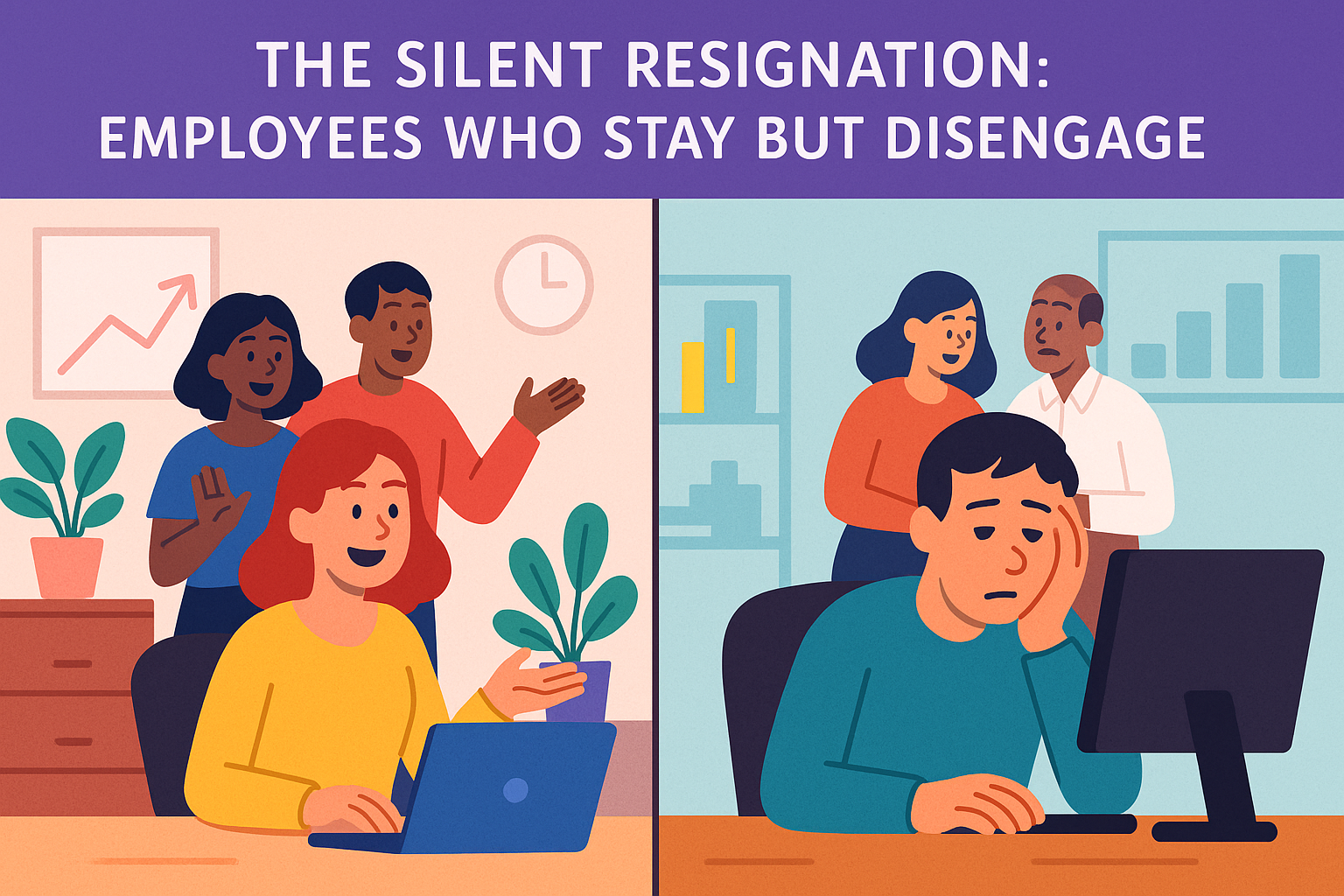
Not all resignations involve an exit interview or a goodbye email. Some employees resign quietly by staying in their jobs physically but checking out mentally. This silent resignation is often harder to detect than actual turnover, but it can be just as damaging. Disengaged employees may keep their seats, but they stop bringing energy, creativity, and commitment to their work.
The causes are varied: lack of recognition, limited growth opportunities, or distrust in leadership. When employees feel undervalued or disconnected from purpose, they shift into survival mode doing just enough to get by while withholding their best efforts. Unlike attrition, silent resignation doesn’t show up in headcount, but in reduced productivity, innovation, and team morale.
For HR, the challenge is early detection. Warning signs include declining participation in meetings, lack of enthusiasm for new projects, or minimal collaboration with colleagues. Surveys, one-on-ones, and open communication channels can help uncover disengagement before it solidifies. Just as importantly, organizations must act on feedback to rebuild trust and engagement.
The solution isn’t perks or quick fixes it’s creating a culture where employees feel valued, heard, and connected to a greater purpose. Addressing silent resignation requires empathy and strategy, but when handled well, it can turn quiet disengagement into renewed commitment.