


Every organization wants to ensure productivity, but the tools and methods used to monitor performance can easily cross a dangerous line. While monitoring is about guiding and supporting employees, micromanaging is about controlling them and that subtle shift can erode trust and damage culture. HR leaders must help managers recognize where oversight ends and overreach begins.
Monitoring done right is empowering. Productivity tools, project dashboards, and check-ins provide transparency, accountability, and opportunities for support. Employees know what’s expected, managers can identify roadblocks early, and teams stay aligned. When monitoring is collaborative, it builds clarity and trust.
Micromanaging, however, suffocates. When managers obsess over every detail, demand constant updates, or track employees’ every keystroke, it sends a clear message: “We don’t trust you.” This undermines autonomy, reduces morale, and often decreases productivity. Employees feel disengaged and stifled, leading to higher turnover.
For HR, the challenge is to create frameworks where monitoring feels like guidance, not surveillance. This means training leaders to focus on outcomes, not activities, and ensuring tools are used to support employees, not control them. When balance is achieved, monitoring becomes a driver of success, while micromanaging becomes a relic of the past.
Every organization wants to ensure productivity, but the tools and methods used to monitor performance can easily cross a dangerous line. While monitoring is about guiding and supporting employees, micromanaging is about controlling them and that subtle shift can erode trust and damage culture. HR leaders must help managers recognize where oversight ends and overreach begins.
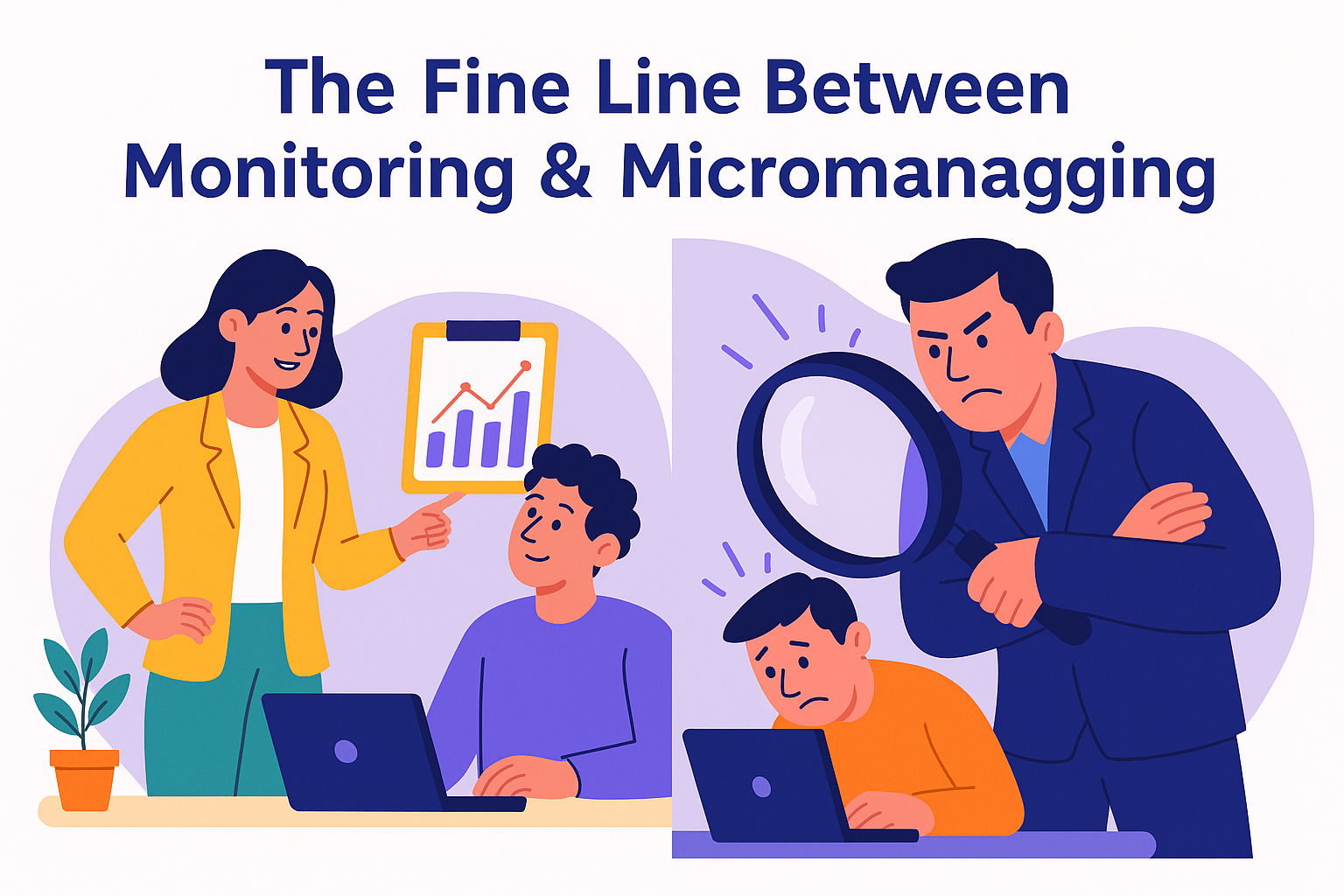
Monitoring done right is empowering. Productivity tools, project dashboards, and check-ins provide transparency, accountability, and opportunities for support. Employees know what’s expected, managers can identify roadblocks early, and teams stay aligned. When monitoring is collaborative, it builds clarity and trust.
Micromanaging, however, suffocates. When managers obsess over every detail, demand constant updates, or track employees’ every keystroke, it sends a clear message: “We don’t trust you.” This undermines autonomy, reduces morale, and often decreases productivity. Employees feel disengaged and stifled, leading to higher turnover.
For HR, the challenge is to create frameworks where monitoring feels like guidance, not surveillance. This means training leaders to focus on outcomes, not activities, and ensuring tools are used to support employees, not control them. When balance is achieved, monitoring becomes a driver of success, while micromanaging becomes a relic of the past.