


Rituals aren’t just for festivals and family dinners they play a powerful role inside organizations too. When thoughtfully designed, workplace rituals create rhythm, meaning, and a sense of belonging. But here’s the catch: employees know the difference between a forced, awkward team building game and a ritual that feels genuine and energizing.
The best company rituals are born from culture, not copied from trends. Weekly gratitude shoutouts, team-led learning circles, virtual coffee breaks, “no meeting” hours, or celebrating small wins every Friday—these rituals work because they’re rooted in values and supported by leaders who lead with example. They’re predictable, inclusive, and consistent without feeling robotic. Employees don’t just participate they actually look forward to them.
To build rituals that truly matter, HR teams should co-create with their people. Ask what energizes them, what feels authentic, and what moments are worth pausing for. Then, test ideas and iterate. The goal isn’t to add more to employees’ plates but to create connection, reduce burnout, and make workdays more human.
In a world of remote, hybrid, and fast paced work environments, rituals are anchors. They offer comfort, clarity, and culture. And when done right, they turn ordinary moments into meaningful experiences.
Rituals aren’t just for festivals and family dinners they play a powerful role inside organizations too. When thoughtfully designed, workplace rituals create rhythm, meaning, and a sense of belonging. But here’s the catch: employees know the difference between a forced, awkward team building game and a ritual that feels genuine and energizing.
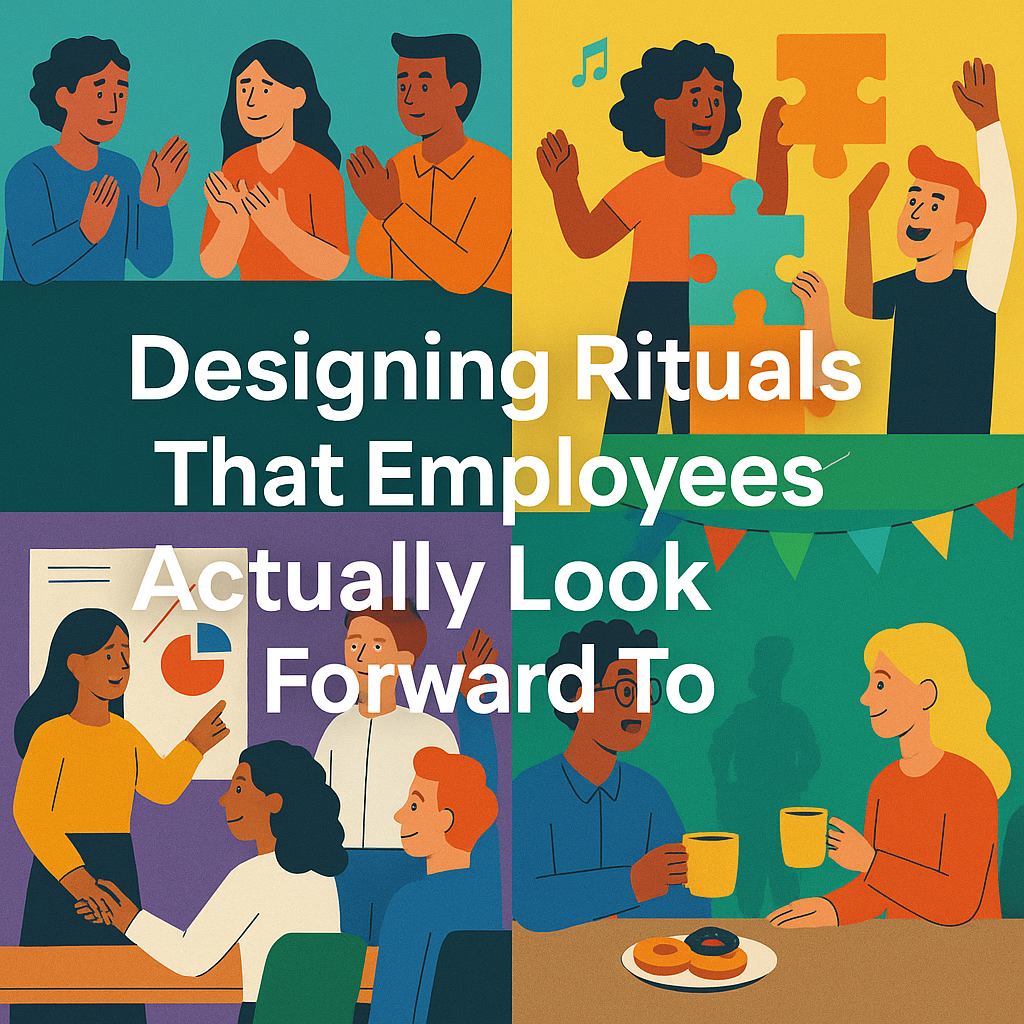
The best company rituals are born from culture, not copied from trends. Weekly gratitude shoutouts, team-led learning circles, virtual coffee breaks, “no meeting” hours, or celebrating small wins every Friday—these rituals work because they’re rooted in values and supported by leaders who lead with example. They’re predictable, inclusive, and consistent without feeling robotic. Employees don’t just participate they actually look forward to them.
To build rituals that truly matter, HR teams should co-create with their people. Ask what energizes them, what feels authentic, and what moments are worth pausing for. Then, test ideas and iterate. The goal isn’t to add more to employees’ plates but to create connection, reduce burnout, and make workdays more human.
In a world of remote, hybrid, and fast paced work environments, rituals are anchors. They offer comfort, clarity, and culture. And when done right, they turn ordinary moments into meaningful experiences.