


In today’s hyper-connected work culture, employees are often overwhelmed not by the work itself but by the incessant ping of notifications, endless email threads, and the pressure to be “always available.” The result? Inbox anxiety. And it’s real. It’s affecting employee productivity, mental health, and overall workplace satisfaction.
HR professionals now face a silent but growing challenge: how to make internal communication less chaotic and more human.
One key starting point is rethinking the volume and tone of internal emails. Not every message needs to be marked urgent, and not every update requires a reply-all. HR teams should establish clear communication norms like quiet hours, email-free Fridays, or encouraging asynchronous updates through collaboration tools instead of traditional inbox dumping. When employees know their time and attention are respected, they feel more in control.
But it’s not just about when and how often we message it’s what those messages say. HR can play a pivotal role in ensuring communication carries warmth, empathy, and clarity. Instead of corporate jargon and cold bullet points, internal announcements can feel more like conversations. Using language that recognizes effort, invites feedback, and offers emotional safety goes a long way in building trust.
Ultimately, humanizing internal communication isn’t just an HR initiative it’s a cultural shift. It shows your employees they are not machines expected to keep up with 100 unread emails. They are people. And they deserve space to breathe, respond, and work meaningfully.
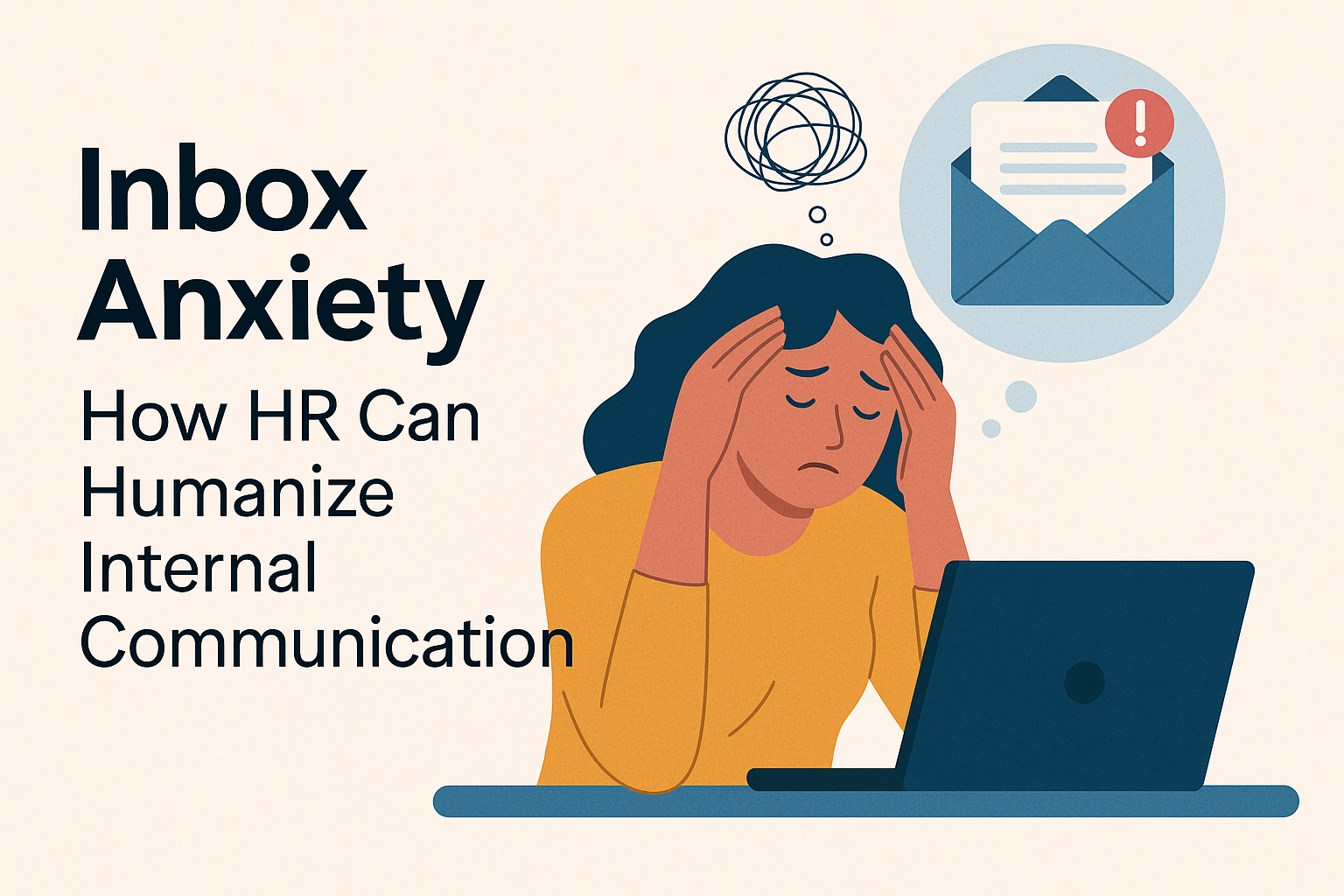
In today’s hyper-connected work culture, employees are often overwhelmed not by the work itself but by the incessant ping of notifications, endless email threads, and the pressure to be “always available.” The result? Inbox anxiety. And it’s real. It’s affecting employee productivity, mental health, and overall workplace satisfaction.
HR professionals now face a silent but growing challenge: how to make internal communication less chaotic and more human.
One key starting point is rethinking the volume and tone of internal emails. Not every message needs to be marked urgent, and not every update requires a reply-all. HR teams should establish clear communication norms like quiet hours, email-free Fridays, or encouraging asynchronous updates through collaboration tools instead of traditional inbox dumping. When employees know their time and attention are respected, they feel more in control.
But it’s not just about when and how often we message it’s what those messages say. HR can play a pivotal role in ensuring communication carries warmth, empathy, and clarity. Instead of corporate jargon and cold bullet points, internal announcements can feel more like conversations. Using language that recognizes effort, invites feedback, and offers emotional safety goes a long way in building trust.
Ultimately, humanizing internal communication isn’t just an HR initiative it’s a cultural shift. It shows your employees they are not machines expected to keep up with 100 unread emails. They are people. And they deserve space to breathe, respond, and work meaningfully.