


For decades, performance management has focused on effort, hours, and output. But modern research in neuroscience and workplace psychology is clear: rest is not the enemy of productivity it’s the fuel for it. Breaks are no longer a luxury; they’re a strategic tool that HR and leaders should integrate into performance plans.
Micro-breaks, such as stretching, walking, or simply pausing between tasks, help employees reset their focus and reduce decision fatigue. Longer breaks, like lunch hours or short personal resets during the day, give the brain the downtime it needs to process information and spark creativity. Far from wasting time, these pauses allow employees to return to their work sharper and more energized.
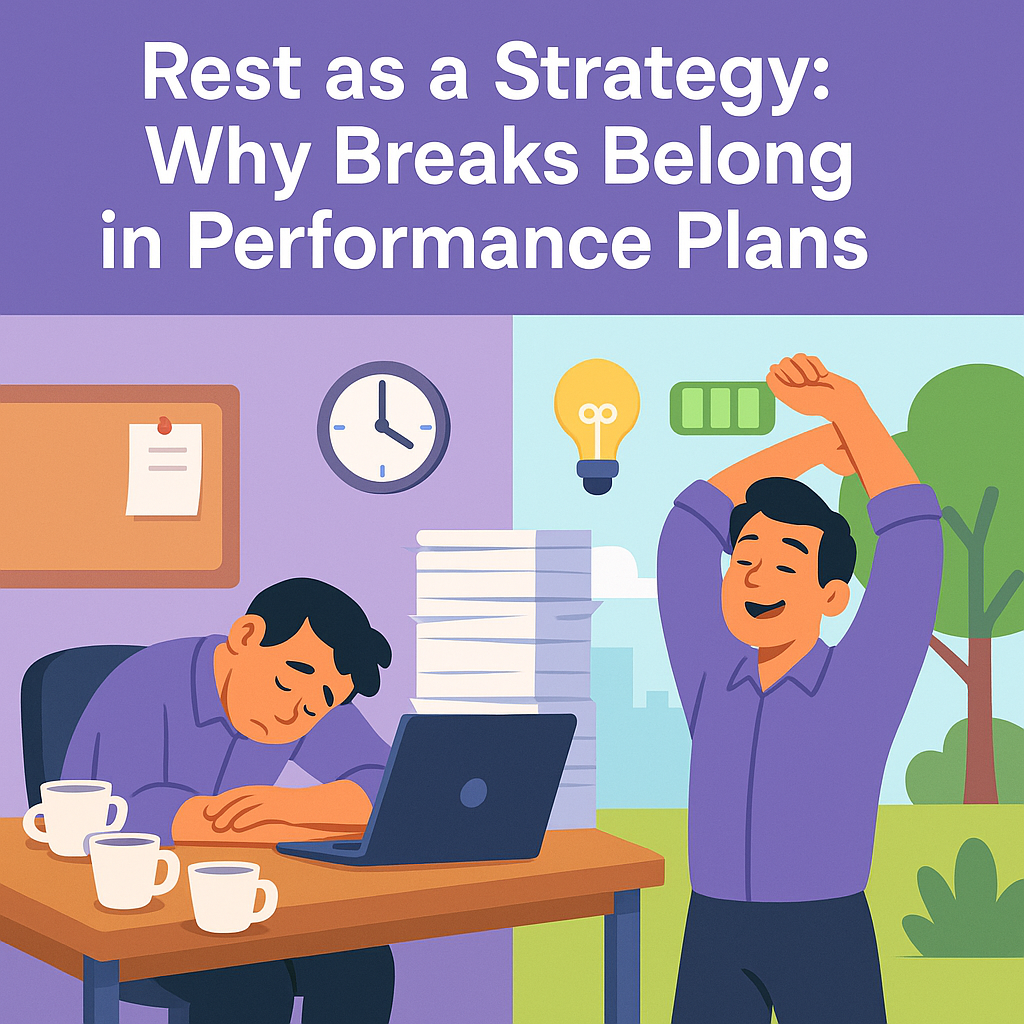
Unfortunately, many workplace cultures still equate constant busyness with effectiveness. Employees often skip breaks out of guilt or fear of being seen as uncommitted. This “always-on” culture leads to burnout, disengagement, and declining performance the very outcomes organizations want to avoid.
By reframing rest as a performance strategy, HR can create a culture where breaks are encouraged, modeled by leaders, and integrated into daily routines. Whether through structured “quiet hours,” encouraging movement, or promoting digital detox moments, embedding rest into performance planning ensures employees deliver not just more but better results.
For decades, performance management has focused on effort, hours, and output. But modern research in neuroscience and workplace psychology is clear: rest is not the enemy of productivity it’s the fuel for it. Breaks are no longer a luxury; they’re a strategic tool that HR and leaders should integrate into performance plans.
Micro-breaks, such as stretching, walking, or simply pausing between tasks, help employees reset their focus and reduce decision fatigue. Longer breaks, like lunch hours or short personal resets during the day, give the brain the downtime it needs to process information and spark creativity. Far from wasting time, these pauses allow employees to return to their work sharper and more energized.
Unfortunately, many workplace cultures still equate constant busyness with effectiveness. Employees often skip breaks out of guilt or fear of being seen as uncommitted. This “always-on” culture leads to burnout, disengagement, and declining performance the very outcomes organizations want to avoid.
By reframing rest as a performance strategy, HR can create a culture where breaks are encouraged, modeled by leaders, and integrated into daily routines. Whether through structured “quiet hours,” encouraging movement, or promoting digital detox moments, embedding rest into performance planning ensures employees deliver not just more but better results.