


Gratitude is a cornerstone of healthy workplace culture, but like anything, too much of it or using it in the wrong way can backfire. When “thank you” becomes automatic, forced, or used as a substitute for real support, it creates gratitude burnout. Instead of feeling valued, employees may feel that appreciation has lost its meaning or, worse, that it’s being used to gloss over deeper issues.
Overusing gratitude often shows up as constant praise without substance. Leaders may thank employees for late nights and extra hours, but without addressing workload issues or offering structural support, those words ring hollow. In such cases, gratitude shifts from recognition to expectation implying employees should accept the strain simply because they were thanked for it.
Employees can quickly spot when appreciation is performative rather than authentic. This erodes trust and engagement, making “thank you” feel like a script rather than genuine recognition. What employees truly need is balanced acknowledgment: specific praise for contributions, paired with tangible action whether that’s fair pay, manageable workloads, or career growth opportunities.
For HR, the lesson is clear: gratitude should never replace structural support. When used authentically and sparingly, “thank you” remains powerful. But when overused or misapplied, it dilutes impact and risks disengagement. True appreciation is about both words and actions, ensuring employees feel recognized and supported in meaningful ways.
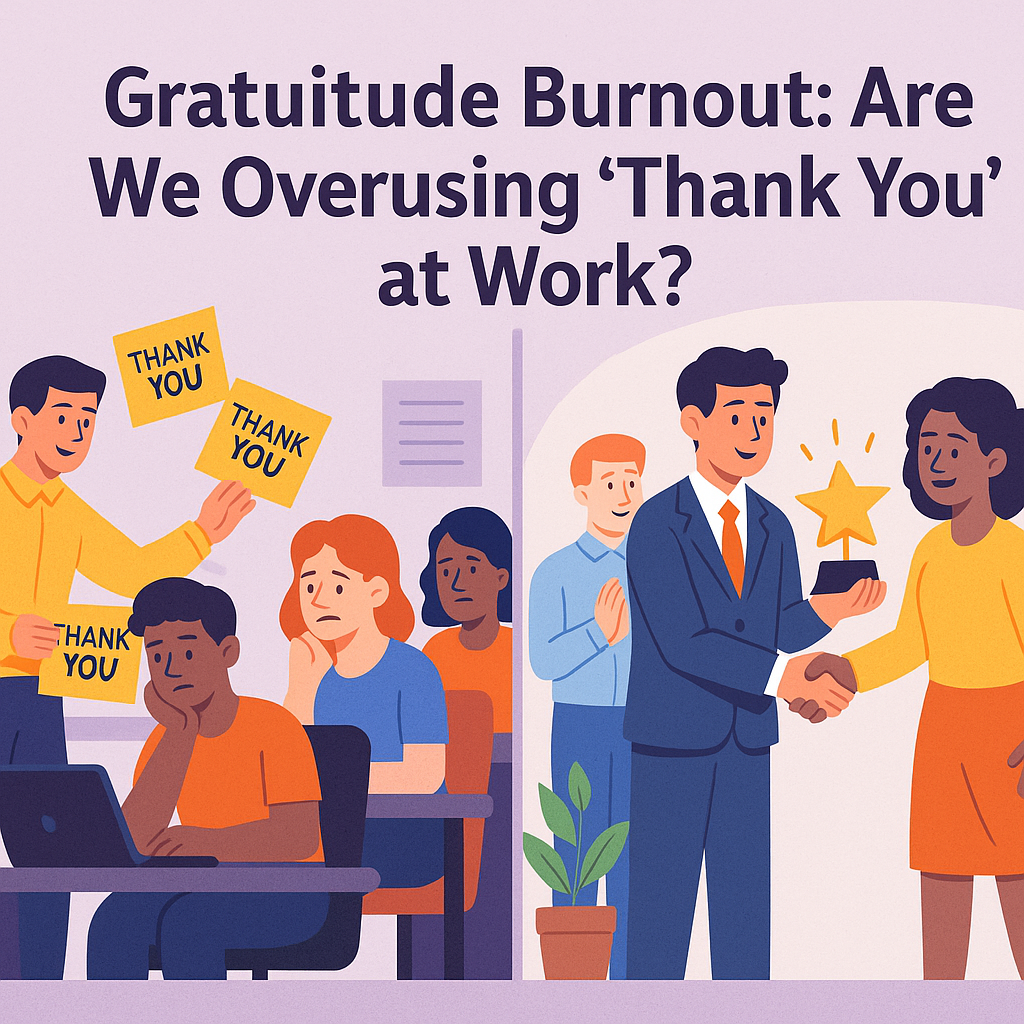
Gratitude is a cornerstone of healthy workplace culture, but like anything, too much of it or using it in the wrong way can backfire. When “thank you” becomes automatic, forced, or used as a substitute for real support, it creates gratitude burnout. Instead of feeling valued, employees may feel that appreciation has lost its meaning or, worse, that it’s being used to gloss over deeper issues.
Overusing gratitude often shows up as constant praise without substance. Leaders may thank employees for late nights and extra hours, but without addressing workload issues or offering structural support, those words ring hollow. In such cases, gratitude shifts from recognition to expectation implying employees should accept the strain simply because they were thanked for it.
Employees can quickly spot when appreciation is performative rather than authentic. This erodes trust and engagement, making “thank you” feel like a script rather than genuine recognition. What employees truly need is balanced acknowledgment: specific praise for contributions, paired with tangible action whether that’s fair pay, manageable workloads, or career growth opportunities.
For HR, the lesson is clear: gratitude should never replace structural support. When used authentically and sparingly, “thank you” remains powerful. But when overused or misapplied, it dilutes impact and risks disengagement. True appreciation is about both words and actions, ensuring employees feel recognized and supported in meaningful ways.