


Diversity and inclusion initiatives are now standard in most organizations, but there’s a growing risk of belonging fatigue when well-intentioned programs overwhelm employees instead of empowering them. Constant workshops, mandatory training, or surface-level campaigns can leave people feeling more drained than inspired. When inclusion is treated as a checkbox exercise, it stops creating genuine connection and instead sparks disengagement.
Belonging fatigue often occurs when programs focus on visibility rather than impact. For example, hosting multiple “awareness days” without addressing systemic issues can feel hollow. Employees, especially from underrepresented groups, may feel tokenized rather than truly included. Over time, these efforts can backfire, leading to skepticism and frustration instead of trust and belonging.
For HR, the solution is quality over quantity. Inclusion programs should be rooted in listening, not just broadcasting. That means creating spaces where employees can safely share their experiences, ensuring policies match promises, and embedding inclusion into daily practices like recruitment, promotions, and feedback. Instead of overloading employees with events, HR should design meaningful initiatives that directly improve workplace culture.
True belonging is about authenticity. Employees thrive when they feel valued for who they are not because of a program, but because the culture naturally includes them. By focusing on real change rather than performative gestures, HR can move beyond fatigue and build a workplace where belonging is genuine and sustainable.
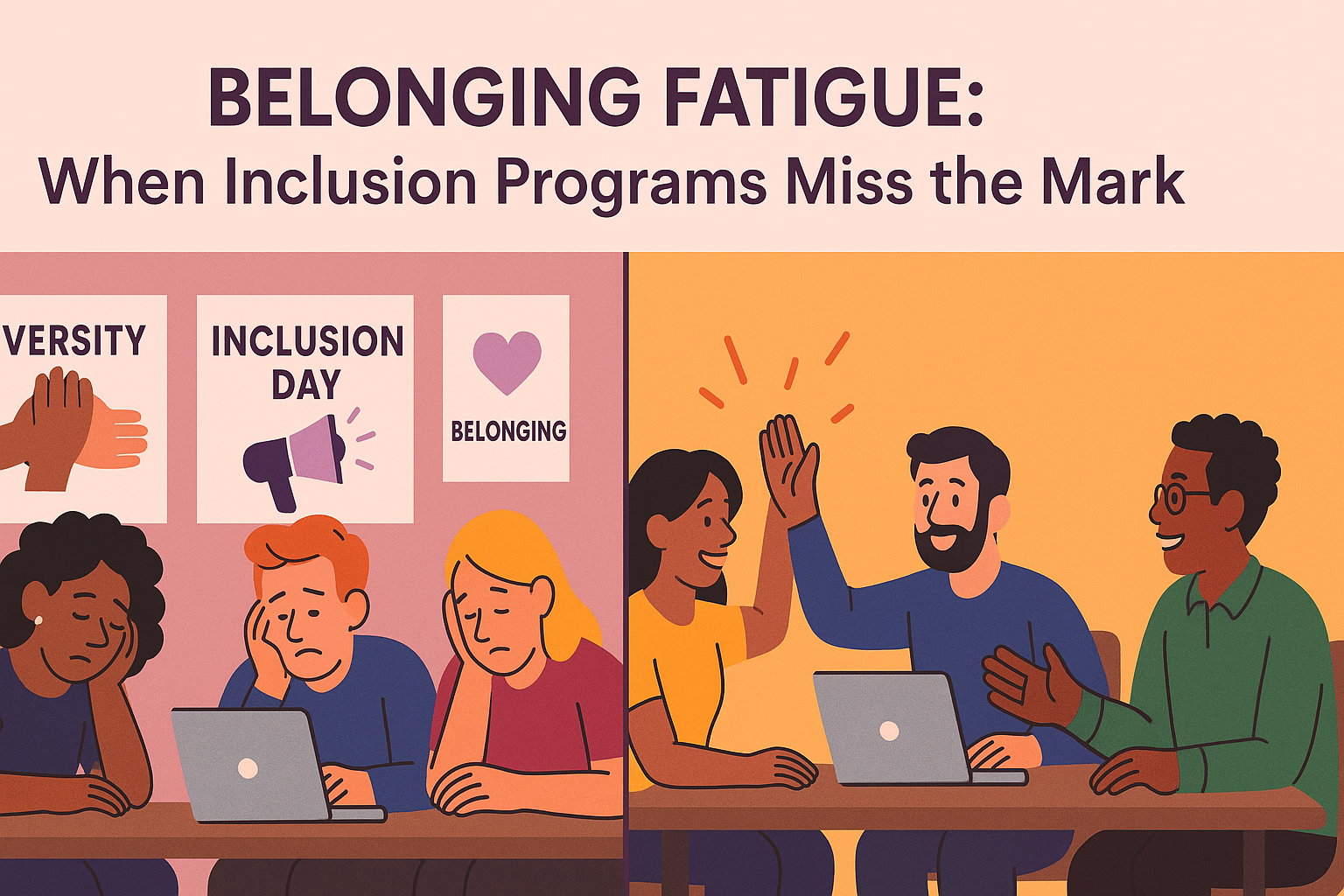
Diversity and inclusion initiatives are now standard in most organizations, but there’s a growing risk of belonging fatigue when well-intentioned programs overwhelm employees instead of empowering them. Constant workshops, mandatory training, or surface-level campaigns can leave people feeling more drained than inspired. When inclusion is treated as a checkbox exercise, it stops creating genuine connection and instead sparks disengagement.
Belonging fatigue often occurs when programs focus on visibility rather than impact. For example, hosting multiple “awareness days” without addressing systemic issues can feel hollow. Employees, especially from underrepresented groups, may feel tokenized rather than truly included. Over time, these efforts can backfire, leading to skepticism and frustration instead of trust and belonging.
For HR, the solution is quality over quantity. Inclusion programs should be rooted in listening, not just broadcasting. That means creating spaces where employees can safely share their experiences, ensuring policies match promises, and embedding inclusion into daily practices like recruitment, promotions, and feedback. Instead of overloading employees with events, HR should design meaningful initiatives that directly improve workplace culture.
True belonging is about authenticity. Employees thrive when they feel valued for who they are not because of a program, but because the culture naturally includes them. By focusing on real change rather than performative gestures, HR can move beyond fatigue and build a workplace where belonging is genuine and sustainable.