


Traditionally, mentoring has always flowed top-down experienced leaders guiding younger employees. But in today’s fast-changing workplace, knowledge isn’t just about years of experience. Enter reverse mentoring, where Gen Z and younger professionals share insights with senior leaders, creating a two-way learning exchange that benefits the entire organization.
Gen Z brings fresh perspectives on technology, inclusivity, and the future of work. They’re digital natives, comfortable with AI, social media, and remote collaboration tools that older leaders may struggle to adopt. Beyond tech, they also push for values like diversity, mental health awareness, and work-life balance. By learning from younger employees, leaders gain real-time insights into what matters to the modern workforce.
For younger employees, reverse mentoring provides empowerment and a sense of contribution. It gives them visibility, helps them develop confidence, and creates deeper connections with leadership. For senior leaders, it breaks echo chambers and keeps them agile in a rapidly changing world. HR plays a crucial role in structuring these programs to ensure they are authentic, respectful, and mutually beneficial.
Ultimately, reverse mentoring isn’t about flipping hierarchies it’s about building bridges. When organizations embrace this model, they unlock innovation, foster inclusion, and future-proof leadership by ensuring wisdom flows both ways.
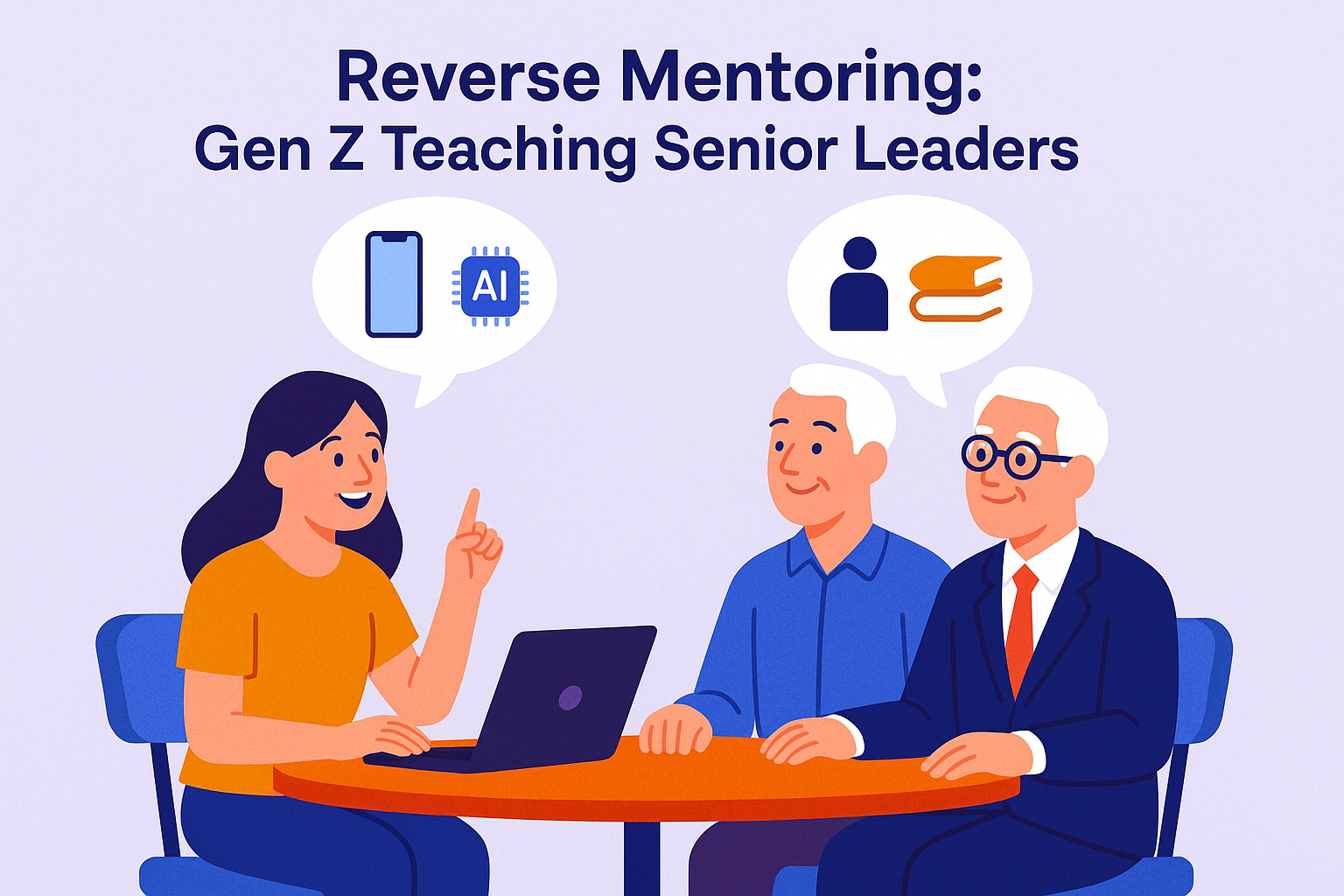
Traditionally, mentoring has always flowed top-down experienced leaders guiding younger employees. But in today’s fast-changing workplace, knowledge isn’t just about years of experience. Enter reverse mentoring, where Gen Z and younger professionals share insights with senior leaders, creating a two-way learning exchange that benefits the entire organization.
Gen Z brings fresh perspectives on technology, inclusivity, and the future of work. They’re digital natives, comfortable with AI, social media, and remote collaboration tools that older leaders may struggle to adopt. Beyond tech, they also push for values like diversity, mental health awareness, and work-life balance. By learning from younger employees, leaders gain real-time insights into what matters to the modern workforce.
For younger employees, reverse mentoring provides empowerment and a sense of contribution. It gives them visibility, helps them develop confidence, and creates deeper connections with leadership. For senior leaders, it breaks echo chambers and keeps them agile in a rapidly changing world. HR plays a crucial role in structuring these programs to ensure they are authentic, respectful, and mutually beneficial.
Ultimately, reverse mentoring isn’t about flipping hierarchies it’s about building bridges. When organizations embrace this model, they unlock innovation, foster inclusion, and future-proof leadership by ensuring wisdom flows both ways.