


Candidate ghosting when applicants vanish without explanation during the hiring process has become one of HR’s biggest frustrations. From not showing up for interviews to ignoring offer letters, ghosting is now common. But before blaming candidates entirely, it’s important to ask: why is this happening in the first place?
One major factor is poor communication. When job descriptions are vague, response times are slow, or recruiters fail to follow up, candidates lose interest. The rise of remote work has also increased opportunities, and job seekers often juggle multiple offers. If the hiring process feels drawn out or impersonal, ghosting becomes the easiest option for candidates to move forward elsewhere.
There’s also a shift in power dynamics. In talent-short markets, especially for skilled roles, candidates feel empowered to choose employers that respect their time. Ghosting is often a signal that the hiring process didn’t make them feel valued or engaged. Just like companies avoid candidates who don’t show commitment, candidates avoid employers who don’t deliver a good experience.
For HR, solving ghosting means improving the candidate experience. Clear communication, timely updates, transparent job expectations, and showing respect throughout the process reduce the temptation to ghost. The solution isn’t just chasing candidates it’s creating a process they don’t want to walk away from.
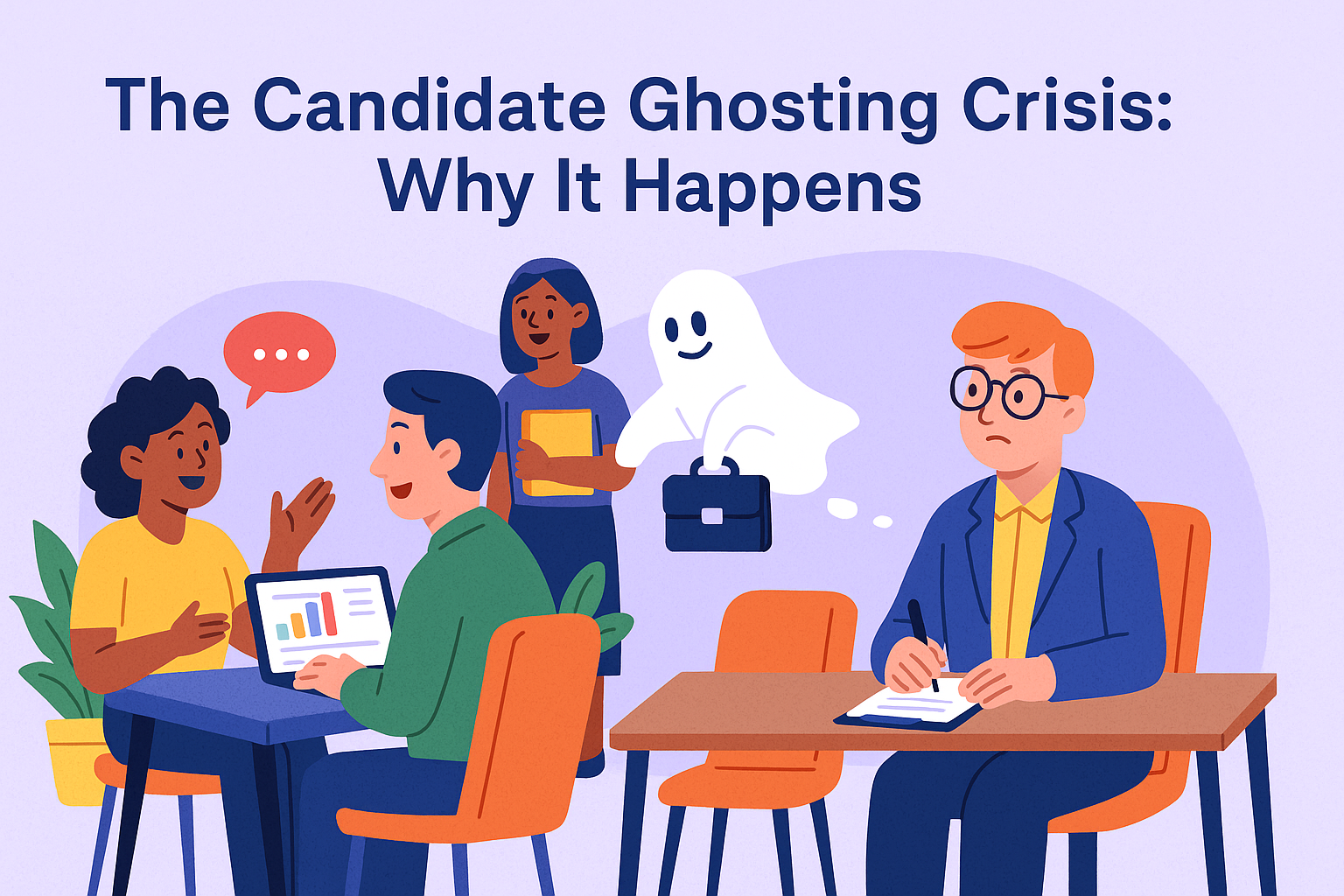
Candidate ghosting when applicants vanish without explanation during the hiring process has become one of HR’s biggest frustrations. From not showing up for interviews to ignoring offer letters, ghosting is now common. But before blaming candidates entirely, it’s important to ask: why is this happening in the first place?
One major factor is poor communication. When job descriptions are vague, response times are slow, or recruiters fail to follow up, candidates lose interest. The rise of remote work has also increased opportunities, and job seekers often juggle multiple offers. If the hiring process feels drawn out or impersonal, ghosting becomes the easiest option for candidates to move forward elsewhere.
There’s also a shift in power dynamics. In talent-short markets, especially for skilled roles, candidates feel empowered to choose employers that respect their time. Ghosting is often a signal that the hiring process didn’t make them feel valued or engaged. Just like companies avoid candidates who don’t show commitment, candidates avoid employers who don’t deliver a good experience.
For HR, solving ghosting means improving the candidate experience. Clear communication, timely updates, transparent job expectations, and showing respect throughout the process reduce the temptation to ghost. The solution isn’t just chasing candidates it’s creating a process they don’t want to walk away from.