


In today’s hustle-driven culture, long hours are often mistaken for productivity. But neuroscience tells us the opposite: the brain isn’t built for endless focus. Instead, short micro breaks throughout the day play a critical role in sustaining energy, creativity, and performance. Far from being wasted time, these moments of rest actually fuel macro-level productivity.
When we focus intensely for long stretches, mental fatigue sets in. Attention declines, errors increase, and stress hormones rise. Micro breaks like a 5-minute walk, a stretch, or even closing your eyes for a moment allow the brain to reset. Research shows these small pauses restore cognitive resources, improve problem solving, and reduce decision fatigue. In other words, they protect employees from burnout while boosting long-term performance.
For HR and leaders, encouraging micro-breaks is about culture, not just policy. Too often, employees feel guilty stepping away from their desks, equating breaks with slacking off. But when leaders model the behavior taking short pauses, encouraging movement, or even scheduling “break rituals” into the day it normalizes rest as a performance strategy.
The future of productivity isn’t about squeezing more hours from employees it’s about making every hour count. By embracing the science of breaks, HR can create workplaces where micro-rest leads to macro-performance, ensuring employees are not just working harder but working smarter.
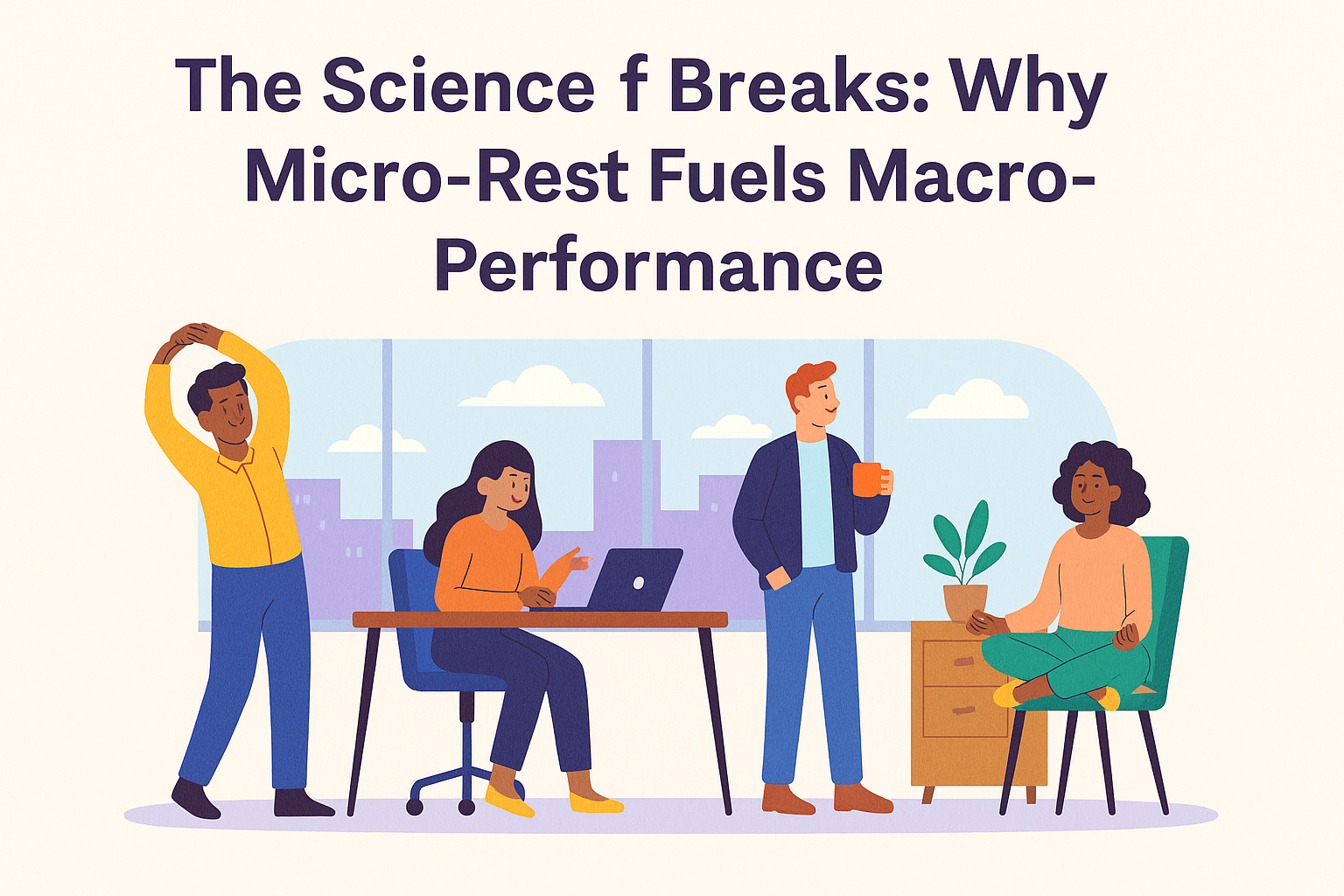
In today’s hustle-driven culture, long hours are often mistaken for productivity. But neuroscience tells us the opposite: the brain isn’t built for endless focus. Instead, short micro breaks throughout the day play a critical role in sustaining energy, creativity, and performance. Far from being wasted time, these moments of rest actually fuel macro-level productivity.
When we focus intensely for long stretches, mental fatigue sets in. Attention declines, errors increase, and stress hormones rise. Micro breaks like a 5-minute walk, a stretch, or even closing your eyes for a moment allow the brain to reset. Research shows these small pauses restore cognitive resources, improve problem solving, and reduce decision fatigue. In other words, they protect employees from burnout while boosting long-term performance.
For HR and leaders, encouraging micro-breaks is about culture, not just policy. Too often, employees feel guilty stepping away from their desks, equating breaks with slacking off. But when leaders model the behavior taking short pauses, encouraging movement, or even scheduling “break rituals” into the day it normalizes rest as a performance strategy.
The future of productivity isn’t about squeezing more hours from employees it’s about making every hour count. By embracing the science of breaks, HR can create workplaces where micro-rest leads to macro-performance, ensuring employees are not just working harder but working smarter.