


Leadership has traditionally been measured by results: hitting targets, driving efficiency, and achieving growth. But in today’s workplaces, employees expect more than direction they want understanding. Unfortunately, many organizations face an empathy deficit in leadership, where managers and executives struggle to connect with their people on a human level.
Empathy is more than a soft skill; it’s a strategic advantage. Leaders who listen, acknowledge emotions, and support employees through challenges build stronger trust and loyalty. Teams led by empathetic leaders are more engaged, innovative, and resilient. Yet, too many leaders still default to command-and-control approaches, dismissing concerns or overlooking well being in the name of productivity.
The cost of this empathy gap is high. Employees who don’t feel heard are more likely to disengage, underperform, or leave altogether. Toxic cultures often take root when leaders lack emotional awareness, leading to higher turnover and lower morale. In contrast, empathetic leadership creates safe spaces for honest dialogue, fosters inclusion, and drives long-term retention.
For HR, closing the empathy gap means more than just offering training it requires embedding empathy into leadership development, performance evaluations, and company values. When empathy becomes a non-negotiable part of leadership, organizations move from managing people to truly leading humans and that makes all the difference.
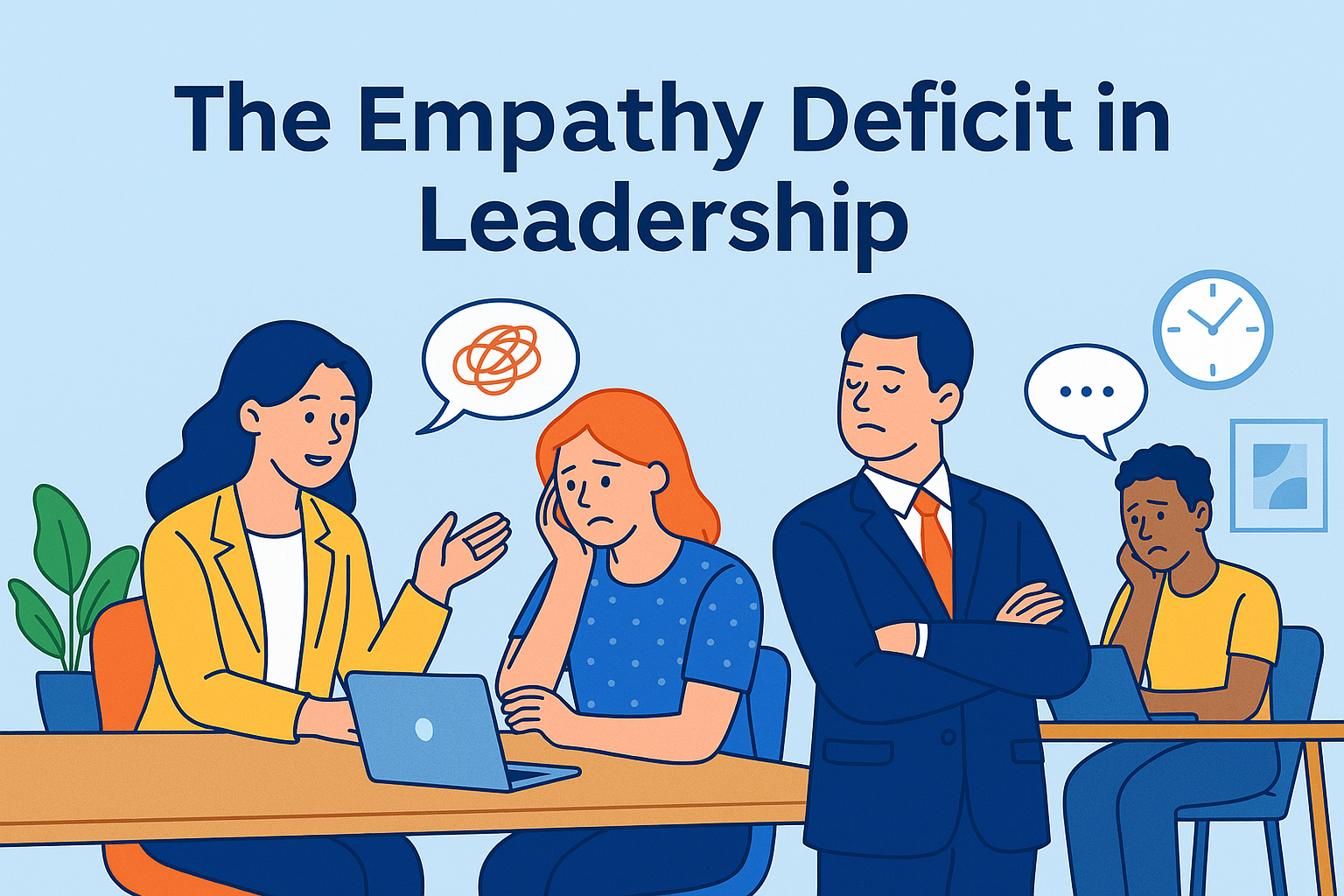
Leadership has traditionally been measured by results: hitting targets, driving efficiency, and achieving growth. But in today’s workplaces, employees expect more than direction they want understanding. Unfortunately, many organizations face an empathy deficit in leadership, where managers and executives struggle to connect with their people on a human level.
Empathy is more than a soft skill; it’s a strategic advantage. Leaders who listen, acknowledge emotions, and support employees through challenges build stronger trust and loyalty. Teams led by empathetic leaders are more engaged, innovative, and resilient. Yet, too many leaders still default to command-and-control approaches, dismissing concerns or overlooking well being in the name of productivity.
The cost of this empathy gap is high. Employees who don’t feel heard are more likely to disengage, underperform, or leave altogether. Toxic cultures often take root when leaders lack emotional awareness, leading to higher turnover and lower morale. In contrast, empathetic leadership creates safe spaces for honest dialogue, fosters inclusion, and drives long-term retention.
For HR, closing the empathy gap means more than just offering training it requires embedding empathy into leadership development, performance evaluations, and company values. When empathy becomes a non-negotiable part of leadership, organizations move from managing people to truly leading humans and that makes all the difference.