


Hybrid work was meant to be the perfect solution a balance between the focus of working from home and the collaboration of the office. Yet, many employees are finding that flexibility doesn’t always equal freedom. Instead, it often creates new pressures, leading to a growing challenge: hybrid burnout.
The problem lies in blurred boundaries. Employees working from home feel the need to be “always on,” while office days often get overloaded with meetings, catch-ups, and collaboration sprints. Instead of balance, hybrid schedules can lead to longer working hours, disrupted routines, and the stress of constantly switching between two modes of work. For some, the flexibility ends up being more draining than traditional models.
HR leaders must recognize that hybrid work is not a one-size-fits-all solution. To prevent burnout, organizations need clear guidelines around availability, meeting loads, and performance expectations. Encouraging managers to focus on outcomes rather than hours, creating “no-meeting” zones, and supporting mental health initiatives are key steps in making hybrid work sustainable.
Flexibility should empower, not exhaust. When designed with employee well-being in mind, hybrid work can still be the best of both worlds. But without intentional planning, it risks becoming the worst of both where employees feel stretched thin, disconnected, and drained. The challenge for HR is to ensure hybrid models truly deliver on their promise of balance.
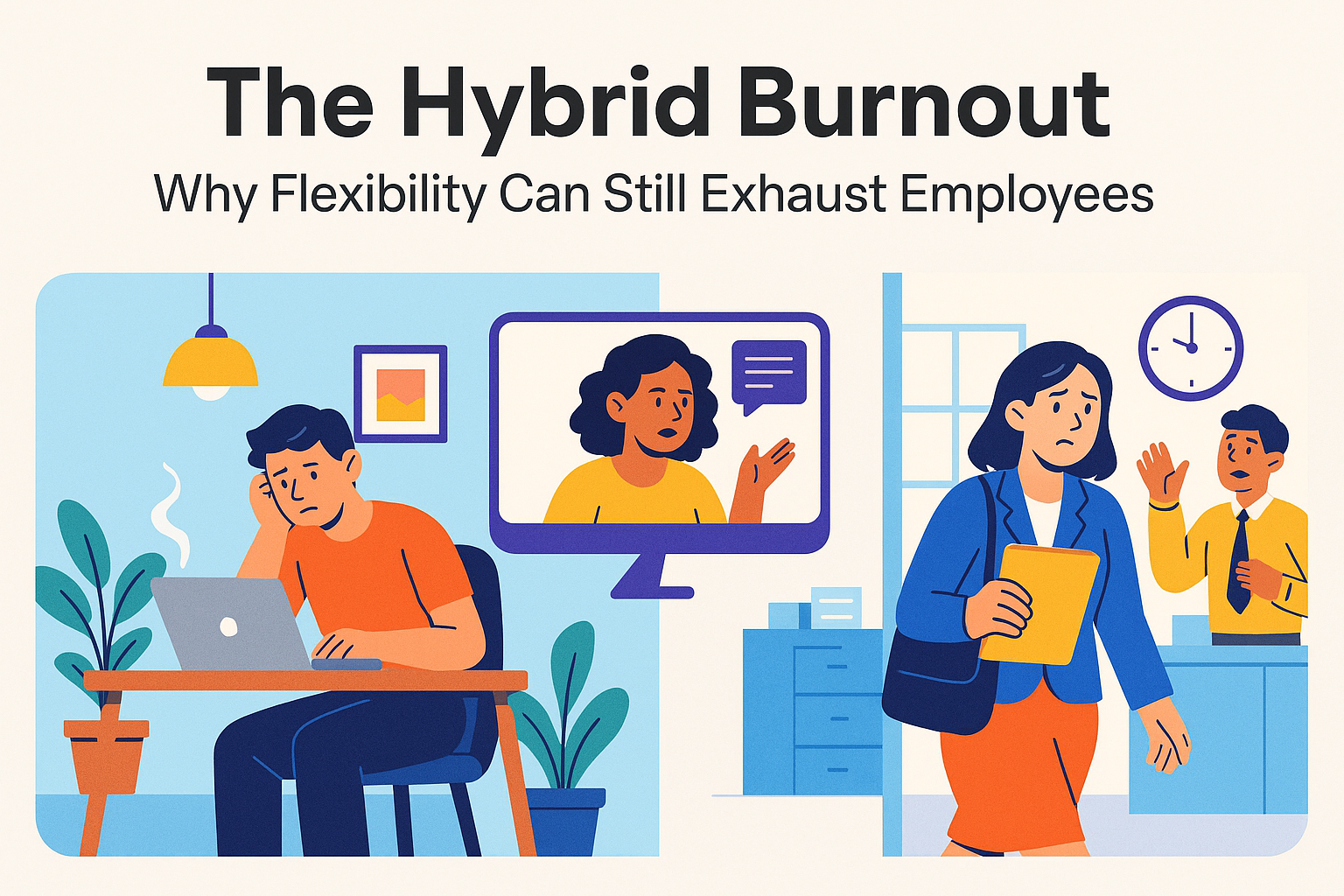
Hybrid work was meant to be the perfect solution a balance between the focus of working from home and the collaboration of the office. Yet, many employees are finding that flexibility doesn’t always equal freedom. Instead, it often creates new pressures, leading to a growing challenge: hybrid burnout.
The problem lies in blurred boundaries. Employees working from home feel the need to be “always on,” while office days often get overloaded with meetings, catch-ups, and collaboration sprints. Instead of balance, hybrid schedules can lead to longer working hours, disrupted routines, and the stress of constantly switching between two modes of work. For some, the flexibility ends up being more draining than traditional models.
HR leaders must recognize that hybrid work is not a one-size-fits-all solution. To prevent burnout, organizations need clear guidelines around availability, meeting loads, and performance expectations. Encouraging managers to focus on outcomes rather than hours, creating “no-meeting” zones, and supporting mental health initiatives are key steps in making hybrid work sustainable.
Flexibility should empower, not exhaust. When designed with employee well-being in mind, hybrid work can still be the best of both worlds. But without intentional planning, it risks becoming the worst of both where employees feel stretched thin, disconnected, and drained. The challenge for HR is to ensure hybrid models truly deliver on their promise of balance.