


The traditional model of work has long been top-down managers assign roles, set responsibilities, and employees follow. But as the modern workforce evolves, a new idea is gaining traction: workplace personalization, where employees play an active role in shaping their jobs. The question is, how far should organizations go in allowing employees to design their own roles?
Personalization taps into the human need for autonomy and meaning. When employees have a say in their responsibilities, schedules, and even workspaces, they feel more invested in their roles. This flexibility can increase engagement, improve performance, and reduce turnover. For example, letting an employee allocate part of their time to passion projects or skill development fosters creativity and innovation.
However, personalization comes with challenges. If roles become too fluid, organizations risk losing structure, accountability, or fairness. Not every task is negotiable, and too much customization can create tension among team members. HR must strike a balance empowering employees to personalize aspects of their work while ensuring organizational goals remain aligned and team cohesion isn’t disrupted.
The future of work may not be about rigid job descriptions, but about dynamic roles shaped collaboratively between employees and employers. By giving people a voice in how they work, HR can unlock greater motivation and loyalty transforming jobs into journeys that fit both personal aspirations and business needs.
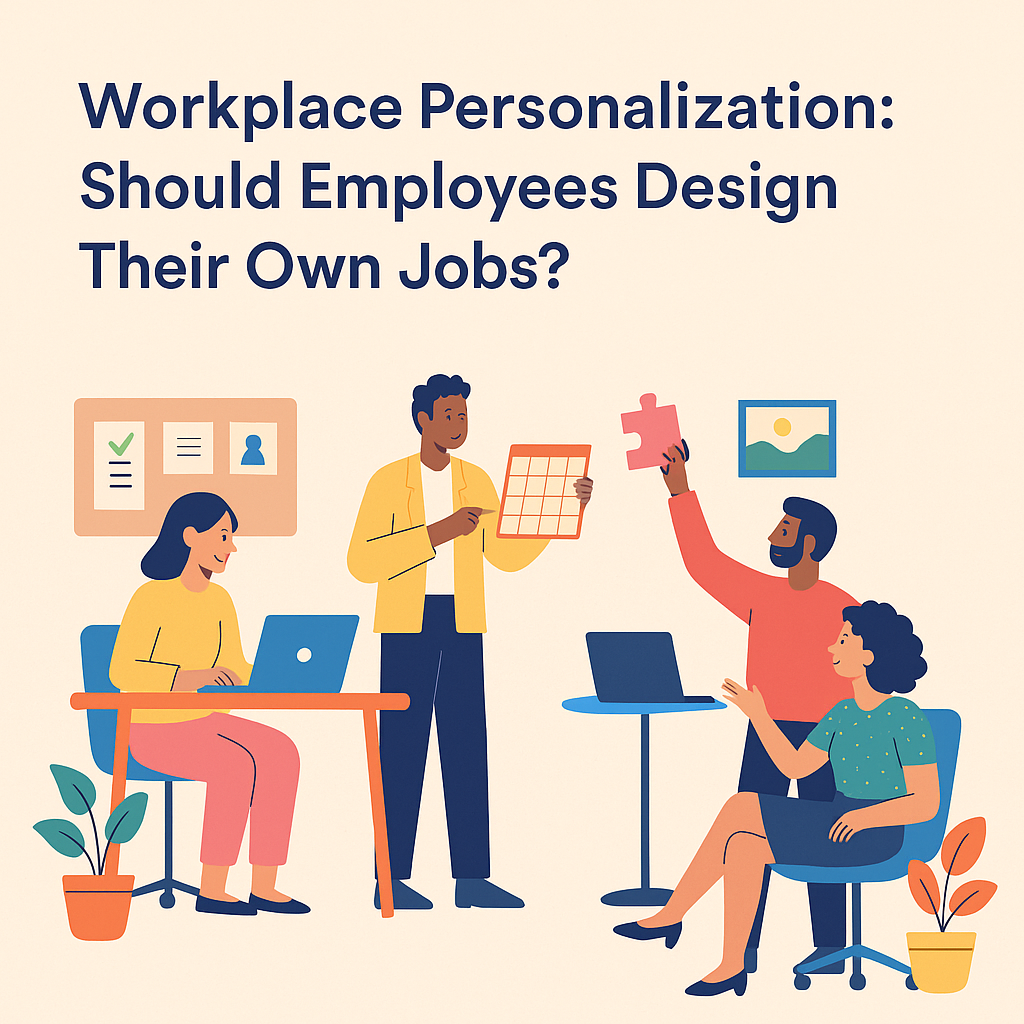
The traditional model of work has long been top-down managers assign roles, set responsibilities, and employees follow. But as the modern workforce evolves, a new idea is gaining traction: workplace personalization, where employees play an active role in shaping their jobs. The question is, how far should organizations go in allowing employees to design their own roles?
Personalization taps into the human need for autonomy and meaning. When employees have a say in their responsibilities, schedules, and even workspaces, they feel more invested in their roles. This flexibility can increase engagement, improve performance, and reduce turnover. For example, letting an employee allocate part of their time to passion projects or skill development fosters creativity and innovation.
However, personalization comes with challenges. If roles become too fluid, organizations risk losing structure, accountability, or fairness. Not every task is negotiable, and too much customization can create tension among team members. HR must strike a balance empowering employees to personalize aspects of their work while ensuring organizational goals remain aligned and team cohesion isn’t disrupted.
The future of work may not be about rigid job descriptions, but about dynamic roles shaped collaboratively between employees and employers. By giving people a voice in how they work, HR can unlock greater motivation and loyalty transforming jobs into journeys that fit both personal aspirations and business needs.