


The traditional office was once defined by rows of identical desks, cubicles, and fixed seating charts. But today, workspaces are evolving into destination offices environments designed to attract employees not because they have to be there, but because they want to be. This shift reflects how companies are reimagining work as more than a place for tasks it’s now about collaboration, culture, and experience.
Destination offices blend functionality with inspiration. Instead of one-size-fits-all desks, they feature flexible work zones: quiet areas for deep focus, open spaces for collaboration, lounges for informal conversations, and wellness zones for recharging. Technology is seamlessly integrated, making hybrid meetings and global teamwork effortless. Offices are no longer just about where work gets done, but how it feels to be part of a community.
For HR, the move toward destination offices is about employee engagement and retention. In an era of remote and hybrid work, employees expect more than just a chair and a desk if they’re commuting in. They want spaces that foster creativity, support mental well-being, and reflect company values. This means HR must work closely with facilities and leadership to design spaces that balance productivity with comfort.
The evolution of workspaces shows that the office of the future isn’t about square footage it’s about purpose. When designed thoughtfully, destination offices can become cultural hubs that attract talent, strengthen collaboration, and remind employees why being together still matters.
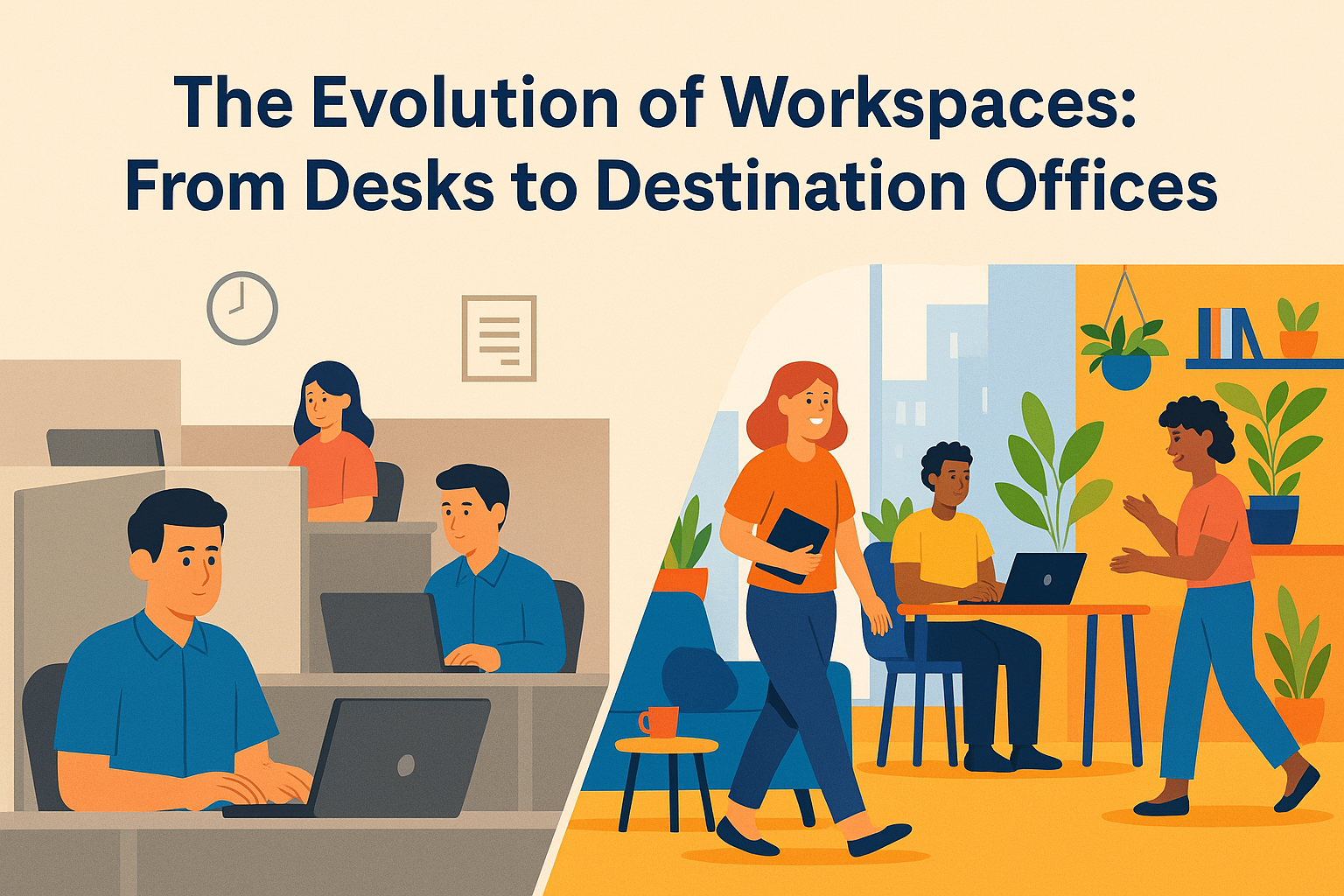
The traditional office was once defined by rows of identical desks, cubicles, and fixed seating charts. But today, workspaces are evolving into destination offices environments designed to attract employees not because they have to be there, but because they want to be. This shift reflects how companies are reimagining work as more than a place for tasks it’s now about collaboration, culture, and experience.
Destination offices blend functionality with inspiration. Instead of one-size-fits-all desks, they feature flexible work zones: quiet areas for deep focus, open spaces for collaboration, lounges for informal conversations, and wellness zones for recharging. Technology is seamlessly integrated, making hybrid meetings and global teamwork effortless. Offices are no longer just about where work gets done, but how it feels to be part of a community.
For HR, the move toward destination offices is about employee engagement and retention. In an era of remote and hybrid work, employees expect more than just a chair and a desk if they’re commuting in. They want spaces that foster creativity, support mental well-being, and reflect company values. This means HR must work closely with facilities and leadership to design spaces that balance productivity with comfort.
The evolution of workspaces shows that the office of the future isn’t about square footage it’s about purpose. When designed thoughtfully, destination offices can become cultural hubs that attract talent, strengthen collaboration, and remind employees why being together still matters.