


In many organizations, the loudest voice in the room often dominates discussions, while others remain quiet. But silence in the workplace isn’t always a sign of agreement it can be a sign of fear. When employees feel unsafe sharing their opinions, concerns, or feedback, it creates a culture of workplace silence. This silence comes at a cost: innovation stalls, problems go unaddressed, and trust in leadership erodes.
Employees may choose silence for several reasons: fear of retaliation, concern about being judged, or a belief that their voice won’t lead to change. Over time, this creates a disengaged workforce where people “go along to get along,” even when they see opportunities for improvement. The result is lost ideas, hidden frustrations, and a widening gap between leadership and staff.
For HR, breaking workplace silence means creating psychological safety an environment where speaking up is encouraged, respected, and acted upon. This includes training managers to listen with empathy, implementing anonymous feedback systems, and demonstrating that input leads to action. Recognition of contributions, no matter how small, can also empower employees to share more openly.
Silence is not golden in the workplace it’s a warning. Organizations that foster openness and encourage dialogue gain more than just ideas; they build stronger trust, deeper engagement, and a culture where everyone feels their voice matters.
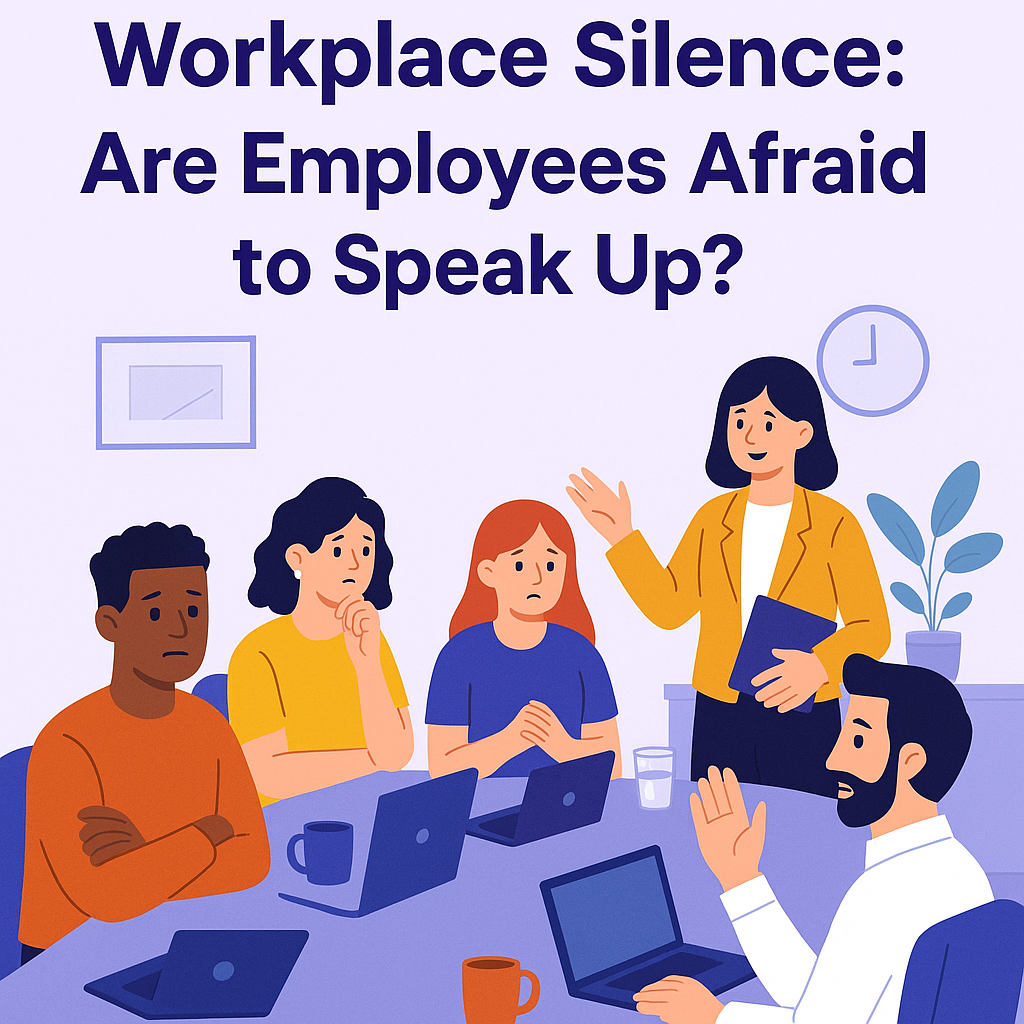
In many organizations, the loudest voice in the room often dominates discussions, while others remain quiet. But silence in the workplace isn’t always a sign of agreement it can be a sign of fear. When employees feel unsafe sharing their opinions, concerns, or feedback, it creates a culture of workplace silence. This silence comes at a cost: innovation stalls, problems go unaddressed, and trust in leadership erodes.
Employees may choose silence for several reasons: fear of retaliation, concern about being judged, or a belief that their voice won’t lead to change. Over time, this creates a disengaged workforce where people “go along to get along,” even when they see opportunities for improvement. The result is lost ideas, hidden frustrations, and a widening gap between leadership and staff.
For HR, breaking workplace silence means creating psychological safety an environment where speaking up is encouraged, respected, and acted upon. This includes training managers to listen with empathy, implementing anonymous feedback systems, and demonstrating that input leads to action. Recognition of contributions, no matter how small, can also empower employees to share more openly.
Silence is not golden in the workplace it’s a warning. Organizations that foster openness and encourage dialogue gain more than just ideas; they build stronger trust, deeper engagement, and a culture where everyone feels their voice matters.