


Inclusion is one of the most important priorities for modern workplaces. But in recent years, many companies have learned that simply rolling out diversity and inclusion programs isn’t enough. Employees may experience belonging fatigue when well-intentioned initiatives feel repetitive, performative, or disconnected from real workplace experiences. Instead of fostering true connection, these efforts sometimes create exhaustion, cynicism, or even division.
Belonging fatigue often arises when inclusion programs focus more on appearances than impact. Mandatory workshops, token celebrations, or one off campaigns may raise awareness temporarily, but without real follow-through, employees stop seeing them as meaningful. When employees feel initiatives are more about checking boxes than improving culture, engagement drops and skepticism grows.
The solution isn’t to abandon inclusion it’s to reimagine it. HR must focus on embedding belonging into everyday culture rather than treating it as a separate agenda item. This means creating spaces where employees feel safe to share ideas, leaders modeling inclusive behavior, and organizations measuring belonging through authentic feedback, not just attendance at training sessions.
True inclusion doesn’t fatigue people it energizes them. By aligning programs with real employee needs, listening to underrepresented voices, and making belonging part of daily practice, HR can ensure inclusion initiatives create connection instead of burnout.
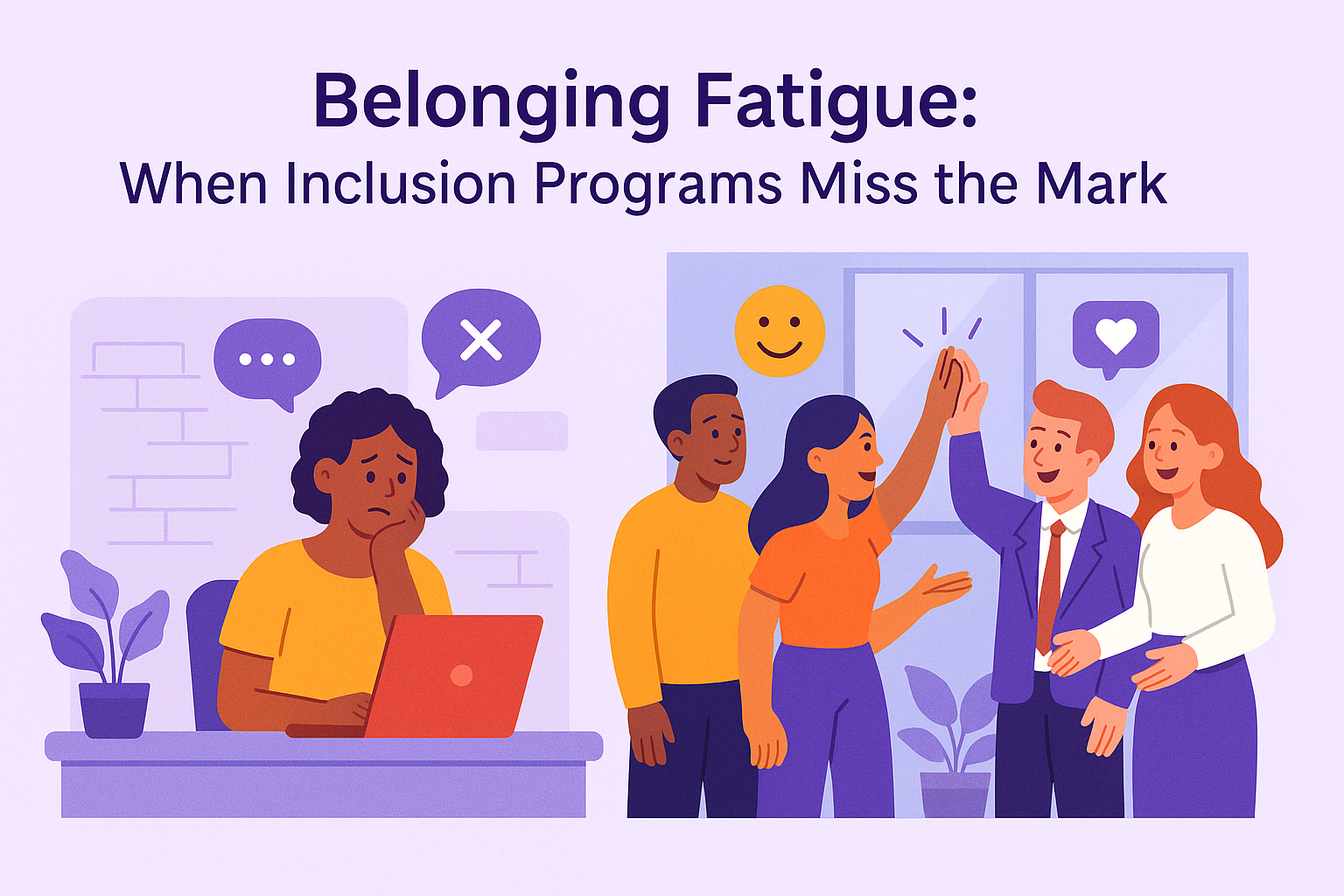
Inclusion is one of the most important priorities for modern workplaces. But in recent years, many companies have learned that simply rolling out diversity and inclusion programs isn’t enough. Employees may experience belonging fatigue when well-intentioned initiatives feel repetitive, performative, or disconnected from real workplace experiences. Instead of fostering true connection, these efforts sometimes create exhaustion, cynicism, or even division.
Belonging fatigue often arises when inclusion programs focus more on appearances than impact. Mandatory workshops, token celebrations, or one off campaigns may raise awareness temporarily, but without real follow-through, employees stop seeing them as meaningful. When employees feel initiatives are more about checking boxes than improving culture, engagement drops and skepticism grows.
The solution isn’t to abandon inclusion it’s to reimagine it. HR must focus on embedding belonging into everyday culture rather than treating it as a separate agenda item. This means creating spaces where employees feel safe to share ideas, leaders modeling inclusive behavior, and organizations measuring belonging through authentic feedback, not just attendance at training sessions.
True inclusion doesn’t fatigue people it energizes them. By aligning programs with real employee needs, listening to underrepresented voices, and making belonging part of daily practice, HR can ensure inclusion initiatives create connection instead of burnout.