


The pandemic forced businesses to rethink how and where work gets done. As organizations emerged from lockdowns, many faced a critical choice: remain remote first, return to an office first model, or embrace a hybrid approach. For HR leaders, this is not just a logistical decision but one that deeply impacts culture, performance, and talent attraction.
A remote first strategy gives employees flexibility and access to wider talent pools. It fosters inclusivity by breaking geographical barriers but comes with challenges around engagement, collaboration, and building culture digitally. Meanwhile, an office first model helps preserve face to face connections, serendipitous learning, and stronger team bonding, but risks alienating employees who now value flexibility as much as compensation.
The real question for HR isn’t just choosing one side it’s about drawing a balance. Employees want both freedom and belonging, independence and connection. HR’s role is to redesign policies, reimagine spaces, and create engagement strategies that combine the best of both worlds. Whether that means flexible office schedules, virtual team-building, or redesigned office spaces, the future lies in customizing work models around people, not forcing people into rigid models.
Ultimately, the winning formula is the one where employees feel trusted, empowered, and included no matter where they log in from.
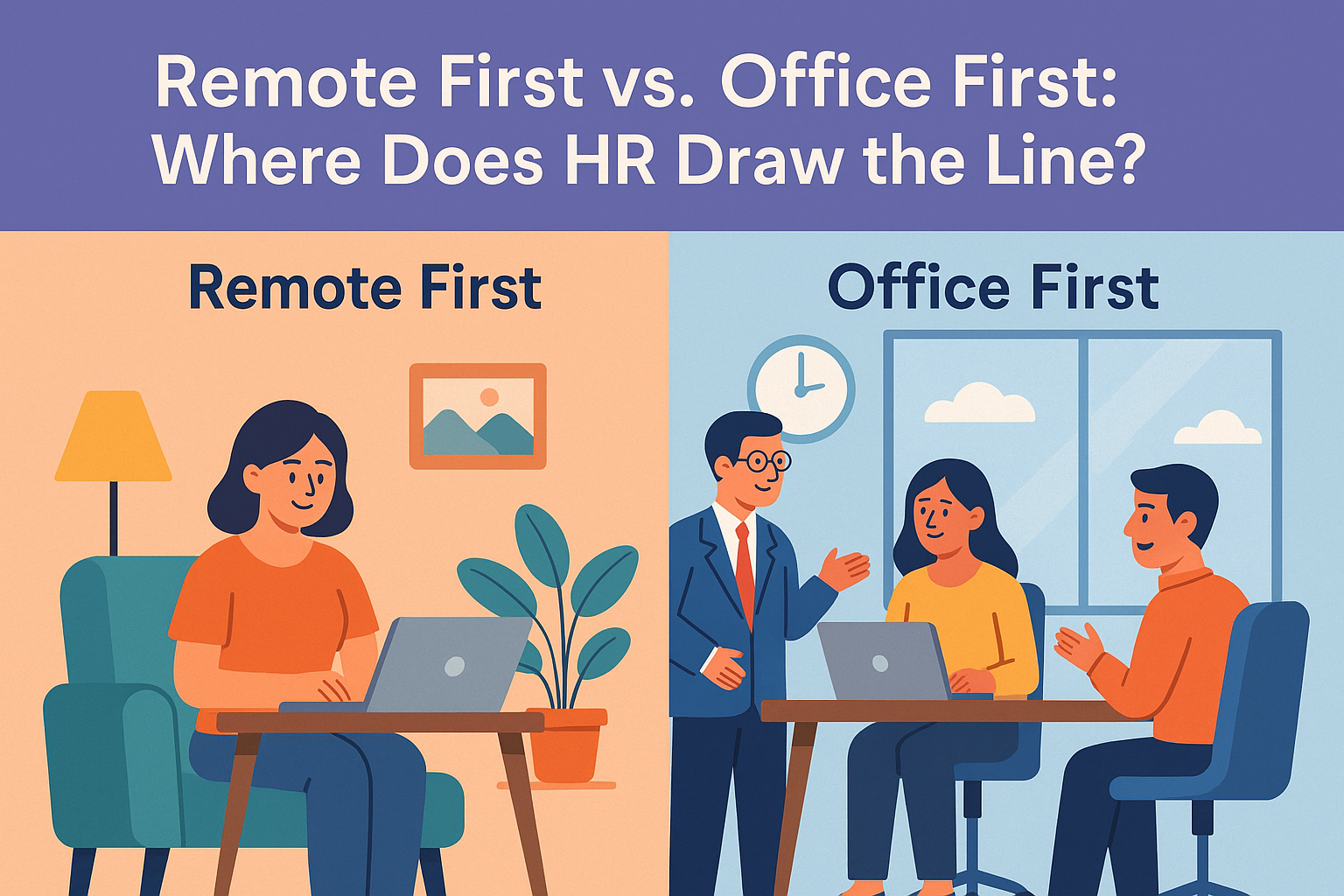
The pandemic forced businesses to rethink how and where work gets done. As organizations emerged from lockdowns, many faced a critical choice: remain remote first, return to an office first model, or embrace a hybrid approach. For HR leaders, this is not just a logistical decision but one that deeply impacts culture, performance, and talent attraction.
A remote first strategy gives employees flexibility and access to wider talent pools. It fosters inclusivity by breaking geographical barriers but comes with challenges around engagement, collaboration, and building culture digitally. Meanwhile, an office first model helps preserve face to face connections, serendipitous learning, and stronger team bonding, but risks alienating employees who now value flexibility as much as compensation.
The real question for HR isn’t just choosing one side it’s about drawing a balance. Employees want both freedom and belonging, independence and connection. HR’s role is to redesign policies, reimagine spaces, and create engagement strategies that combine the best of both worlds. Whether that means flexible office schedules, virtual team-building, or redesigned office spaces, the future lies in customizing work models around people, not forcing people into rigid models.
Ultimately, the winning formula is the one where employees feel trusted, empowered, and included no matter where they log in from.