


The pandemic transformed how we view office spaces. For many employees, the office is no longer just a place to work it’s a place to connect, collaborate, and feel part of a community. As organizations shift toward hybrid models, HR has a critical role in shaping workspaces that are not only functional but also emotionally engaging.
Post-pandemic office design is about flexibility and well-being. Open layouts are now balanced with quiet zones for focused work. Breakout areas encourage spontaneous collaboration, while wellness rooms, greenery, and natural light improve mental health and productivity. HR’s involvement ensures these design changes align with employee needs rather than just aesthetic trends.
Another important consideration is inclusivity. From ergonomic furniture to accessible meeting spaces, HR must work closely with facilities teams to ensure offices are welcoming for everyone. Additionally, technology integration from seamless video conferencing to smart desk booking ensures hybrid teams can collaborate effortlessly.
When HR actively participates in office design, the workplace becomes a destination employees want to visit, not one they have to. In a world where talent retention is as critical as attraction, creating spaces people love is an investment in culture, productivity, and loyalty.
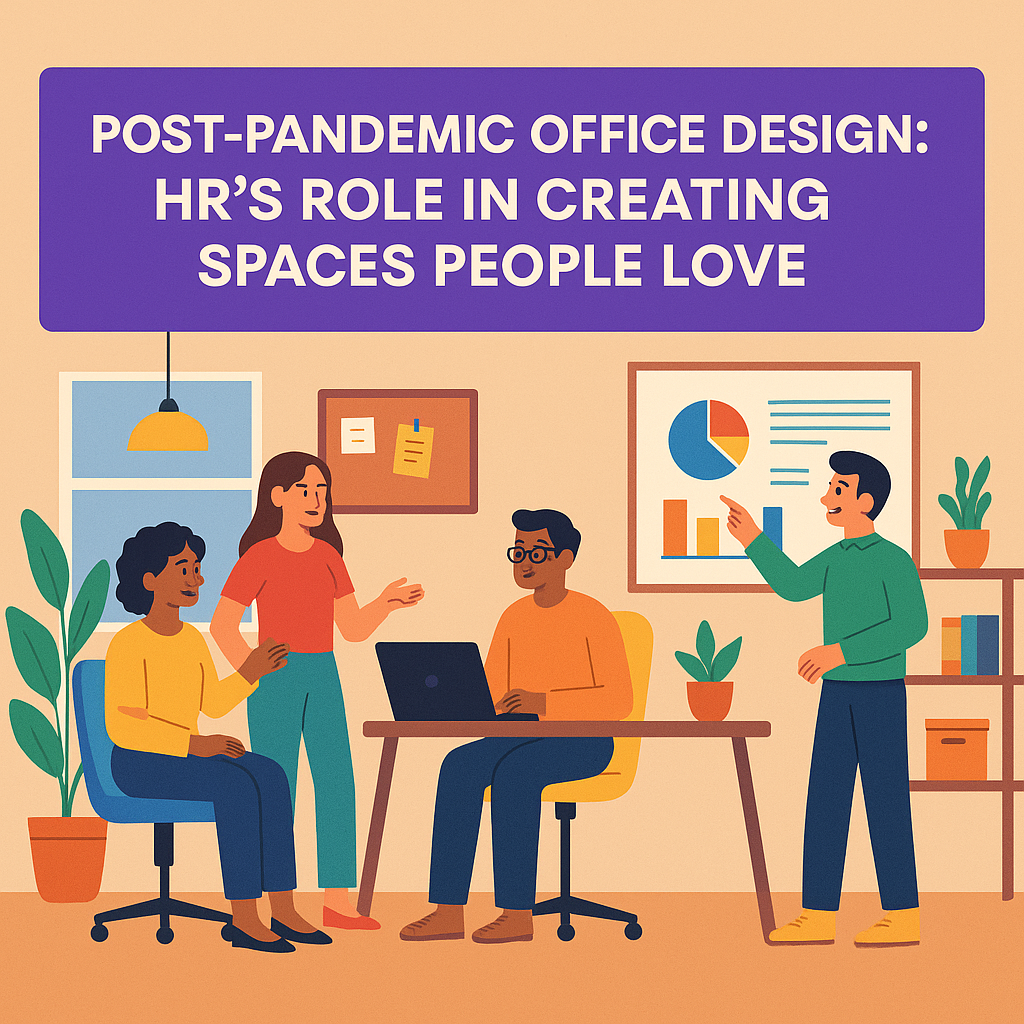
The pandemic transformed how we view office spaces. For many employees, the office is no longer just a place to work it’s a place to connect, collaborate, and feel part of a community. As organizations shift toward hybrid models, HR has a critical role in shaping workspaces that are not only functional but also emotionally engaging.
Post-pandemic office design is about flexibility and well-being. Open layouts are now balanced with quiet zones for focused work. Breakout areas encourage spontaneous collaboration, while wellness rooms, greenery, and natural light improve mental health and productivity. HR’s involvement ensures these design changes align with employee needs rather than just aesthetic trends.
Another important consideration is inclusivity. From ergonomic furniture to accessible meeting spaces, HR must work closely with facilities teams to ensure offices are welcoming for everyone. Additionally, technology integration from seamless video conferencing to smart desk booking ensures hybrid teams can collaborate effortlessly.
When HR actively participates in office design, the workplace becomes a destination employees want to visit, not one they have to. In a world where talent retention is as critical as attraction, creating spaces people love is an investment in culture, productivity, and loyalty.