


Not every resignation comes with a goodbye email. Some happen quietly, long before an employee actually leaves. This is the silent resignation when employees mentally and emotionally check out, yet remain in their jobs. They fulfill the basics of their role but no longer bring energy, creativity, or commitment to their work.
Silent resignation is often the result of unmet expectations, lack of recognition, limited growth opportunities, or burnout. The danger is that it’s harder to detect than an outright resignation. While performance may not immediately plummet, morale, innovation, and team collaboration suffer. Over time, it spreads disengagement is contagious.
For HR and leaders, the key to addressing silent resignation is proactive engagement. Regular check-ins, clear career paths, and genuine recognition can reignite an employee’s connection to their role. It’s also about creating a psychologically safe environment where employees feel heard, valued, and supported before disengagement sets in.
The cost of silent resignation isn’t just in productivity it’s in lost potential. By paying attention to early warning signs and investing in ongoing engagement strategies, companies can turn silent quitters into passionate contributors once again.
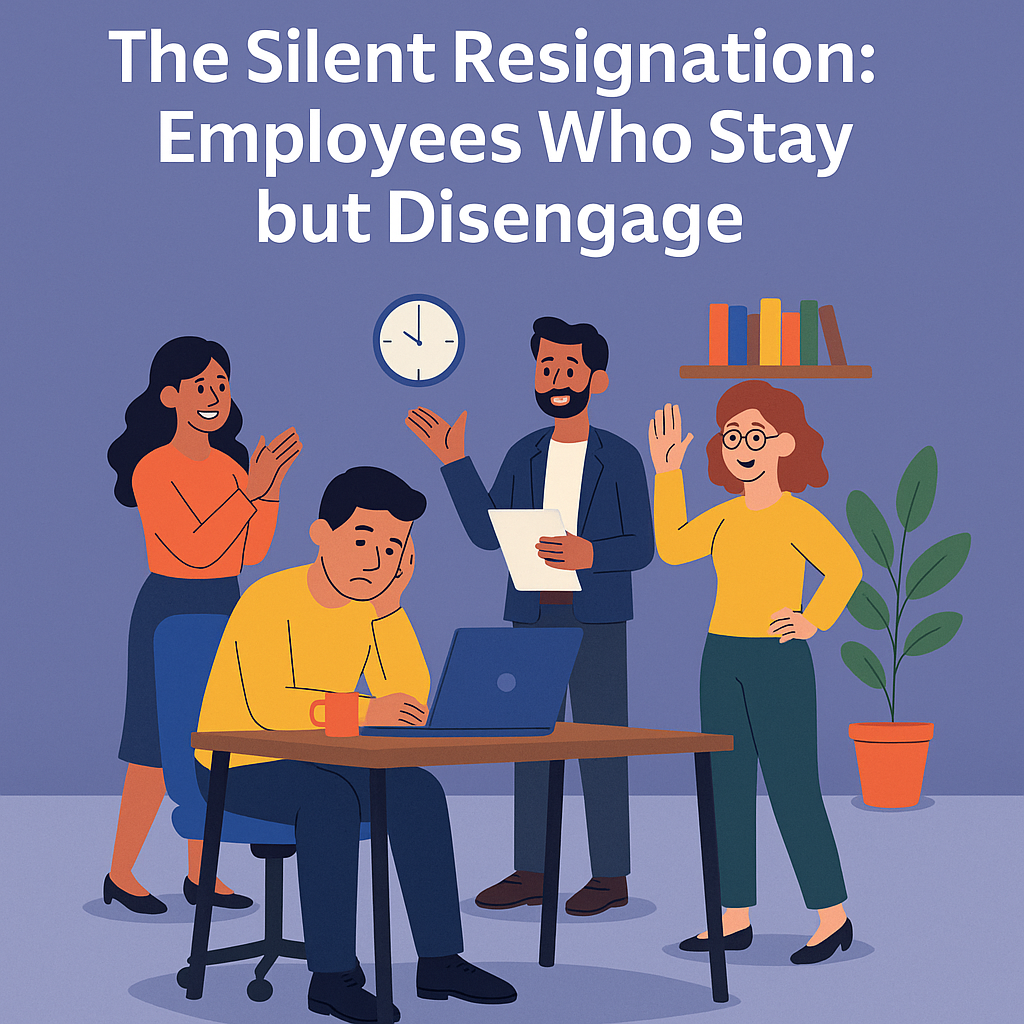
Not every resignation comes with a goodbye email. Some happen quietly, long before an employee actually leaves. This is the silent resignation when employees mentally and emotionally check out, yet remain in their jobs. They fulfill the basics of their role but no longer bring energy, creativity, or commitment to their work.
Silent resignation is often the result of unmet expectations, lack of recognition, limited growth opportunities, or burnout. The danger is that it’s harder to detect than an outright resignation. While performance may not immediately plummet, morale, innovation, and team collaboration suffer. Over time, it spreads disengagement is contagious.
For HR and leaders, the key to addressing silent resignation is proactive engagement. Regular check-ins, clear career paths, and genuine recognition can reignite an employee’s connection to their role. It’s also about creating a psychologically safe environment where employees feel heard, valued, and supported before disengagement sets in.
The cost of silent resignation isn’t just in productivity it’s in lost potential. By paying attention to early warning signs and investing in ongoing engagement strategies, companies can turn silent quitters into passionate contributors once again.