


In the age of remote work, companies are no longer restricted by geography when hiring talent. The “global talent shuffle” has unlocked opportunities to build teams that span continents, cultures, and time zones. While this diversity brings rich perspectives and 24/7 productivity potential, it also introduces one of HR’s biggest modern challenges managing distributed teams effectively without burning them out.
Working across time zones requires more than just flexible hours it demands intentional design. Leaders must set clear communication protocols, align on overlapping work windows, and respect personal boundaries. Tools like asynchronous messaging, project management boards, and recorded video updates can help bridge the gap without forcing employees into odd-hour meetings. The goal is to foster collaboration while honoring work-life balance.
Cultural awareness also plays a big role. Distributed teams often bring varied communication styles, holiday schedules, and decision making approaches. HR can be the bridge here encouraging cross-cultural training, promoting inclusivity, and ensuring everyone feels equally involved, regardless of where they are in the world.
The global talent shuffle isn’t just about filling roles faster it’s about reimagining the workplace. Companies that master time zone management will not only access the best talent anywhere, but also create environments where that talent thrives together, even when miles apart.
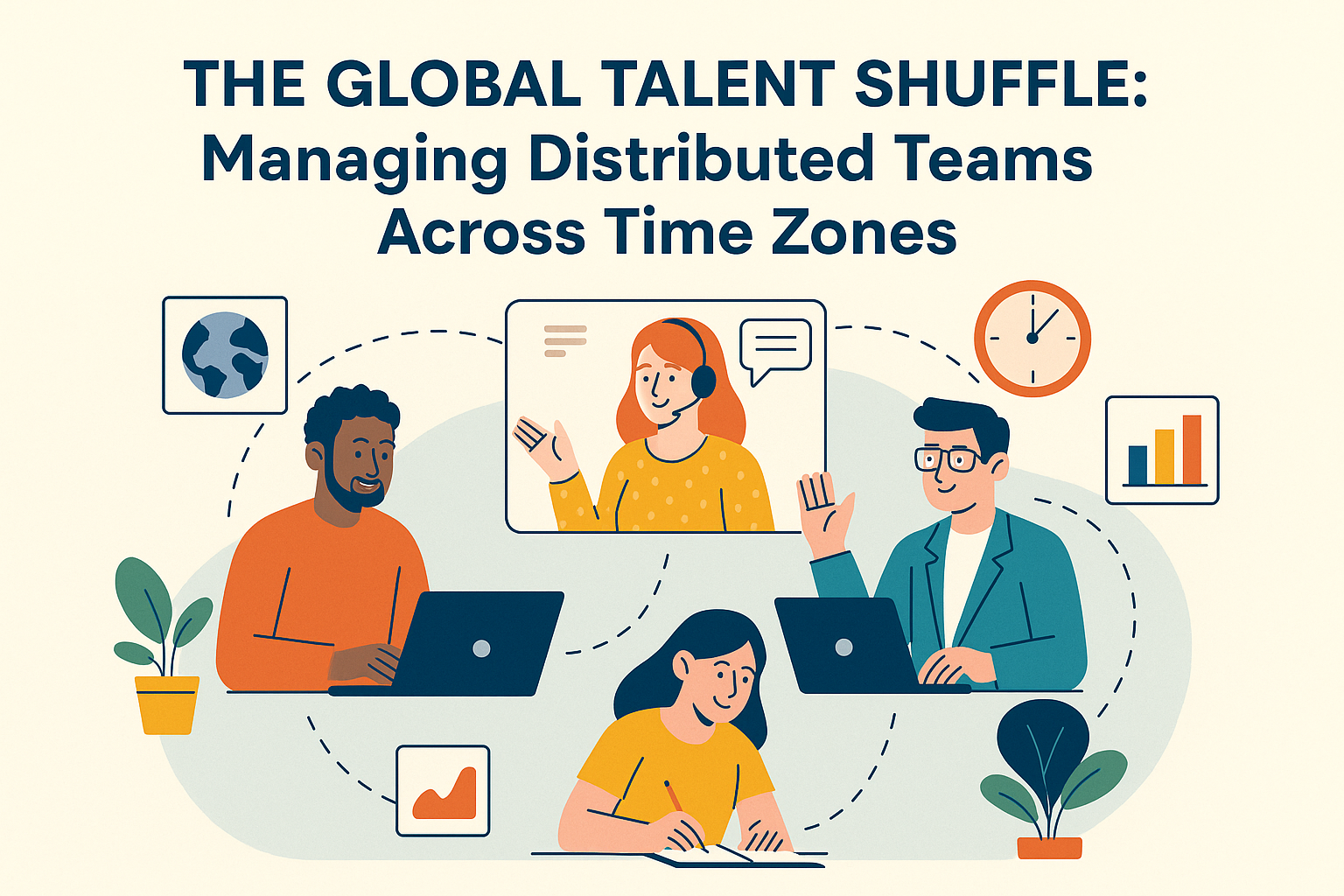
In the age of remote work, companies are no longer restricted by geography when hiring talent. The “global talent shuffle” has unlocked opportunities to build teams that span continents, cultures, and time zones. While this diversity brings rich perspectives and 24/7 productivity potential, it also introduces one of HR’s biggest modern challenges managing distributed teams effectively without burning them out.
Working across time zones requires more than just flexible hours it demands intentional design. Leaders must set clear communication protocols, align on overlapping work windows, and respect personal boundaries. Tools like asynchronous messaging, project management boards, and recorded video updates can help bridge the gap without forcing employees into odd-hour meetings. The goal is to foster collaboration while honoring work-life balance.
Cultural awareness also plays a big role. Distributed teams often bring varied communication styles, holiday schedules, and decision making approaches. HR can be the bridge here encouraging cross-cultural training, promoting inclusivity, and ensuring everyone feels equally involved, regardless of where they are in the world.
The global talent shuffle isn’t just about filling roles faster it’s about reimagining the workplace. Companies that master time zone management will not only access the best talent anywhere, but also create environments where that talent thrives together, even when miles apart.