


In the age of hyper connectivity, the workplace has evolved into a 24/7 environment where emails, pings, and deadlines blur the lines between personal and professional life. While productivity may appear to be on the rise, the long-term costs of an “always-on” culture are becoming too loud to ignore especially for HR leaders tasked with building sustainable work environments. Constant availability may look efficient, but it’s quietly eroding employee wellbeing, mental health, and engagement.
Employees are increasingly reporting burnout, disengagement, and even resentment not because of the work itself, but the never-ending nature of it. When teams feel they can’t disconnect without guilt or fear of being judged, the culture shifts from one of collaboration to silent exhaustion. HR must recognize this as not just a wellness issue, but a retention crisis in the making.
It’s time to normalize boundaries. Setting expectations around communication hours, encouraging digital detoxes, and modeling behavior from the top down can transform how employees feel about work. Tools like “no-meeting” days, after hours email blockers, and flexible scheduling are no longer perks they’re essentials. HR plays a critical role in making these practices a cultural norm rather than a one-time initiative.
Sustainable productivity stems from rest, clarity, and space. By protecting employees’ right to disconnect, HR doesn’t just fight burnout it builds trust, loyalty, and a culture that respects human rhythm over hustle culture. The real win isn’t faster replies it’s healthier, happier, longer lasting teams.
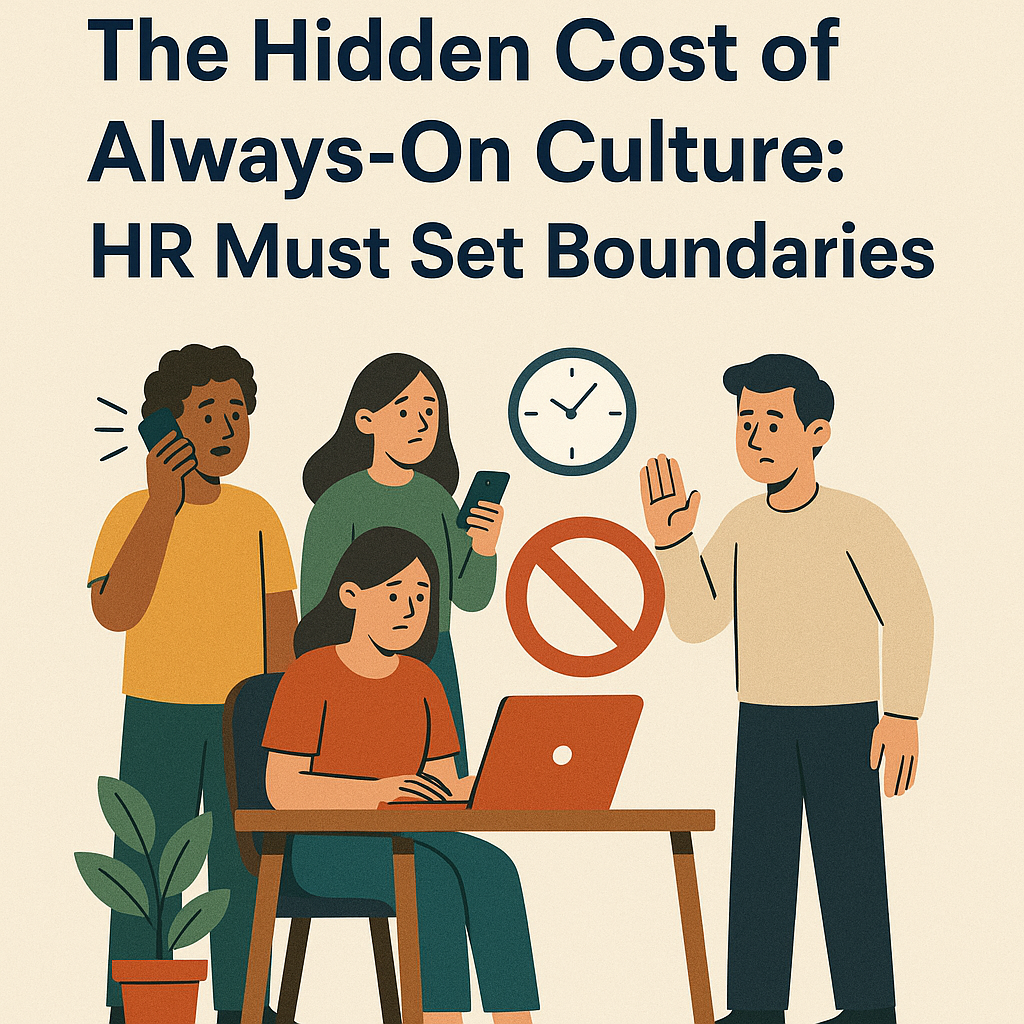
In the age of hyper connectivity, the workplace has evolved into a 24/7 environment where emails, pings, and deadlines blur the lines between personal and professional life. While productivity may appear to be on the rise, the long-term costs of an “always-on” culture are becoming too loud to ignore especially for HR leaders tasked with building sustainable work environments. Constant availability may look efficient, but it’s quietly eroding employee wellbeing, mental health, and engagement.
Employees are increasingly reporting burnout, disengagement, and even resentment not because of the work itself, but the never-ending nature of it. When teams feel they can’t disconnect without guilt or fear of being judged, the culture shifts from one of collaboration to silent exhaustion. HR must recognize this as not just a wellness issue, but a retention crisis in the making.
It’s time to normalize boundaries. Setting expectations around communication hours, encouraging digital detoxes, and modeling behavior from the top down can transform how employees feel about work. Tools like “no-meeting” days, after hours email blockers, and flexible scheduling are no longer perks they’re essentials. HR plays a critical role in making these practices a cultural norm rather than a one-time initiative.
Sustainable productivity stems from rest, clarity, and space. By protecting employees’ right to disconnect, HR doesn’t just fight burnout it builds trust, loyalty, and a culture that respects human rhythm over hustle culture. The real win isn’t faster replies it’s healthier, happier, longer lasting teams.