


In today’s rapidly shifting work culture, the traditional red flags on a resume like employment gaps are slowly becoming outdated indicators of a candidate’s potential. Whether it’s a break taken for caregiving, mental health, upskilling, travel, or simply to reset, resume gaps often signal real-world experience and resilience. Yet, many candidates still feel the need to over-explain, justify, or hide these breaks. It’s time for HR professionals to lead the charge in changing this outdated narrative.
When we penalize gaps, we risk overlooking incredibly valuable candidates who bring renewed perspective, emotional maturity, and hunger for growth. Instead of asking “Why were you not working?” HR must start asking “What did you learn during your time off?” This small shift in language creates an environment of trust and inclusion, allowing candidates to share their story instead of defend it.
With the rise of non-linear careers, project-based gigs, entrepreneurship, and caregiving roles, HR must evolve its lens. Career comebacks should be celebrated, not questioned. Every re-entry is an act of courage, and those who return after a break often bring unmatched energy and fresh thinking. By acknowledging this, companies open themselves to a diverse, experienced, and often more loyal workforce.
It’s not just about fairness it’s a strategic move. The best talent may not always have the most uninterrupted resumes, but they do have stories of growth, survival, and reinvention. And in a world craving empathy and innovation, that’s exactly the kind of story every workplace needs.
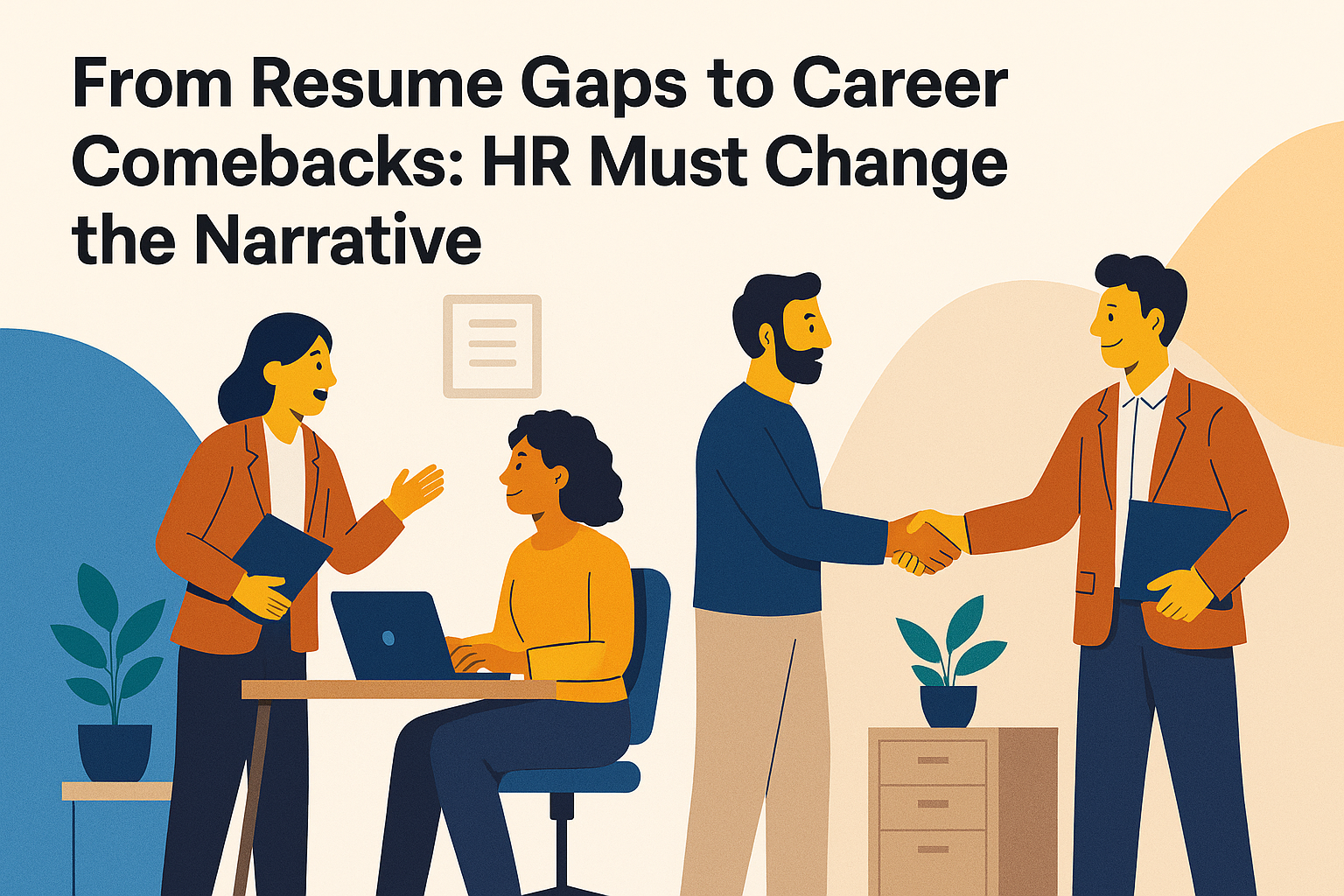
In today’s rapidly shifting work culture, the traditional red flags on a resume like employment gaps are slowly becoming outdated indicators of a candidate’s potential. Whether it’s a break taken for caregiving, mental health, upskilling, travel, or simply to reset, resume gaps often signal real-world experience and resilience. Yet, many candidates still feel the need to over-explain, justify, or hide these breaks. It’s time for HR professionals to lead the charge in changing this outdated narrative.
When we penalize gaps, we risk overlooking incredibly valuable candidates who bring renewed perspective, emotional maturity, and hunger for growth. Instead of asking “Why were you not working?” HR must start asking “What did you learn during your time off?” This small shift in language creates an environment of trust and inclusion, allowing candidates to share their story instead of defend it.
With the rise of non-linear careers, project-based gigs, entrepreneurship, and caregiving roles, HR must evolve its lens. Career comebacks should be celebrated, not questioned. Every re-entry is an act of courage, and those who return after a break often bring unmatched energy and fresh thinking. By acknowledging this, companies open themselves to a diverse, experienced, and often more loyal workforce.
It’s not just about fairness it’s a strategic move. The best talent may not always have the most uninterrupted resumes, but they do have stories of growth, survival, and reinvention. And in a world craving empathy and innovation, that’s exactly the kind of story every workplace needs.