


Performance reviews are meant to motivate, realign, and improve but all too often, they do the opposite. A poorly delivered review can trigger the brain’s fight-or-flight response, shutting down rational thinking and reinforcing fear or shame. Neuroscience tells us that the brain perceives feedback as a social threat, especially when it feels sudden, one-sided, or judgmental. So how can HR make feedback something employees can actually hear and grow from?
It starts with timing and tone. Instead of dumping a year’s worth of critiques in one sitting, frequent micro-feedback helps normalize the process and reduce anxiety. Our brains crave psychological safety, which means employees need to feel they are being evaluated fairly, supported through mistakes, and recognized for progress. Without that trust, feedback becomes noise or worse, trauma.
The brain also thrives on specificity and positivity. When reviews focus only on what’s wrong, it triggers defensive patterns in the prefrontal cortex, limiting our ability to accept or apply the feedback. But when balanced with positive reinforcement, goal-setting, and actionable steps, feedback activates the reward center, increasing motivation and learning.
HR’s role is to turn performance reviews from intimidating events into conversations that empower. By grounding feedback strategies in brain science, companies can build a culture where growth feels safe and performance actually improves.
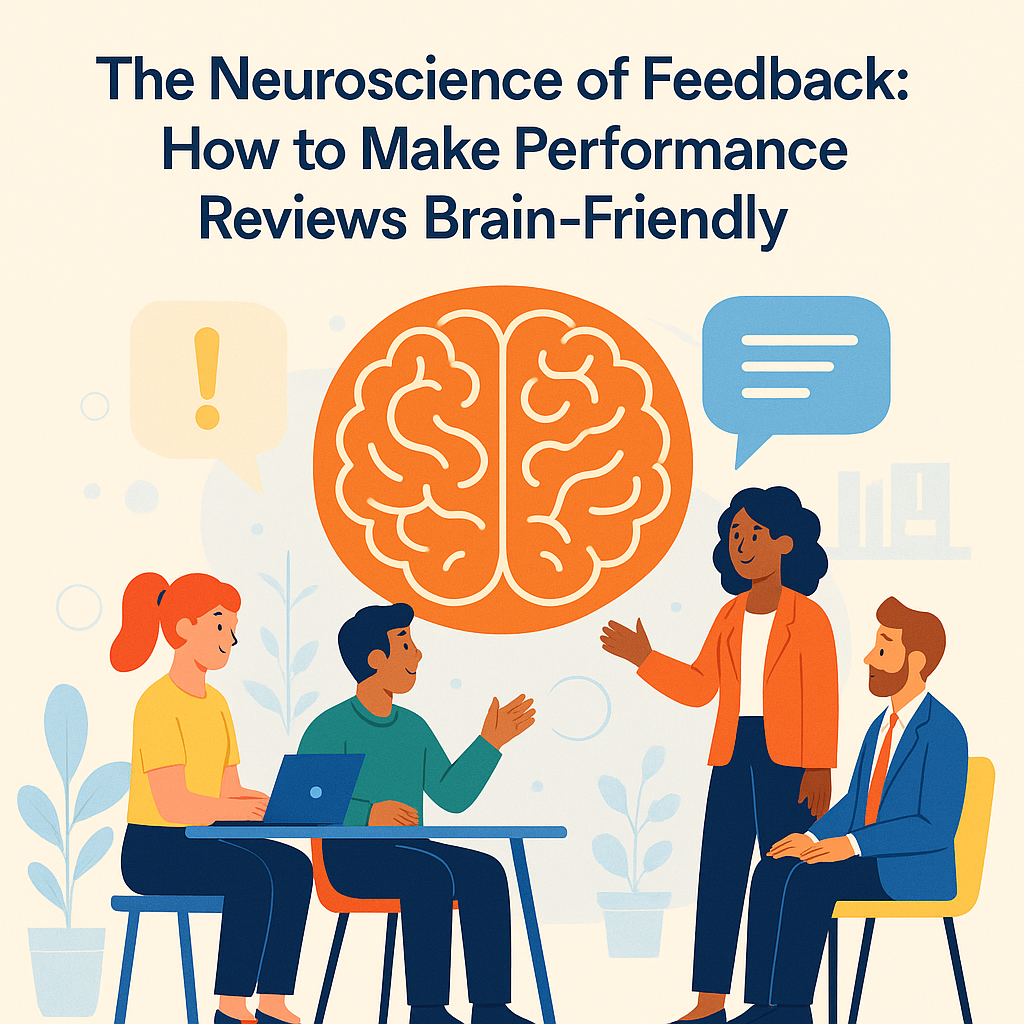
Performance reviews are meant to motivate, realign, and improve but all too often, they do the opposite. A poorly delivered review can trigger the brain’s fight-or-flight response, shutting down rational thinking and reinforcing fear or shame. Neuroscience tells us that the brain perceives feedback as a social threat, especially when it feels sudden, one-sided, or judgmental. So how can HR make feedback something employees can actually hear and grow from?
It starts with timing and tone. Instead of dumping a year’s worth of critiques in one sitting, frequent micro-feedback helps normalize the process and reduce anxiety. Our brains crave psychological safety, which means employees need to feel they are being evaluated fairly, supported through mistakes, and recognized for progress. Without that trust, feedback becomes noise or worse, trauma.
The brain also thrives on specificity and positivity. When reviews focus only on what’s wrong, it triggers defensive patterns in the prefrontal cortex, limiting our ability to accept or apply the feedback. But when balanced with positive reinforcement, goal-setting, and actionable steps, feedback activates the reward center, increasing motivation and learning.
HR’s role is to turn performance reviews from intimidating events into conversations that empower. By grounding feedback strategies in brain science, companies can build a culture where growth feels safe and performance actually improves.