


In today’s fast paced work culture, the onboarding process has always been viewed as the official start of an employee’s journey the point where new hires are welcomed, trained, and introduced to the company’s values and processes. But forward-thinking HR professionals are now recognizing the importance of something that happens even earlier: preboarding. This often overlooked phase occurs between the moment a candidate accepts the job offer and their actual first day. And while it may seem like a minor gap, it holds massive potential for shaping the new hire’s perception, preparedness, and long-term success in your organization.
Preboarding is not just a courtesy it’s a critical engagement opportunity. New hires are often anxious about their first day, wondering what to expect, how the team will be, and if they’ve made the right decision. By initiating communication during this interim period, HR can ease those anxieties and replace them with excitement. Sharing the company’s story, offering a peek into the culture, sending helpful resources like a digital handbook or welcome video, and arranging an informal introduction with the reporting manager all contribute to making the new hire feel like they already belong even before stepping into the office or joining the first Zoom call.
This early engagement also plays a vital role in employee retention. Studies show that a significant portion of new employee turnover happens within the first 45 days of joining. One major reason for this is a disconnect between the hiring process and the actual work environment. A thoughtful preboarding process bridges that gap. It aligns expectations, shows the company is organized and values its people, and offers clarity on what the first few days or weeks will entail. Employees who feel welcomed and guided early are more likely to stay committed and motivated from day one.
Additionally, preboarding has a direct impact on productivity. By the time new hires officially start, they already know the tools they’ll be using, the team structure, and the tasks ahead. Rather than wasting the first week on filling out forms and navigating confusion, they can hit the ground running with purpose and direction. This early clarity saves time for both the employee and the team, helping build early momentum and trust.
Preboarding is also a chance to humanize the transition. Changing jobs, no matter how exciting, is an emotional experience. A friendly preboarding approach like sending a welcome kit, an email from the CEO, or a quick video message from teammates helps new hires feel valued. These small gestures have a big emotional payoff, especially in hybrid and remote setups where employees might otherwise feel disconnected.
Most importantly, preboarding is an opportunity to build a cultural connection. It’s your first real chance to showcase your values, rituals, communication style, and what it’s like to be part of the team. When employees walk in already feeling aligned with the culture, their engagement is more authentic and their integration more natural.
In conclusion, preboarding is not just an HR trend it’s a smart strategy. Companies that invest in this phase are more likely to create smoother transitions, stronger first impressions, and more loyal employees. If your organization goes quiet after the offer letter, it’s missing a key moment to build excitement and confidence. Because in 2025 and beyond, the best onboarding starts before Day 1.
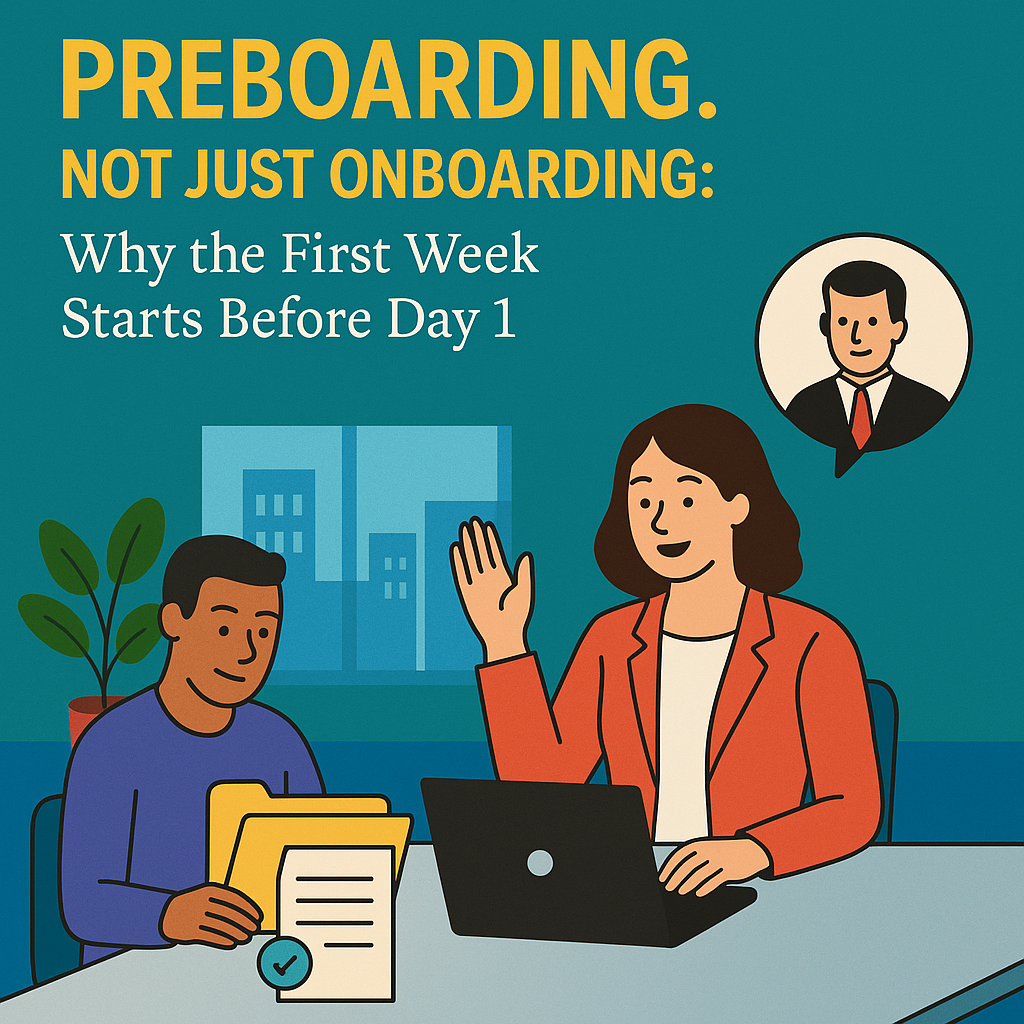
In today’s fast paced work culture, the onboarding process has always been viewed as the official start of an employee’s journey the point where new hires are welcomed, trained, and introduced to the company’s values and processes. But forward-thinking HR professionals are now recognizing the importance of something that happens even earlier: preboarding. This often overlooked phase occurs between the moment a candidate accepts the job offer and their actual first day. And while it may seem like a minor gap, it holds massive potential for shaping the new hire’s perception, preparedness, and long-term success in your organization.
Preboarding is not just a courtesy it’s a critical engagement opportunity. New hires are often anxious about their first day, wondering what to expect, how the team will be, and if they’ve made the right decision. By initiating communication during this interim period, HR can ease those anxieties and replace them with excitement. Sharing the company’s story, offering a peek into the culture, sending helpful resources like a digital handbook or welcome video, and arranging an informal introduction with the reporting manager all contribute to making the new hire feel like they already belong even before stepping into the office or joining the first Zoom call.
This early engagement also plays a vital role in employee retention. Studies show that a significant portion of new employee turnover happens within the first 45 days of joining. One major reason for this is a disconnect between the hiring process and the actual work environment. A thoughtful preboarding process bridges that gap. It aligns expectations, shows the company is organized and values its people, and offers clarity on what the first few days or weeks will entail. Employees who feel welcomed and guided early are more likely to stay committed and motivated from day one.
Additionally, preboarding has a direct impact on productivity. By the time new hires officially start, they already know the tools they’ll be using, the team structure, and the tasks ahead. Rather than wasting the first week on filling out forms and navigating confusion, they can hit the ground running with purpose and direction. This early clarity saves time for both the employee and the team, helping build early momentum and trust.
Preboarding is also a chance to humanize the transition. Changing jobs, no matter how exciting, is an emotional experience. A friendly preboarding approach like sending a welcome kit, an email from the CEO, or a quick video message from teammates helps new hires feel valued. These small gestures have a big emotional payoff, especially in hybrid and remote setups where employees might otherwise feel disconnected.
Most importantly, preboarding is an opportunity to build a cultural connection. It’s your first real chance to showcase your values, rituals, communication style, and what it’s like to be part of the team. When employees walk in already feeling aligned with the culture, their engagement is more authentic and their integration more natural.
In conclusion, preboarding is not just an HR trend it’s a smart strategy. Companies that invest in this phase are more likely to create smoother transitions, stronger first impressions, and more loyal employees. If your organization goes quiet after the offer letter, it’s missing a key moment to build excitement and confidence. Because in 2025 and beyond, the best onboarding starts before Day 1.