


In the traditional corporate world, HR departments manage everything from recruitment to benefits and employee relations. But as the gig economy continues to grow, a new, informal layer of workforce management is quietly emerging what some now call “Shadow HR.” These are the systems, habits, and strategies used to engage freelancers, contractors, creators, and remote gig workers often without a formal HR framework.
Today’s workforce is increasingly fluid. A marketing team might hire a freelance designer, a SaaS company might onboard a product consultant remotely, and startups routinely build core teams of part time contributors. These non-traditional workers often don’t receive onboarding, performance reviews, or cultural alignment, yet they contribute significantly to business outcomes. Without intentional structure, they risk becoming isolated, disengaged, or burnt out despite being vital to a company’s success.
This is where HR must evolve. Forward thinking organizations are starting to extend key HR functions like inclusive communication, recognition, mental health resources, and learning opportunities to freelancers and gig workers. They’re redefining policies to account for hybrid contributors and using tech tools to maintain connection, clarity, and compliance. By embracing the gig mindset, HR can ensure that everyone regardless of employment type feels like part of the bigger picture.
Shadow HR isn’t a threat to traditional HR; it’s a call to adapt. As work becomes more distributed and project-based, companies that treat all contributors with care and consistency will have the edge in retaining top freelance talent and building resilient, modern teams.
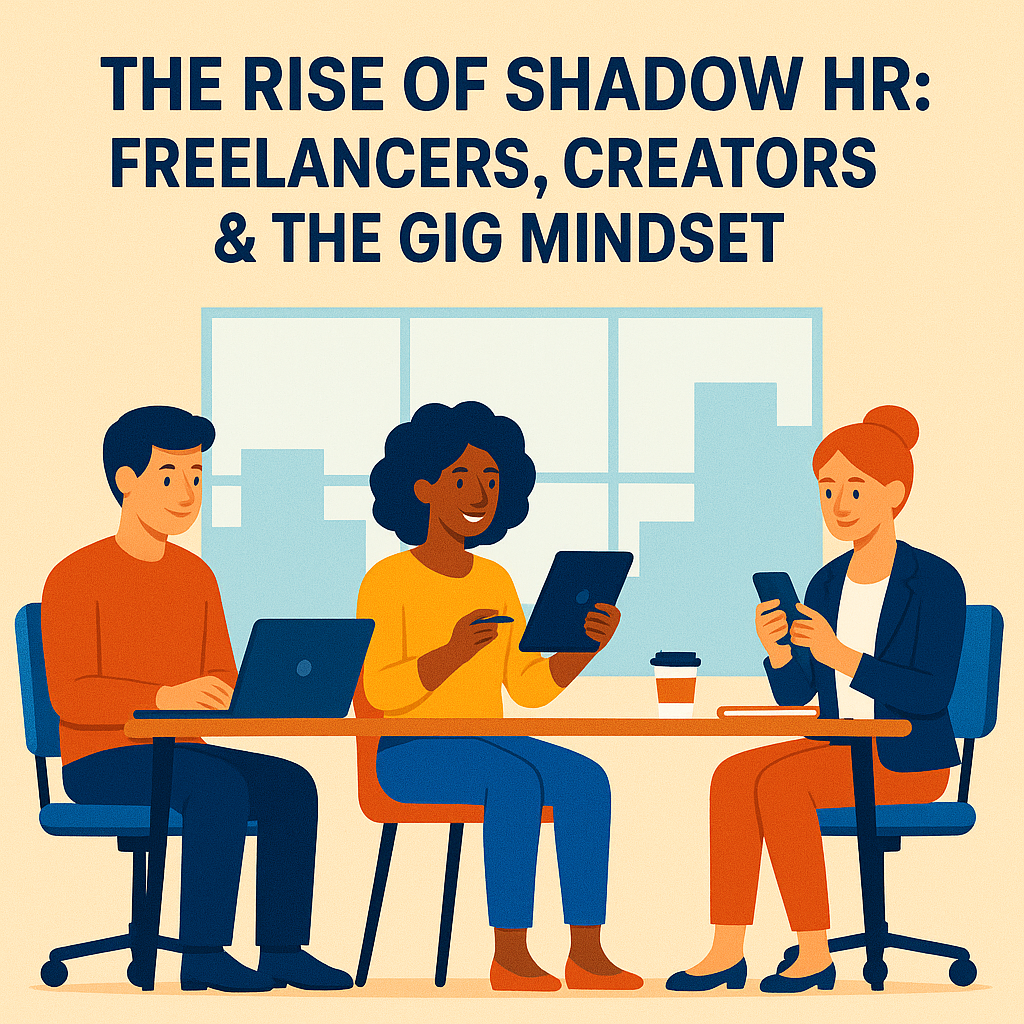
In the traditional corporate world, HR departments manage everything from recruitment to benefits and employee relations. But as the gig economy continues to grow, a new, informal layer of workforce management is quietly emerging what some now call “Shadow HR.” These are the systems, habits, and strategies used to engage freelancers, contractors, creators, and remote gig workers often without a formal HR framework.
Today’s workforce is increasingly fluid. A marketing team might hire a freelance designer, a SaaS company might onboard a product consultant remotely, and startups routinely build core teams of part time contributors. These non-traditional workers often don’t receive onboarding, performance reviews, or cultural alignment, yet they contribute significantly to business outcomes. Without intentional structure, they risk becoming isolated, disengaged, or burnt out despite being vital to a company’s success.
This is where HR must evolve. Forward thinking organizations are starting to extend key HR functions like inclusive communication, recognition, mental health resources, and learning opportunities to freelancers and gig workers. They’re redefining policies to account for hybrid contributors and using tech tools to maintain connection, clarity, and compliance. By embracing the gig mindset, HR can ensure that everyone regardless of employment type feels like part of the bigger picture.
Shadow HR isn’t a threat to traditional HR; it’s a call to adapt. As work becomes more distributed and project-based, companies that treat all contributors with care and consistency will have the edge in retaining top freelance talent and building resilient, modern teams.