


The modern workplace is a unique crossroads where generational identities meet and sometimes clash. One of the most fascinating dynamics playing out is between Millennial managers and their Gen Z interns or juniors. Caught between evolving technologies, shifting expectations, and differing worldviews, HR has a crucial role in helping both generations thrive.
Millennials now in their late 20s to early 40s often find themselves in leadership roles for the first time, still navigating imposter syndrome while trying to balance empathy with authority. They’re digital natives, but also shaped by hustle culture and the early internet’s work hard play hard ethos. On the other hand, Gen Z workers bring with them bold ideas, a no-tolerance stance on toxic work environments, and high expectations for mental health support, purpose-driven work, and feedback-rich environments.
This intergenerational setup can be powerful but only when guided. HR can bridge this gap by facilitating open communication between these groups. For instance, workshops that address unconscious generational biases, reverse mentoring programs, and collaborative goal-setting exercises can create a culture of mutual respect.
Rather than treating these generational divides as obstacles, smart HR teams should treat them as opportunities for innovation and redefinition of leadership styles. In doing so, they help build a workplace that doesn’t just tolerate diversity in age and thought but truly benefits from it.
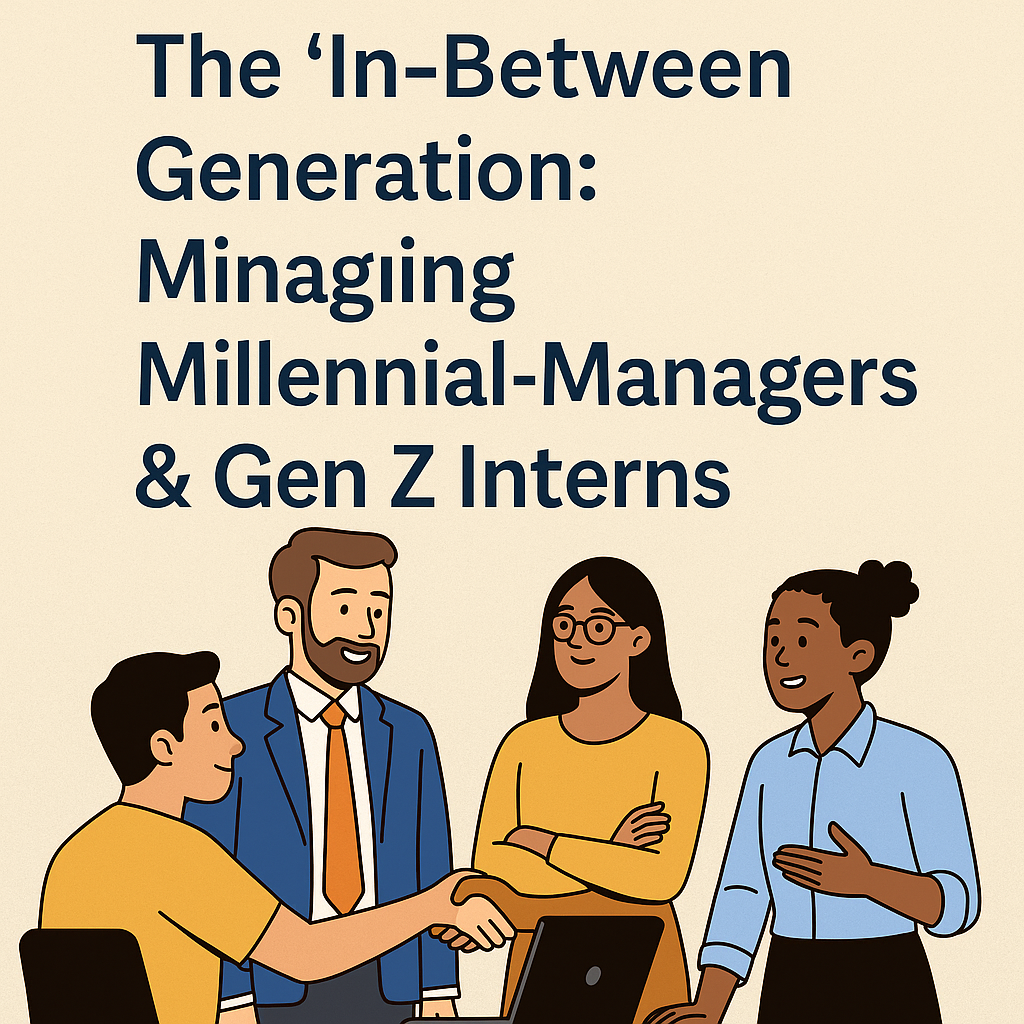
The modern workplace is a unique crossroads where generational identities meet and sometimes clash. One of the most fascinating dynamics playing out is between Millennial managers and their Gen Z interns or juniors. Caught between evolving technologies, shifting expectations, and differing worldviews, HR has a crucial role in helping both generations thrive.
Millennials now in their late 20s to early 40s often find themselves in leadership roles for the first time, still navigating imposter syndrome while trying to balance empathy with authority. They’re digital natives, but also shaped by hustle culture and the early internet’s work hard play hard ethos. On the other hand, Gen Z workers bring with them bold ideas, a no-tolerance stance on toxic work environments, and high expectations for mental health support, purpose-driven work, and feedback-rich environments.
This intergenerational setup can be powerful but only when guided. HR can bridge this gap by facilitating open communication between these groups. For instance, workshops that address unconscious generational biases, reverse mentoring programs, and collaborative goal-setting exercises can create a culture of mutual respect.
Rather than treating these generational divides as obstacles, smart HR teams should treat them as opportunities for innovation and redefinition of leadership styles. In doing so, they help build a workplace that doesn’t just tolerate diversity in age and thought but truly benefits from it.