


In every large organization, there’s more than one culture quietly operating beneath the surface. These are micro cultures smaller pockets of norms, behaviors, and values that develop within departments, teams, or even shifts. While they often emerge organically, they can shape (or shake) the broader company culture in powerful ways.
Micro-cultures are influenced by local leadership styles, team dynamics, project demands, and even physical work environments. For example, a high performing sales team may develop a competitive, fast paced micro-culture, while a creative department may foster a laid-back, innovation-first environment. Over time, these differences can lead to culture silos, communication gaps, or even internal friction.
That’s why HR needs to go beyond promoting a unified “company culture” and start recognizing, respecting, and managing these cultural subzones. By identifying where micro-cultures are thriving or conflicting HR can tailor engagement strategies, learning programs, and leadership coaching more effectively.
The goal isn’t to erase micro cultures but to align them with the organization’s core values, while preserving the strengths that make each team unique. When micro-cultures are acknowledged and positively integrated, they can actually strengthen the company’s identity rather than dilute it.
For HR professionals, the ability to map, measure, and manage these subcultures is quickly becoming a superpower in building resilient, high performing workplaces.
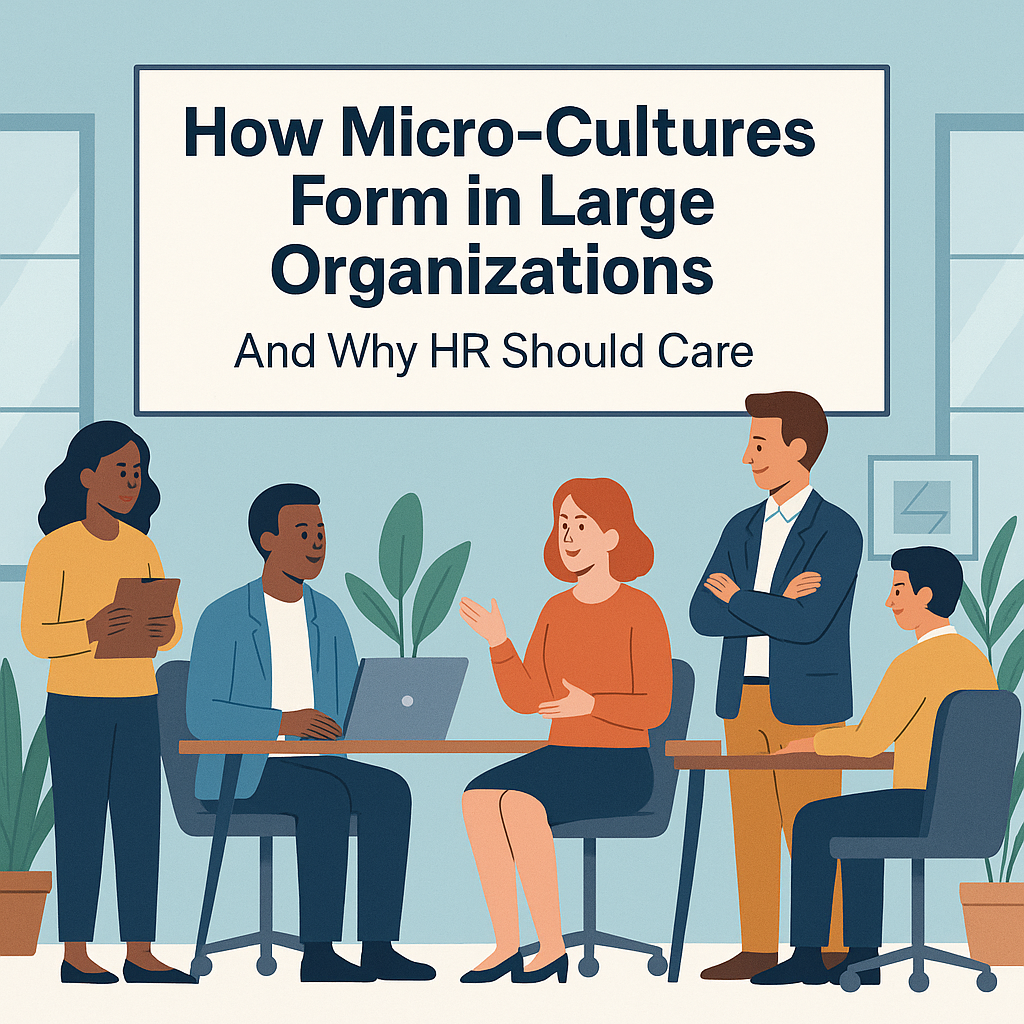
In every large organization, there’s more than one culture quietly operating beneath the surface. These are micro cultures smaller pockets of norms, behaviors, and values that develop within departments, teams, or even shifts. While they often emerge organically, they can shape (or shake) the broader company culture in powerful ways.
Micro-cultures are influenced by local leadership styles, team dynamics, project demands, and even physical work environments. For example, a high performing sales team may develop a competitive, fast paced micro-culture, while a creative department may foster a laid-back, innovation-first environment. Over time, these differences can lead to culture silos, communication gaps, or even internal friction.
That’s why HR needs to go beyond promoting a unified “company culture” and start recognizing, respecting, and managing these cultural subzones. By identifying where micro-cultures are thriving or conflicting HR can tailor engagement strategies, learning programs, and leadership coaching more effectively.
The goal isn’t to erase micro cultures but to align them with the organization’s core values, while preserving the strengths that make each team unique. When micro-cultures are acknowledged and positively integrated, they can actually strengthen the company’s identity rather than dilute it.
For HR professionals, the ability to map, measure, and manage these subcultures is quickly becoming a superpower in building resilient, high performing workplaces.