


The office environment is more than just desks and deadlines it’s also made up of sound. From the click of keyboards to casual chatter and the persistent hum of air conditioners, the soundscape of a workplace directly impacts employee focus, stress levels, and overall productivity. In fact, studies show that excessive or unpredictable noise can reduce cognitive performance by as much as 66%, especially when employees are performing tasks that require deep concentration.
For HR leaders, understanding the role of acoustic design isn’t just an operational concern it’s a strategic one. Open offices, while fostering collaboration, often amplify distractions. Meanwhile, hybrid models mean more people are taking calls from different corners of the same room, increasing noise pollution. HR departments can step in with soundproofing solutions, dedicated quiet zones, noise-canceling headphone policies, or even soft background music in shared areas to balance the sound dynamics. Moreover, implementing flexible break policies to escape noisy environments and gathering feedback through “sound audits” can help create a more productive and inclusive workspace.
The right soundscape doesn’t silence people it supports them. HR’s role is to craft an environment where employees feel heard without being overwhelmed by noise. When done right, a well managed office soundscape can elevate not just productivity but also employee well-being and retention.
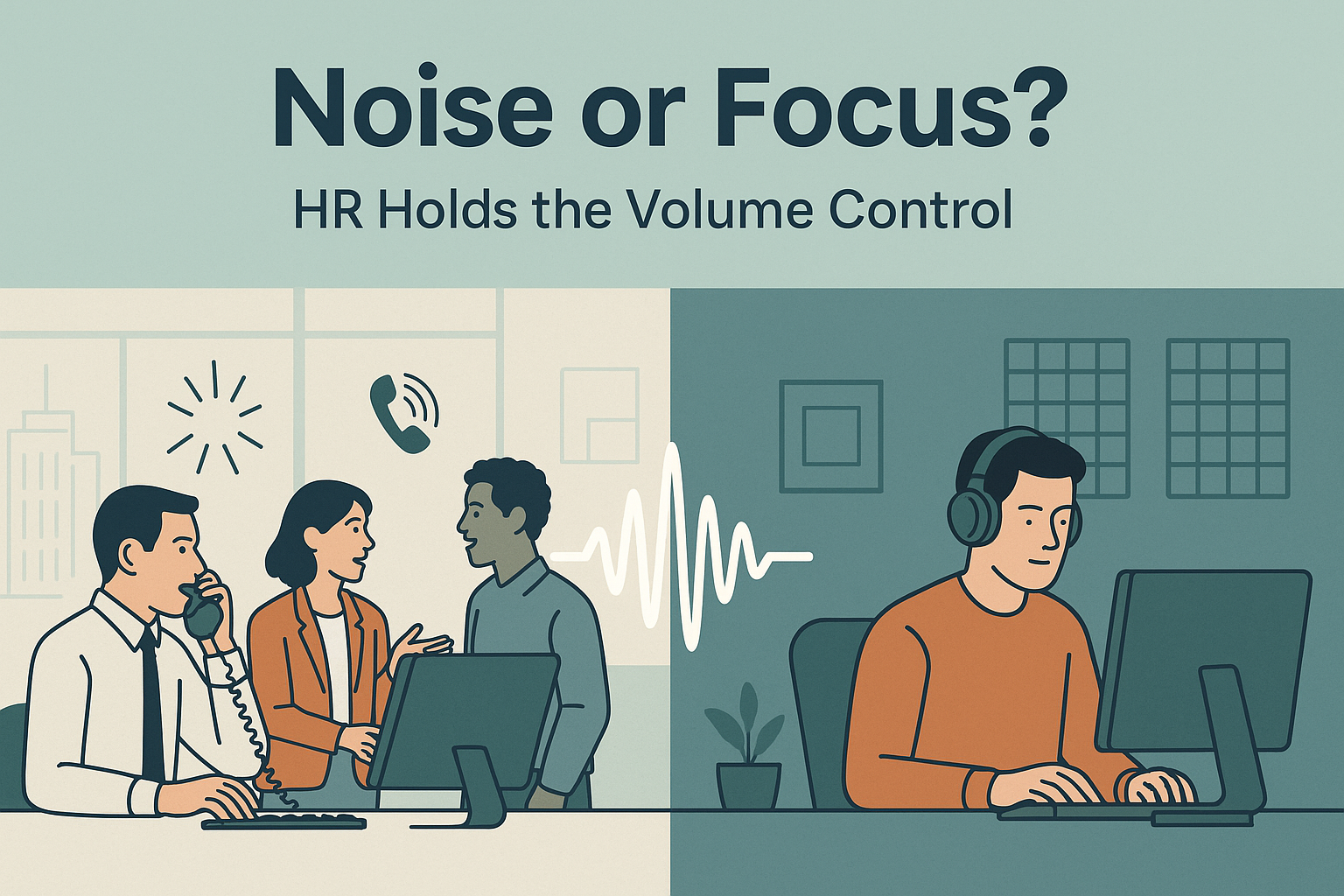
The office environment is more than just desks and deadlines it’s also made up of sound. From the click of keyboards to casual chatter and the persistent hum of air conditioners, the soundscape of a workplace directly impacts employee focus, stress levels, and overall productivity. In fact, studies show that excessive or unpredictable noise can reduce cognitive performance by as much as 66%, especially when employees are performing tasks that require deep concentration.
For HR leaders, understanding the role of acoustic design isn’t just an operational concern it’s a strategic one. Open offices, while fostering collaboration, often amplify distractions. Meanwhile, hybrid models mean more people are taking calls from different corners of the same room, increasing noise pollution. HR departments can step in with soundproofing solutions, dedicated quiet zones, noise-canceling headphone policies, or even soft background music in shared areas to balance the sound dynamics. Moreover, implementing flexible break policies to escape noisy environments and gathering feedback through “sound audits” can help create a more productive and inclusive workspace.
The right soundscape doesn’t silence people it supports them. HR’s role is to craft an environment where employees feel heard without being overwhelmed by noise. When done right, a well managed office soundscape can elevate not just productivity but also employee well-being and retention.