


User experience (UX) design and human resources (HR) may seem like distant disciplines, but at their core, both focus on people how they interact, feel, and function within a system. While UX designers obsess over every detail of a user’s journey with a product or platform, HR professionals manage the entire journey of an employee with an organization. So what if HR started thinking like UX designers? What if onboarding was treated like a sign-up flow, performance reviews like user feedback loops, and workplace tools like interfaces that need to be intuitive, supportive, and empowering?
The modern employee experience needs more than just processes it needs empathy led design. From the moment a candidate interacts with your job ad to their exit interview (or promotion), every touchpoint contributes to their perception of the brand. UX designers use tools like journey mapping, friction audits, and user personas. HR can do the same. Map the employee lifecycle. Identify moments of friction (delayed responses, unclear policies, outdated tools) and fix them before they lead to disengagement. Just like a frustrated user leaves an app, a confused employee disconnects emotionally or physically from their workplace.
Another lesson from UX: personalization matters. Employees today want experiences that feel tailored flexible work hours, personalized learning paths, and recognition that fits their values. UX teams create adaptive experiences for different user segments. HR can borrow that approach to cater to introverts vs. extroverts, Gen Z vs. Millennials, or creative thinkers vs. structured executors. An one size fits all approach is outdated and ineffective.
Feedback, too, is key. UX design thrives on constant iteration based on real user feedback. HR must replace once-a-year surveys with real-time pulse checks, anonymous inputs, and culture conversations. Build feedback into the system so that employee voices aren’t just heard they’re implemented.
In conclusion, HR can learn a lot from UX not by copying software tools, but by adopting a design mindset. One that sees employees as users of the workplace ecosystem, values their journey, and designs every step with purpose. After all, great employee experiences, like great apps, don’t happen by accident they’re designed with care.
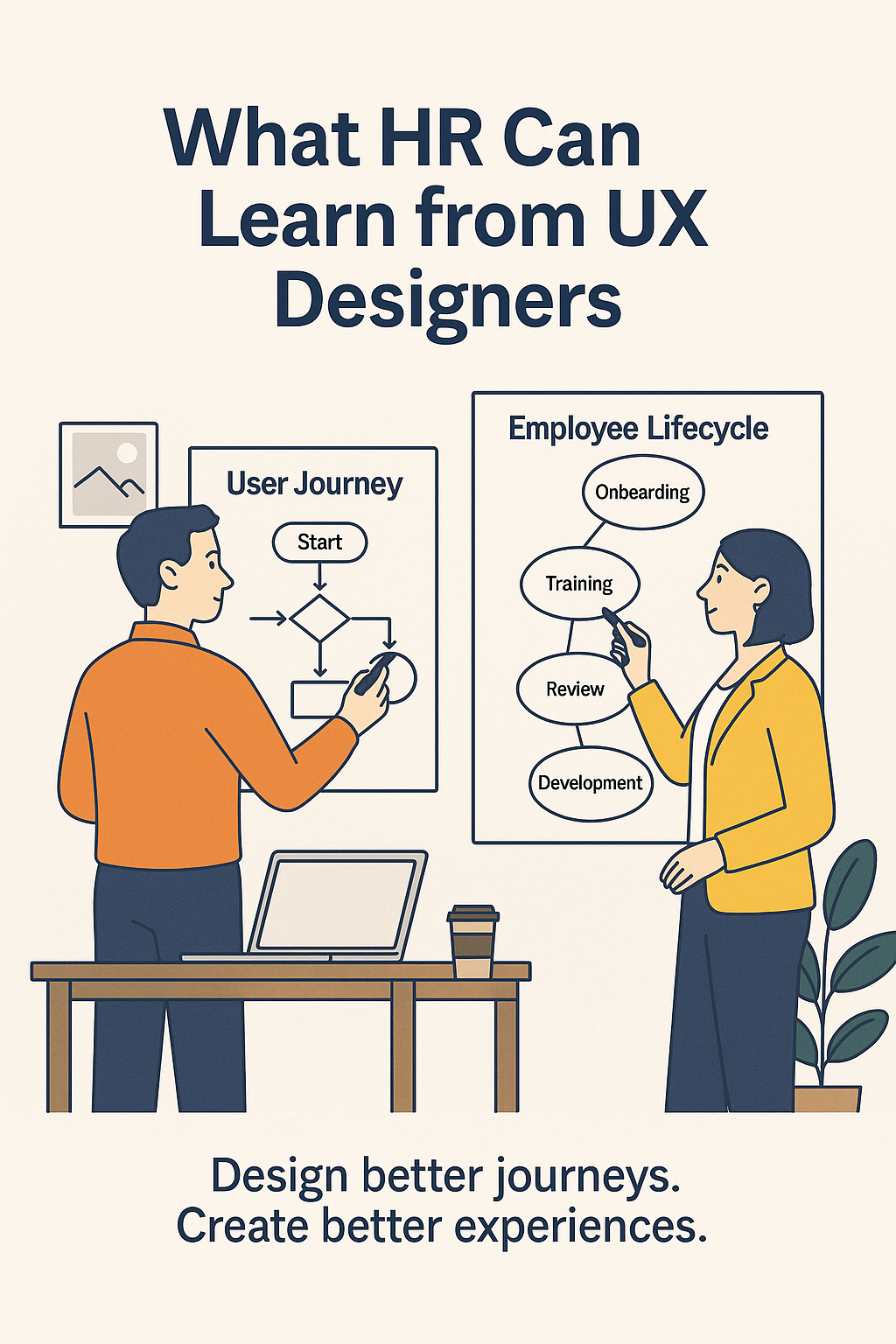
User experience (UX) design and human resources (HR) may seem like distant disciplines, but at their core, both focus on people how they interact, feel, and function within a system. While UX designers obsess over every detail of a user’s journey with a product or platform, HR professionals manage the entire journey of an employee with an organization. So what if HR started thinking like UX designers? What if onboarding was treated like a sign-up flow, performance reviews like user feedback loops, and workplace tools like interfaces that need to be intuitive, supportive, and empowering?
The modern employee experience needs more than just processes it needs empathy led design. From the moment a candidate interacts with your job ad to their exit interview (or promotion), every touchpoint contributes to their perception of the brand. UX designers use tools like journey mapping, friction audits, and user personas. HR can do the same. Map the employee lifecycle. Identify moments of friction (delayed responses, unclear policies, outdated tools) and fix them before they lead to disengagement. Just like a frustrated user leaves an app, a confused employee disconnects emotionally or physically from their workplace.
Another lesson from UX: personalization matters. Employees today want experiences that feel tailored flexible work hours, personalized learning paths, and recognition that fits their values. UX teams create adaptive experiences for different user segments. HR can borrow that approach to cater to introverts vs. extroverts, Gen Z vs. Millennials, or creative thinkers vs. structured executors. An one size fits all approach is outdated and ineffective.
Feedback, too, is key. UX design thrives on constant iteration based on real user feedback. HR must replace once-a-year surveys with real-time pulse checks, anonymous inputs, and culture conversations. Build feedback into the system so that employee voices aren’t just heard they’re implemented.
In conclusion, HR can learn a lot from UX not by copying software tools, but by adopting a design mindset. One that sees employees as users of the workplace ecosystem, values their journey, and designs every step with purpose. After all, great employee experiences, like great apps, don’t happen by accident they’re designed with care.