


As remote work became the norm during the pandemic, so did virtual fatigue. Now, even in a hybrid work culture, digital burnout is quietly taking a toll on employee well being and productivity. In this post Zoom era, where meetings have been replaced by back-to-back video calls, online collaboration tools, constant pings, and “always on” expectations, the very technology that kept us connected is now exhausting us. Digital burnout isn’t just about tired eyes or stiff necks it’s the emotional and cognitive overload caused by too much screen time and too little human connection. And if HR leaders don’t actively address it, companies risk losing engagement, creativity, and even their top talent.
Unlike traditional burnout that builds gradually, digital burnout hits in smaller, sharper doses Zoom fatigue, Slack anxiety, screen exhaustion, notification overload. It’s harder to spot but just as damaging. Employees may show up on calls but remain mentally checked out. They respond to emails but delay taking real decisions. The line between presence and productivity becomes blurry. HR must understand that digital overload is not about laziness it’s a signal that the system is failing to give space, silence, or autonomy.
Tackling digital burnout starts by rethinking the culture of urgency. Not everything needs to be a Zoom meeting. Not every conversation needs a Slack thread. Encouraging asynchronous communication where possible recorded video updates, shared docs with comments, or flexible check-in windows can reduce the psychological pressure of real-time response. Leaders should also normalize “video-off” meetings, set clear digital detox hours, and even encourage no-meeting days during the week to give employees time to recharge and focus.
Another key approach is to shift performance evaluation from visibility to value. In remote and hybrid setups, time spent on screen doesn’t equate to output. HR needs to align performance goals with outcomes, not hours logged on apps. Recognizing efforts that come from deep focus, creative problem solving, and emotional support (not just fast replies) builds a healthier work culture.
In conclusion, tackling digital burnout is not about removing tech it’s about humanizing how we use it. HR must lead the way in redefining boundaries, encouraging recovery, and making space for mindful work habits. A post Zoom world needs more intention, not more meetings.
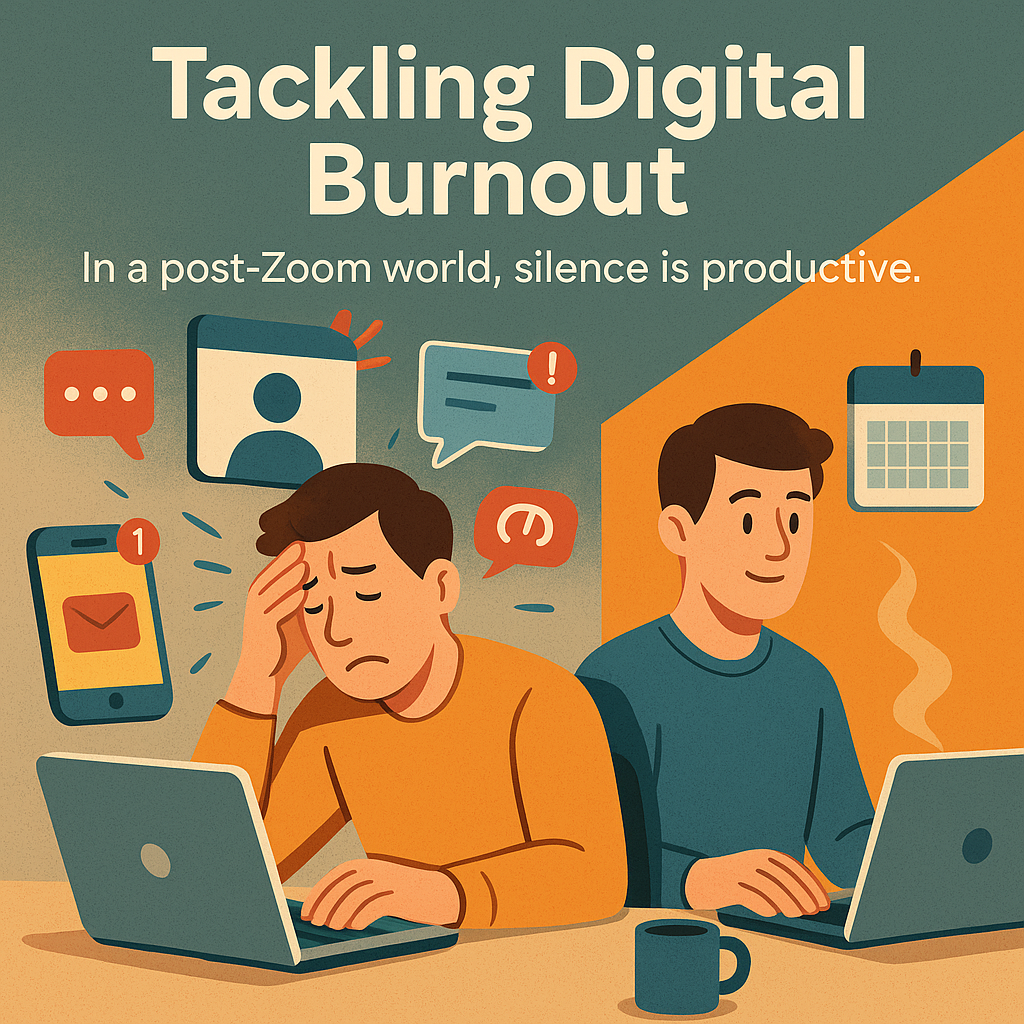
As remote work became the norm during the pandemic, so did virtual fatigue. Now, even in a hybrid work culture, digital burnout is quietly taking a toll on employee well being and productivity. In this post Zoom era, where meetings have been replaced by back-to-back video calls, online collaboration tools, constant pings, and “always on” expectations, the very technology that kept us connected is now exhausting us. Digital burnout isn’t just about tired eyes or stiff necks it’s the emotional and cognitive overload caused by too much screen time and too little human connection. And if HR leaders don’t actively address it, companies risk losing engagement, creativity, and even their top talent.
Unlike traditional burnout that builds gradually, digital burnout hits in smaller, sharper doses Zoom fatigue, Slack anxiety, screen exhaustion, notification overload. It’s harder to spot but just as damaging. Employees may show up on calls but remain mentally checked out. They respond to emails but delay taking real decisions. The line between presence and productivity becomes blurry. HR must understand that digital overload is not about laziness it’s a signal that the system is failing to give space, silence, or autonomy.
Tackling digital burnout starts by rethinking the culture of urgency. Not everything needs to be a Zoom meeting. Not every conversation needs a Slack thread. Encouraging asynchronous communication where possible recorded video updates, shared docs with comments, or flexible check-in windows can reduce the psychological pressure of real-time response. Leaders should also normalize “video-off” meetings, set clear digital detox hours, and even encourage no-meeting days during the week to give employees time to recharge and focus.
Another key approach is to shift performance evaluation from visibility to value. In remote and hybrid setups, time spent on screen doesn’t equate to output. HR needs to align performance goals with outcomes, not hours logged on apps. Recognizing efforts that come from deep focus, creative problem solving, and emotional support (not just fast replies) builds a healthier work culture.
In conclusion, tackling digital burnout is not about removing tech it’s about humanizing how we use it. HR must lead the way in redefining boundaries, encouraging recovery, and making space for mindful work habits. A post Zoom world needs more intention, not more meetings.