


We’ve all heard about the “quiet quitter”—the employee who does the bare minimum, disengaged but still drawing a paycheck. But there’s another character in the workplace drama, more elusive and perhaps more dangerous: the emotional resigner who stays.
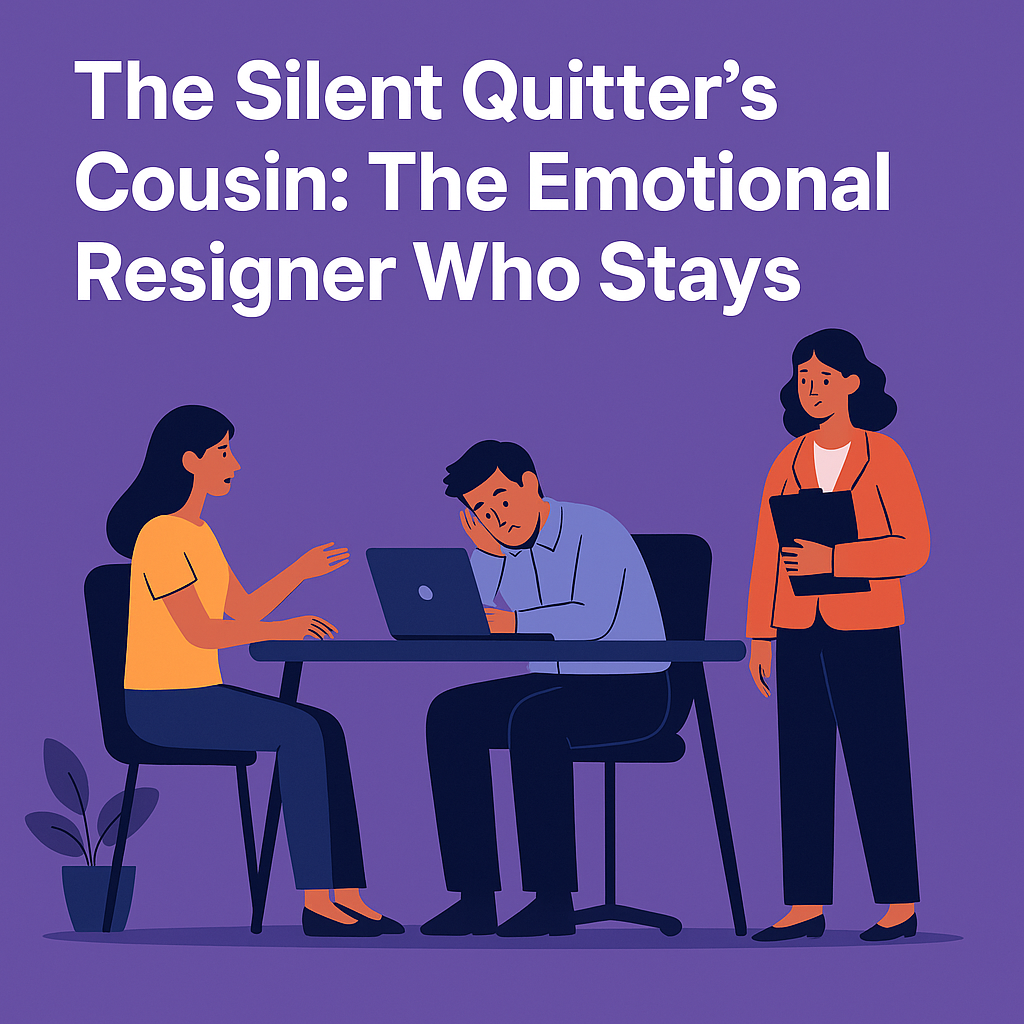
This person hasn’t just stopped trying. They’ve checked out emotionally. They show up, smile politely, respond to emails, even meet deadlines—but their heart is no longer in it. There’s no pushback, no enthusiasm, no ideas. Just polite compliance masking deep disengagement. And the scariest part? They’re often invisible to managers who confuse their silence with satisfaction.
Unlike quiet quitters who reduce their output, emotional resigners often maintain surface performance. That makes them harder to spot. But dig deeper and you’ll notice: no initiative, no innovation, no loyalty. They’ve detached from the mission—they’re mentally rehearsing their exit even if they haven’t submitted a resignation letter. They’re present in body, absent in spirit.
Why do they stay? For some, it’s economic pressure. For others, inertia, fear, or a hope that things might improve. But every day they stay in that emotionally vacant state, they dilute the culture, erode morale, and quietly infect team energy. The weight of their silent disconnection can shift an entire department’s tone from vibrant to robotic.
So what can HR do? First, we must stop using performance alone as a measure of engagement. Just because someone delivers doesn’t mean they’re thriving. Creating open check-ins that ask “how are you really feeling about your work?” and listening without judgment is a start. Building a culture where feedback flows upward, not just downward, matters. And most importantly, managers must be trained to spot emotional detachment—not just behavioral disruption.
Retaining top talent isn’t about perks or ping-pong tables. It’s about emotional alignment. When someone starts emotionally resigning, it’s not just their exit you risk—it’s the silent message they send to everyone else: you don’t have to care to stay.
We’ve all heard about the “quiet quitter”—the employee who does the bare minimum, disengaged but still drawing a paycheck. But there’s another character in the workplace drama, more elusive and perhaps more dangerous: the emotional resigner who stays.
This person hasn’t just stopped trying. They’ve checked out emotionally. They show up, smile politely, respond to emails, even meet deadlines—but their heart is no longer in it. There’s no pushback, no enthusiasm, no ideas. Just polite compliance masking deep disengagement. And the scariest part? They’re often invisible to managers who confuse their silence with satisfaction.
Unlike quiet quitters who reduce their output, emotional resigners often maintain surface performance. That makes them harder to spot. But dig deeper and you’ll notice: no initiative, no innovation, no loyalty. They’ve detached from the mission—they’re mentally rehearsing their exit even if they haven’t submitted a resignation letter. They’re present in body, absent in spirit.
Why do they stay? For some, it’s economic pressure. For others, inertia, fear, or a hope that things might improve. But every day they stay in that emotionally vacant state, they dilute the culture, erode morale, and quietly infect team energy. The weight of their silent disconnection can shift an entire department’s tone from vibrant to robotic.
So what can HR do? First, we must stop using performance alone as a measure of engagement. Just because someone delivers doesn’t mean they’re thriving. Creating open check-ins that ask “how are you really feeling about your work?” and listening without judgment is a start. Building a culture where feedback flows upward, not just downward, matters. And most importantly, managers must be trained to spot emotional detachment—not just behavioral disruption.
Retaining top talent isn’t about perks or ping-pong tables. It’s about emotional alignment. When someone starts emotionally resigning, it’s not just their exit you risk—it’s the silent message they send to everyone else: you don’t have to care to stay.