


In the world of HR, being empathetic and supportive is often celebrated. But there’s a line—subtle but dangerous—where kindness can morph into avoidance. When HR professionals shy away from confrontation under the banner of “being nice,” they risk enabling the very problems they’re hired to solve. Being approachable is essential, but being conflict-avoidant can slowly dismantle trust, credibility, and culture.
When HR avoids tough conversations—postponing feedback, tolerating poor performance because someone is “sweet,” or tiptoeing around toxic behavior from high performers—it may seem like a gesture of compassion. In reality, it fosters resentment. High-performing employees begin to feel demotivated. Culture becomes performative. Team dynamics quietly fracture, and psychological safety evaporates. All while HR tries to maintain a fragile peace that’s costing the organization its backbone.
Conflict isn’t the enemy. When navigated with clarity and care, conflict becomes a tool for realignment and growth. Avoiding it means allowing behaviors to fester, turning one-off issues into systemic culture rot. HR’s true role is not to suppress friction, but to turn it into constructive dialogue. That means speaking up, even when it’s uncomfortable—especially when it’s uncomfortable.
The truth is, people respect boundaries more than they respect blind kindness. Clarity is a form of respect. It’s not unkind to tell someone they’re underperforming; it’s unkind to let them continue failing without feedback. It’s not harsh to hold leaders accountable; it’s damaging to let title outrank accountability.
If HR wants to build trust, it must lead with honesty, not diplomacy alone. That doesn’t mean dropping empathy—it means pairing it with courage. Being kind isn’t about saying “yes” to everything. It’s about having the strength to say “this isn’t okay” when it matters most.
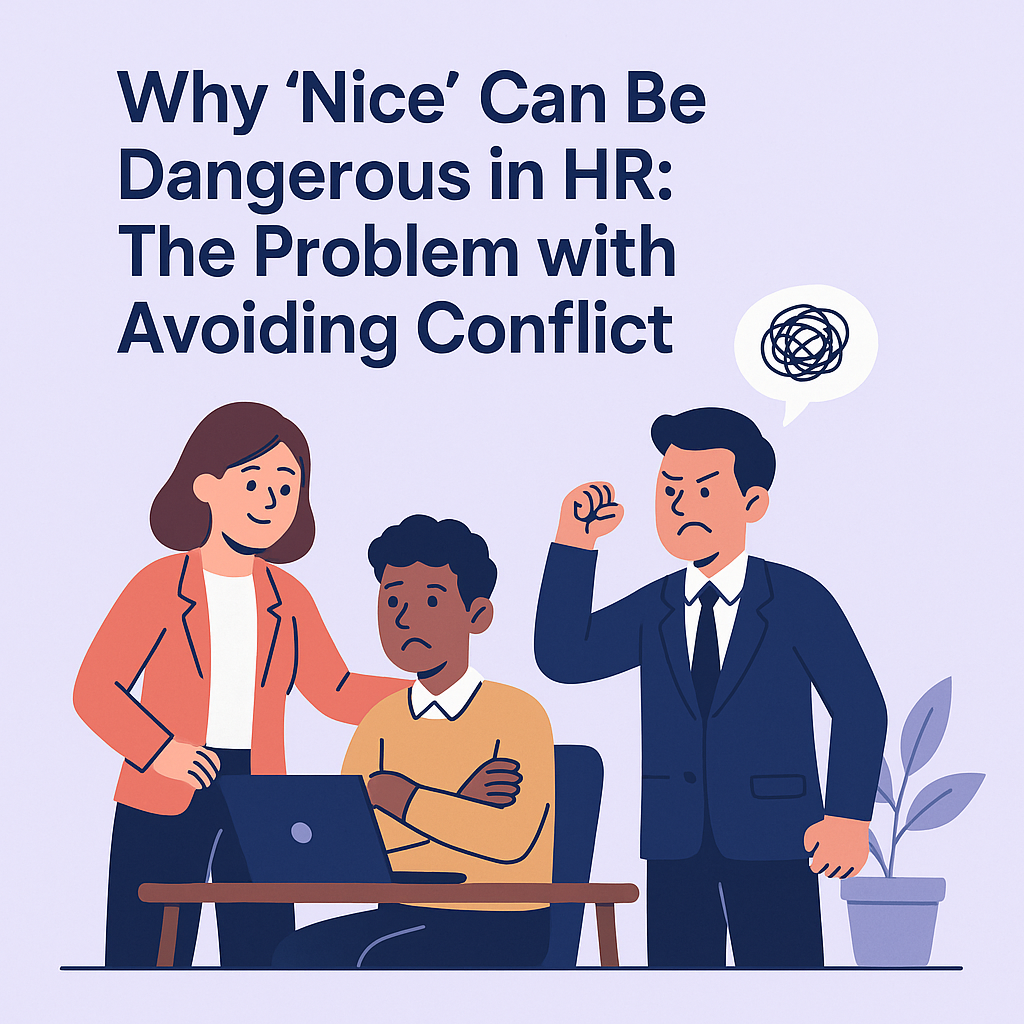
In the world of HR, being empathetic and supportive is often celebrated. But there’s a line—subtle but dangerous—where kindness can morph into avoidance. When HR professionals shy away from confrontation under the banner of “being nice,” they risk enabling the very problems they’re hired to solve. Being approachable is essential, but being conflict-avoidant can slowly dismantle trust, credibility, and culture.
When HR avoids tough conversations—postponing feedback, tolerating poor performance because someone is “sweet,” or tiptoeing around toxic behavior from high performers—it may seem like a gesture of compassion. In reality, it fosters resentment. High-performing employees begin to feel demotivated. Culture becomes performative. Team dynamics quietly fracture, and psychological safety evaporates. All while HR tries to maintain a fragile peace that’s costing the organization its backbone.
Conflict isn’t the enemy. When navigated with clarity and care, conflict becomes a tool for realignment and growth. Avoiding it means allowing behaviors to fester, turning one-off issues into systemic culture rot. HR’s true role is not to suppress friction, but to turn it into constructive dialogue. That means speaking up, even when it’s uncomfortable—especially when it’s uncomfortable.
The truth is, people respect boundaries more than they respect blind kindness. Clarity is a form of respect. It’s not unkind to tell someone they’re underperforming; it’s unkind to let them continue failing without feedback. It’s not harsh to hold leaders accountable; it’s damaging to let title outrank accountability.
If HR wants to build trust, it must lead with honesty, not diplomacy alone. That doesn’t mean dropping empathy—it means pairing it with courage. Being kind isn’t about saying “yes” to everything. It’s about having the strength to say “this isn’t okay” when it matters most.