


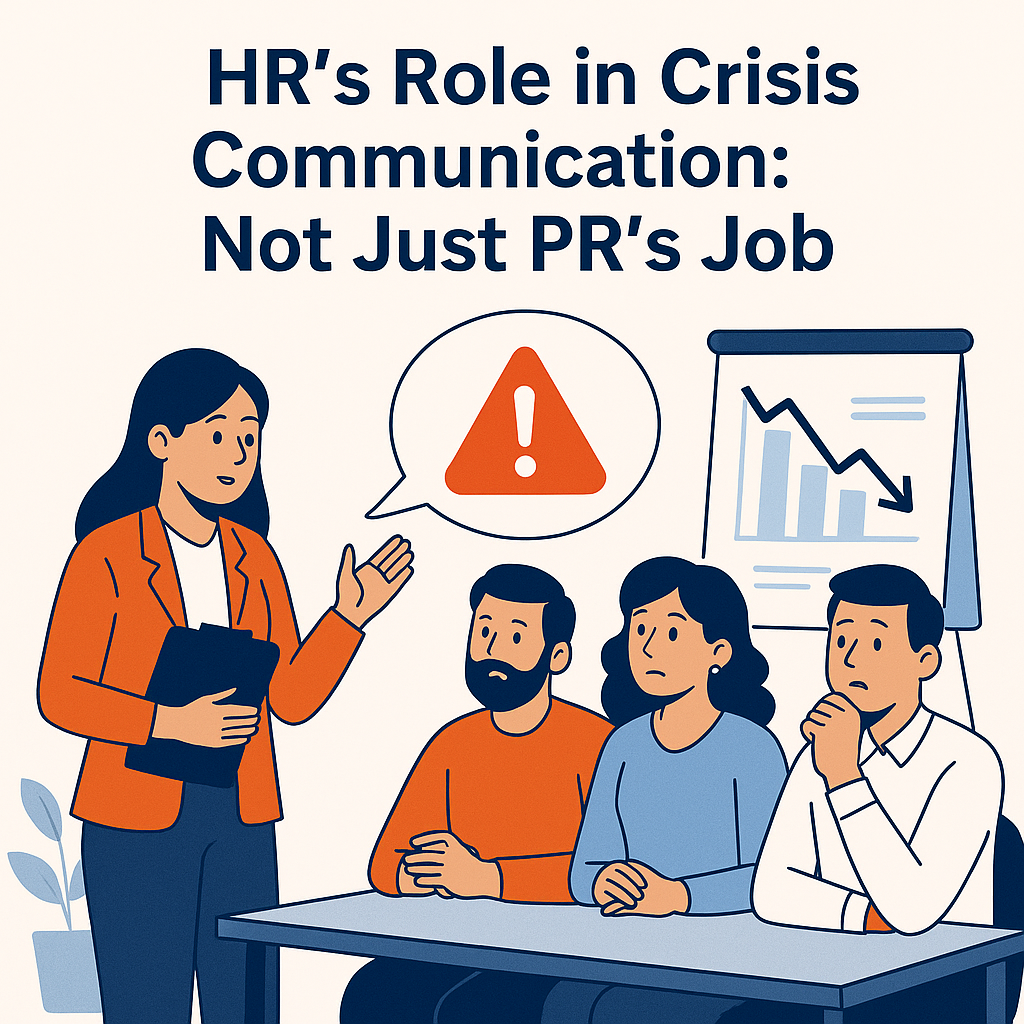
When a company crisis hits—whether it’s a public scandal, cyberattack, layoff wave, or executive misstep—the spotlight often turns to PR. But while external messaging might protect the brand, internal communication can either preserve or destroy company culture. That’s where HR steps in—not as a bystander, but as a core player in the crisis response team.
Why HR Can’t Sit This One Out
PR handles headlines. HR handles humans.
In a crisis, employees need clarity, compassion, and direction. Without this, rumors spiral, productivity tanks, and trust erodes. Employees become the first internal “public” you must stabilize.
HR is the bridge between what’s happening outside and how it’s processed inside.
5 Key Roles HR Must Play in Crisis Communication
Internal Truth Teller (With Boundaries)
Employees don’t expect all details, but they do expect honesty. HR must work with leadership to craft internal statements that are transparent yet responsible.
Emotional Anchor for the Workforce
From confusion to fear, HR must provide psychological safety. This includes town halls, safe spaces for concerns, and support resources like counseling.
Guardian of Tone and Timing
HR ensures messages are not just accurate, but empathetic. Timing matters too—internal communication should never lag behind external press releases.
Feedback Listener
Crisis communication should be two-way. HR needs to open listening channels to understand how employees are feeling and what rumors are circulating.
Policy Translator
If new protocols, security measures, or behavior expectations are implemented during a crisis, HR makes them digestible and human.
Common Mistakes to Avoid
Sharing too little, too late
Over-relying on email; neglecting face-to-face forums
Being overly corporate and under-human
Ignoring frontline or remote employee needs
Final Thought
A crisis is a pressure test—not just of leadership, but of internal trust. And that trust is HR’s domain. Done right, HR-led communication doesn’t just get the company through the crisis—it strengthens the culture that survives it.
When a company crisis hits—whether it’s a public scandal, cyberattack, layoff wave, or executive misstep—the spotlight often turns to PR. But while external messaging might protect the brand, internal communication can either preserve or destroy company culture. That’s where HR steps in—not as a bystander, but as a core player in the crisis response team.
Why HR Can’t Sit This One Out
PR handles headlines. HR handles humans.
In a crisis, employees need clarity, compassion, and direction. Without this, rumors spiral, productivity tanks, and trust erodes. Employees become the first internal “public” you must stabilize.
HR is the bridge between what’s happening outside and how it’s processed inside.
5 Key Roles HR Must Play in Crisis Communication
Internal Truth Teller (With Boundaries)
Employees don’t expect all details, but they do expect honesty. HR must work with leadership to craft internal statements that are transparent yet responsible.Emotional Anchor for the Workforce
From confusion to fear, HR must provide psychological safety. This includes town halls, safe spaces for concerns, and support resources like counseling.Guardian of Tone and Timing
HR ensures messages are not just accurate, but empathetic. Timing matters too—internal communication should never lag behind external press releases.Feedback Listener
Crisis communication should be two-way. HR needs to open listening channels to understand how employees are feeling and what rumors are circulating.Policy Translator
If new protocols, security measures, or behavior expectations are implemented during a crisis, HR makes them digestible and human.
Common Mistakes to Avoid
Sharing too little, too late
Over-relying on email; neglecting face-to-face forums
Being overly corporate and under-human
Ignoring frontline or remote employee needs
Final Thought
A crisis is a pressure test—not just of leadership, but of internal trust. And that trust is HR’s domain. Done right, HR-led communication doesn’t just get the company through the crisis—it strengthens the culture that survives it.