


Not every workplace disruption is loud. Sometimes, it’s the silence, the sarcasm, or the missed deadlines cloaked in excuses that slowly poison the team dynamic. Passive-aggressive employees are one of the most complex behavioral challenges HR has to navigate—because it’s rarely about what’s said, but how it’s said (or not said at all).
So how do you deal with it? Here’s the HR guidebook no one gave you—until now.
1. Spot the Red Flags Early
It starts subtly—procrastination masked as perfectionism, half-hearted compliance, silent treatment in meetings, or chronic sarcasm. While none of these behaviors scream “toxic,” they erode morale over time. HR’s job is to train managers to recognize these patterns and not confuse them with introversion or burnout.
2. Don’t Diagnose—Document Instead
Avoid labeling someone as “passive-aggressive” right away. Focus on documenting observable behavior:
“Missed 3 consecutive report deadlines with no follow-up.”
“Responded with sarcasm in team discussion.”
This keeps feedback factual and HR-safe for future interventions.
3. Create a Safe Conversation Space
Passive-aggression often stems from a lack of psychological safety. One-on-one conversations—not confrontations—are key. Encourage the employee to share frustrations, but ensure the focus stays on impact over intent. Use coaching-style questions like:
“What’s been frustrating for you recently?”
“What could help you feel more aligned with the team’s goals?”
4. Establish Boundaries & Expectations
Set clear expectations about communication norms, deadlines, tone, and collaboration. Make it clear that behavior—not personality—is being addressed. Follow it up with written documentation to avoid ambiguity.
5. Equip Managers With Conflict Tools
Often, passive-aggression thrives where managers are uncomfortable with confrontation. Offer leadership coaching or workshops focused on:
Assertive communication
Feedback frameworks like SBI (Situation, Behavior, Impact)
Managing indirect conflict
6. Monitor Progress, Not Perfection
Behavioral change takes time. Set check-ins, document improvements, and if needed, escalate to formal PIP (Performance Improvement Plan) protocols. Your role as HR is to balance empathy with accountability.
Final Word
The quiet disruptions are the hardest to call out—but the most critical to fix. Passive-aggressive employees can either be coached into powerful team players or become long-term culture risks. HR’s proactive, measured, and human-first approach is the only way to tilt the balance toward the former.
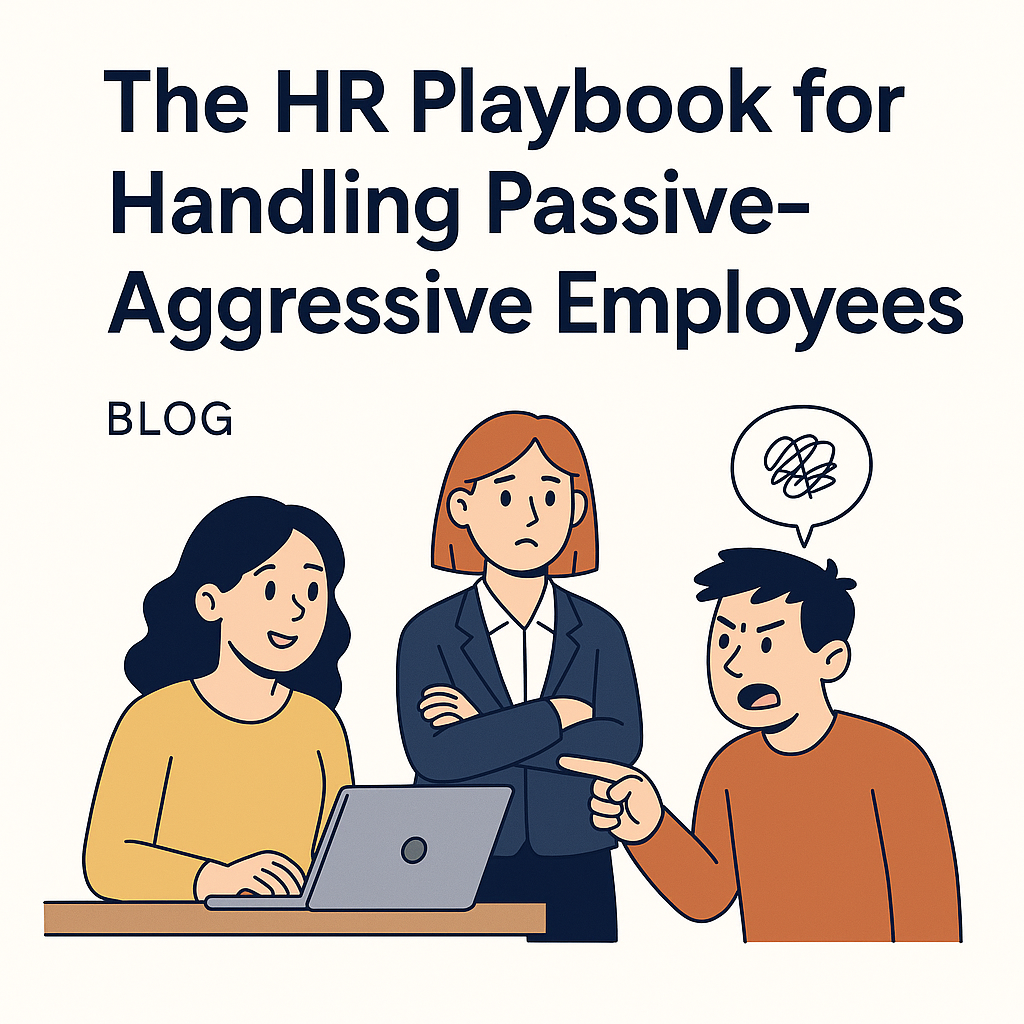
Not every workplace disruption is loud. Sometimes, it’s the silence, the sarcasm, or the missed deadlines cloaked in excuses that slowly poison the team dynamic. Passive-aggressive employees are one of the most complex behavioral challenges HR has to navigate—because it’s rarely about what’s said, but how it’s said (or not said at all).
So how do you deal with it? Here’s the HR guidebook no one gave you—until now.
1. Spot the Red Flags Early
It starts subtly—procrastination masked as perfectionism, half-hearted compliance, silent treatment in meetings, or chronic sarcasm. While none of these behaviors scream “toxic,” they erode morale over time. HR’s job is to train managers to recognize these patterns and not confuse them with introversion or burnout.
2. Don’t Diagnose—Document Instead
Avoid labeling someone as “passive-aggressive” right away. Focus on documenting observable behavior:
“Missed 3 consecutive report deadlines with no follow-up.”
“Responded with sarcasm in team discussion.”
This keeps feedback factual and HR-safe for future interventions.
3. Create a Safe Conversation Space
Passive-aggression often stems from a lack of psychological safety. One-on-one conversations—not confrontations—are key. Encourage the employee to share frustrations, but ensure the focus stays on impact over intent. Use coaching-style questions like:
“What’s been frustrating for you recently?”
“What could help you feel more aligned with the team’s goals?”
4. Establish Boundaries & Expectations
Set clear expectations about communication norms, deadlines, tone, and collaboration. Make it clear that behavior—not personality—is being addressed. Follow it up with written documentation to avoid ambiguity.
5. Equip Managers With Conflict Tools
Often, passive-aggression thrives where managers are uncomfortable with confrontation. Offer leadership coaching or workshops focused on:
Assertive communication
Feedback frameworks like SBI (Situation, Behavior, Impact)
Managing indirect conflict
6. Monitor Progress, Not Perfection
Behavioral change takes time. Set check-ins, document improvements, and if needed, escalate to formal PIP (Performance Improvement Plan) protocols. Your role as HR is to balance empathy with accountability.
Final Word
The quiet disruptions are the hardest to call out—but the most critical to fix. Passive-aggressive employees can either be coached into powerful team players or become long-term culture risks. HR’s proactive, measured, and human-first approach is the only way to tilt the balance toward the former.