


Performance reviews have long been a source of debate are they fair, accurate, and truly reflective of an employee’s contribution? In 2025, AI-powered performance reviews are emerging as a new approach, promising to make evaluations faster, data-driven, and less biased. But do they actually solve the problem or create new ones?
AI systems can analyze metrics like project completion rates, communication patterns, and even meeting participation. This level of data can highlight trends managers might miss and reduce subjectivity. For example, instead of relying on one manager’s perception, AI can assess performance across months of real work activity, giving a broader and more consistent view.
Yet, AI is only as good as the data it’s trained on. If workplace systems track only measurable tasks, employees who contribute in less visible but equally important ways like mentoring, problem-solving, or cultural building—risk being undervalued. Additionally, biases in data collection or interpretation could lead to unfair evaluations, with employees feeling reduced to numbers rather than recognized as people.
The truth lies in balance. AI can be a powerful assistant in performance reviews, helping managers make better-informed decisions. But it should never replace the human element empathy, context, and nuance. The most effective reviews will combine AI insights with thoughtful human judgment, ensuring employees feel both seen and valued.
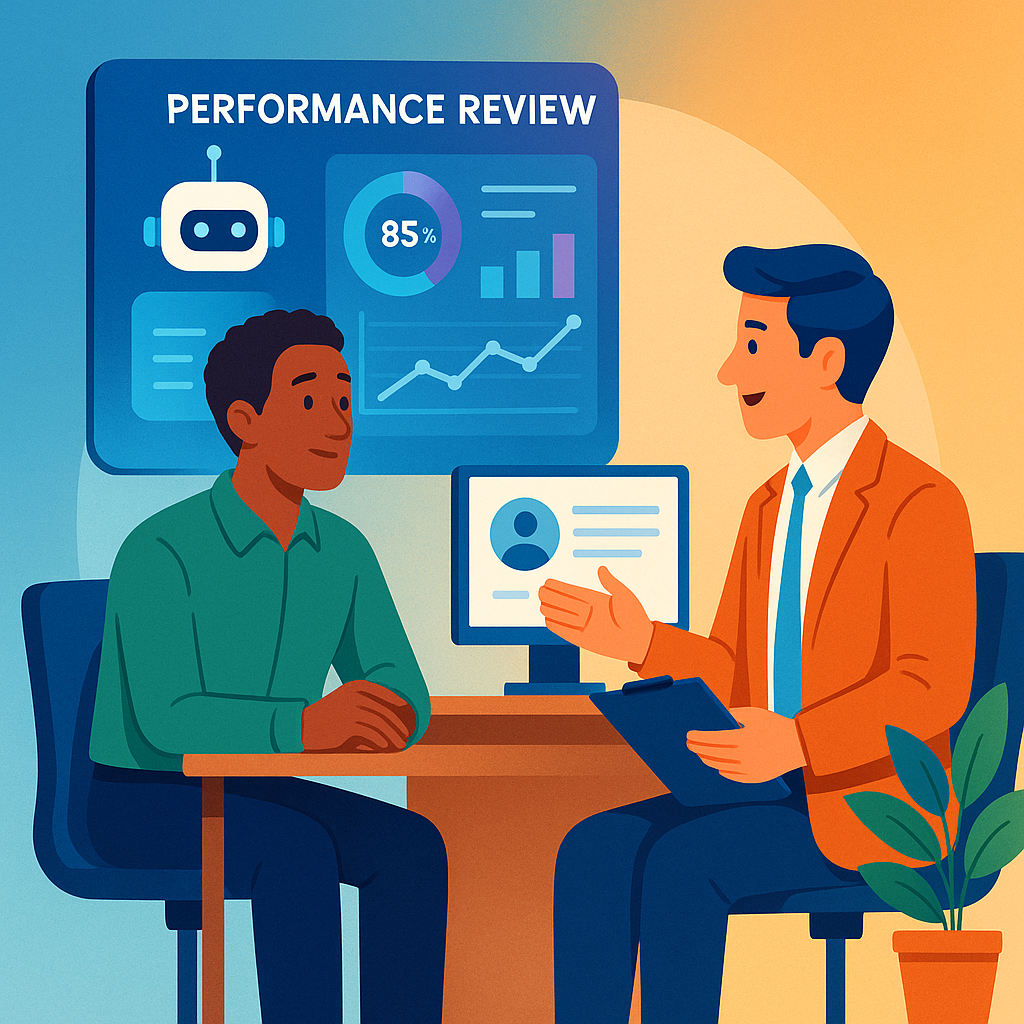
Performance reviews have long been a source of debate are they fair, accurate, and truly reflective of an employee’s contribution? In 2025, AI-powered performance reviews are emerging as a new approach, promising to make evaluations faster, data-driven, and less biased. But do they actually solve the problem or create new ones?
AI systems can analyze metrics like project completion rates, communication patterns, and even meeting participation. This level of data can highlight trends managers might miss and reduce subjectivity. For example, instead of relying on one manager’s perception, AI can assess performance across months of real work activity, giving a broader and more consistent view.
Yet, AI is only as good as the data it’s trained on. If workplace systems track only measurable tasks, employees who contribute in less visible but equally important ways like mentoring, problem-solving, or cultural building—risk being undervalued. Additionally, biases in data collection or interpretation could lead to unfair evaluations, with employees feeling reduced to numbers rather than recognized as people.
The truth lies in balance. AI can be a powerful assistant in performance reviews, helping managers make better-informed decisions. But it should never replace the human element empathy, context, and nuance. The most effective reviews will combine AI insights with thoughtful human judgment, ensuring employees feel both seen and valued.