


For decades, the gold standard of employee wellbeing was achieving work-life balance the idea of separating professional and personal life into neat, manageable compartments. But in 2025, with hybrid work models, digital collaboration, and 24/7 connectivity, the line between work and personal life has blurred. This shift has given rise to a new approach: work-life blend.
Work-life balance promotes clear boundaries: logging off at 6 pm, not checking emails on weekends, and preserving personal time. While this structure works for some, many employees find it unrealistic in today’s flexible world. In contrast, work-life blend integrates work and personal life more fluidly. It allows employees to pick up their kids from school between meetings, attend a gym class mid-day, or answer work emails in the evening after family time.
The question isn’t which approach is “better” universally it’s which fits your workforce. Balance works well for employees who thrive on structure, while blend supports those who value flexibility and autonomy. The future of HR lies in giving employees the choice to design their schedules based on their needs, without forcing one model for all.
Ultimately, whether balance or blend, the core principle is the same: wellbeing and productivity improve when people feel in control of their time. Organizations that respect and empower this choice will lead the way in 2025.
For decades, the gold standard of employee wellbeing was achieving work-life balance the idea of separating professional and personal life into neat, manageable compartments. But in 2025, with hybrid work models, digital collaboration, and 24/7 connectivity, the line between work and personal life has blurred. This shift has given rise to a new approach: work-life blend.
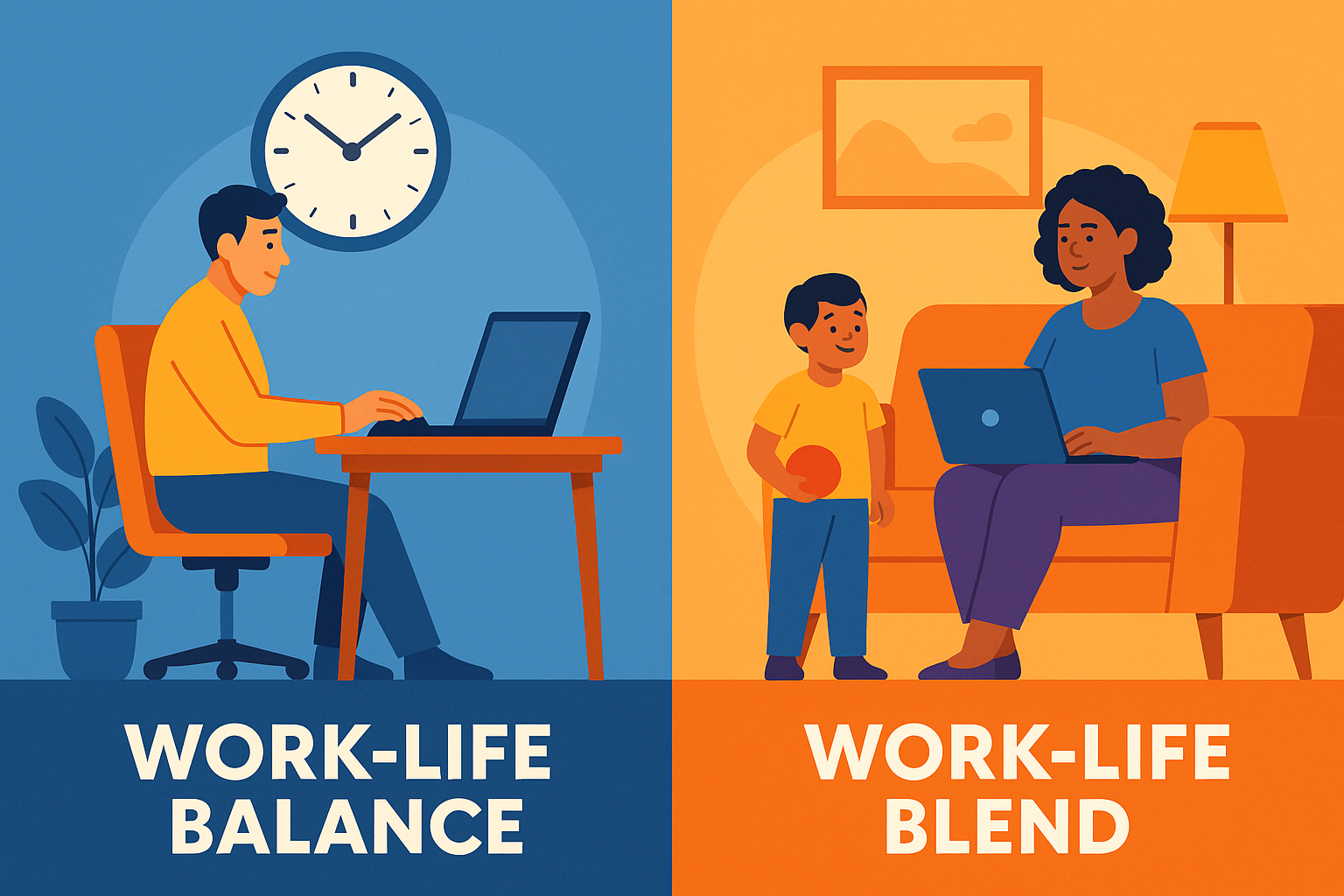
Work-life balance promotes clear boundaries: logging off at 6 pm, not checking emails on weekends, and preserving personal time. While this structure works for some, many employees find it unrealistic in today’s flexible world. In contrast, work-life blend integrates work and personal life more fluidly. It allows employees to pick up their kids from school between meetings, attend a gym class mid-day, or answer work emails in the evening after family time.
The question isn’t which approach is “better” universally it’s which fits your workforce. Balance works well for employees who thrive on structure, while blend supports those who value flexibility and autonomy. The future of HR lies in giving employees the choice to design their schedules based on their needs, without forcing one model for all.
Ultimately, whether balance or blend, the core principle is the same: wellbeing and productivity improve when people feel in control of their time. Organizations that respect and empower this choice will lead the way in 2025.