


For years, job hopping switching roles every one to two years was considered a warning sign for employers. Frequent moves suggested a lack of loyalty or an inability to commit. But in today’s fast-changing job market, job hopping is being redefined. Instead of being a red flag, it’s often a signal of adaptability, ambition, and continuous growth.
Modern employees, especially Millennials and Gen Z, value learning, flexibility, and meaningful work over long tenure. Changing jobs allows them to gain diverse skills, expand networks, and accelerate their careers. From an HR perspective, candidates with varied experiences often bring fresh perspectives and agility that long-tenured employees may lack.
That said, context matters. Jumping from job to job without clear progression can still raise concerns. But when moves are strategic demonstrating skill-building, new challenges, or upward growth job hopping can be an asset. The key for HR is to look beyond the résumé timeline and explore the why behind the changes.
Rather than dismissing job hoppers, organizations should ask: what strengths do they bring? In a world where agility is essential, candidates who have navigated multiple roles may be exactly what modern workplaces need. Job hopping is no longer a universal red flag it’s often a reflection of evolving career norms.
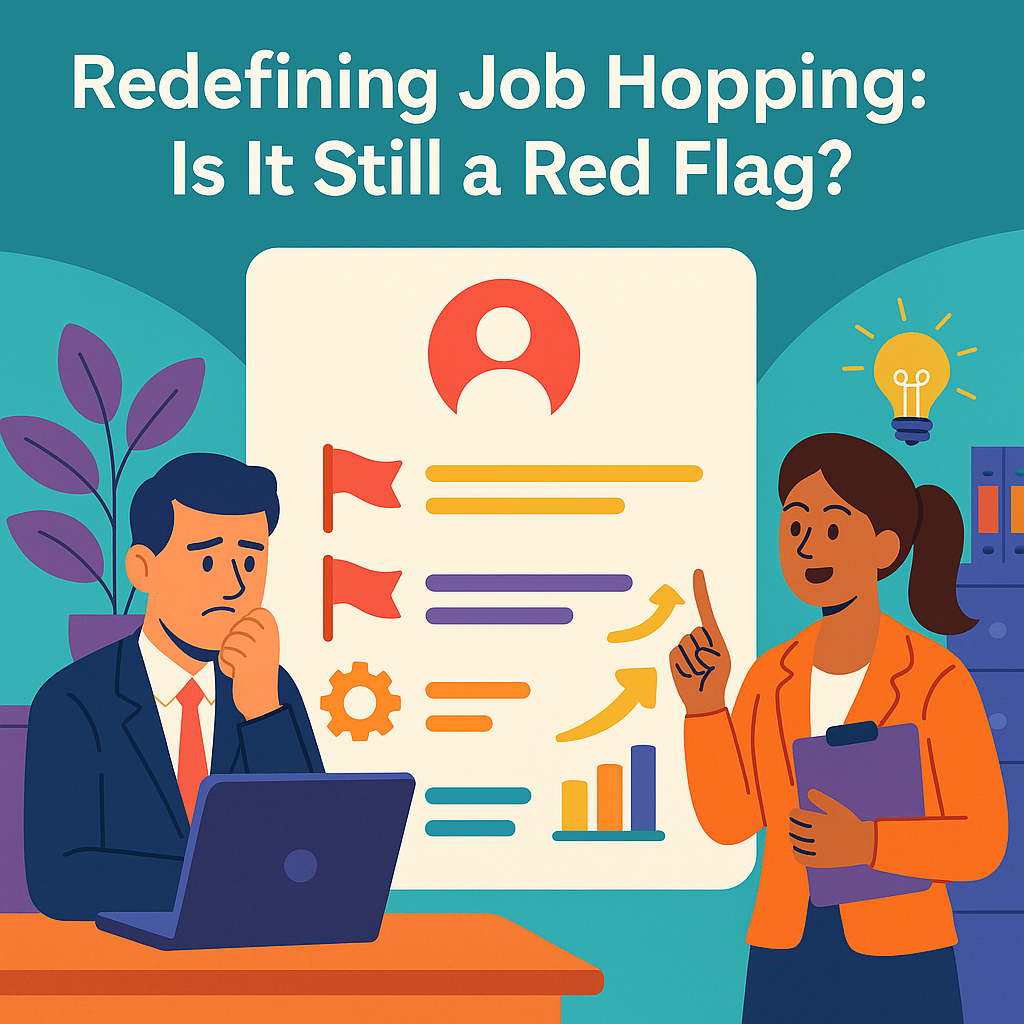
For years, job hopping switching roles every one to two years was considered a warning sign for employers. Frequent moves suggested a lack of loyalty or an inability to commit. But in today’s fast-changing job market, job hopping is being redefined. Instead of being a red flag, it’s often a signal of adaptability, ambition, and continuous growth.
Modern employees, especially Millennials and Gen Z, value learning, flexibility, and meaningful work over long tenure. Changing jobs allows them to gain diverse skills, expand networks, and accelerate their careers. From an HR perspective, candidates with varied experiences often bring fresh perspectives and agility that long-tenured employees may lack.
That said, context matters. Jumping from job to job without clear progression can still raise concerns. But when moves are strategic demonstrating skill-building, new challenges, or upward growth job hopping can be an asset. The key for HR is to look beyond the résumé timeline and explore the why behind the changes.
Rather than dismissing job hoppers, organizations should ask: what strengths do they bring? In a world where agility is essential, candidates who have navigated multiple roles may be exactly what modern workplaces need. Job hopping is no longer a universal red flag it’s often a reflection of evolving career norms.