


Recognition doesn’t always have to come in the form of awards, bonuses, or ceremonies. Sometimes, the most powerful motivators are the micro-moments of recognition the quick “thank you,” the acknowledgment during a meeting, or the personal note appreciating effort. These small gestures may seem minor, but their cumulative impact on employee engagement and morale is immense.
Micro-recognition works because it’s immediate and authentic. When employees feel their daily contributions are noticed, they experience a stronger sense of belonging and motivation. Unlike annual awards, micro-moments tie recognition directly to actions, reinforcing positive behavior in real time. This creates a ripple effect, encouraging others to go above and beyond.
For HR and leaders, building a culture of micro-recognition is about consistency. It doesn’t require budgets or complex systems just awareness and intention. Leaders should be trained to spot small wins and call them out, whether it’s meeting a tight deadline, helping a colleague, or simply demonstrating core values. Over time, these moments create a culture where recognition isn’t an event, but a habit.
When organizations embrace micro recognition, they discover that small acts carry big weight. Employees don’t just want to be celebrated for milestones; they want to feel valued in the everyday. And it’s these micro-moments that often make the difference between disengagement and lasting commitment.
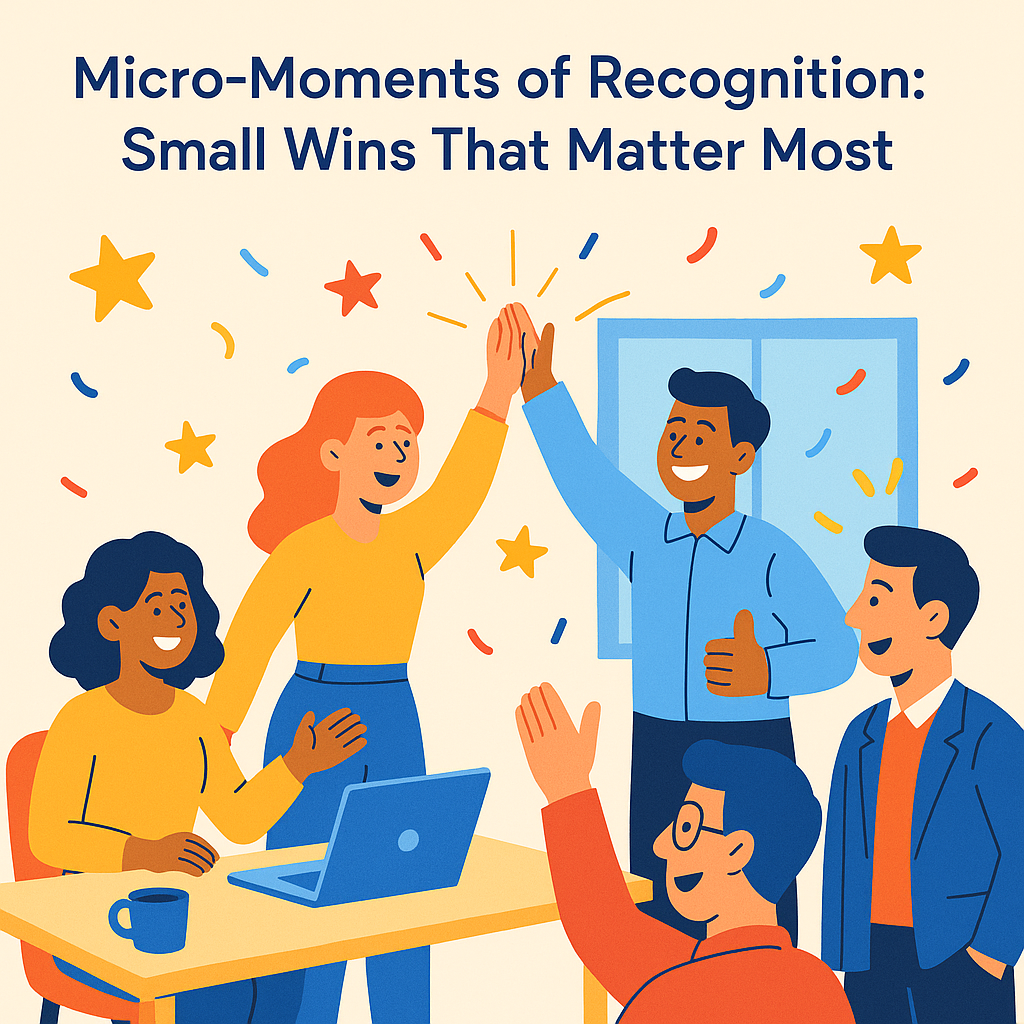
Recognition doesn’t always have to come in the form of awards, bonuses, or ceremonies. Sometimes, the most powerful motivators are the micro-moments of recognition the quick “thank you,” the acknowledgment during a meeting, or the personal note appreciating effort. These small gestures may seem minor, but their cumulative impact on employee engagement and morale is immense.
Micro-recognition works because it’s immediate and authentic. When employees feel their daily contributions are noticed, they experience a stronger sense of belonging and motivation. Unlike annual awards, micro-moments tie recognition directly to actions, reinforcing positive behavior in real time. This creates a ripple effect, encouraging others to go above and beyond.
For HR and leaders, building a culture of micro-recognition is about consistency. It doesn’t require budgets or complex systems just awareness and intention. Leaders should be trained to spot small wins and call them out, whether it’s meeting a tight deadline, helping a colleague, or simply demonstrating core values. Over time, these moments create a culture where recognition isn’t an event, but a habit.
When organizations embrace micro recognition, they discover that small acts carry big weight. Employees don’t just want to be celebrated for milestones; they want to feel valued in the everyday. And it’s these micro-moments that often make the difference between disengagement and lasting commitment.