


Gratitude is often celebrated as one of the healthiest workplace habits. A simple “thank you” can boost morale, improve engagement, and make employees feel valued. But when appreciation becomes an expectation or worse, a mask for deeper issues it turns into toxic gratitude. Instead of motivating, it pressures employees into accepting unfair workloads, poor treatment, or lack of recognition beyond a hollow “thank you.”
Toxic gratitude happens when leaders rely on constant praise to keep employees compliant, rather than addressing structural problems. For example, telling employees they should be “grateful” for having a job during tough times, or constantly thanking them for working long hours without adjusting workloads, can feel manipulative. Over time, employees may feel guilty for raising concerns, thinking gratitude should replace their need for fair treatment and balance.
For HR, the challenge is to ensure gratitude remains authentic and doesn’t become a tool of control. True appreciation must be paired with action like fair pay, realistic deadlines, and opportunities for growth. Recognizing employees shouldn’t be about silencing them, but about celebrating their contributions while continuing to support their well-being.
When done right, gratitude fuels positivity and connection. But when it becomes toxic, it undermines trust and leaves employees feeling undervalued. The lesson for leaders and HR is simple: gratitude should complement fairness, not substitute for it.
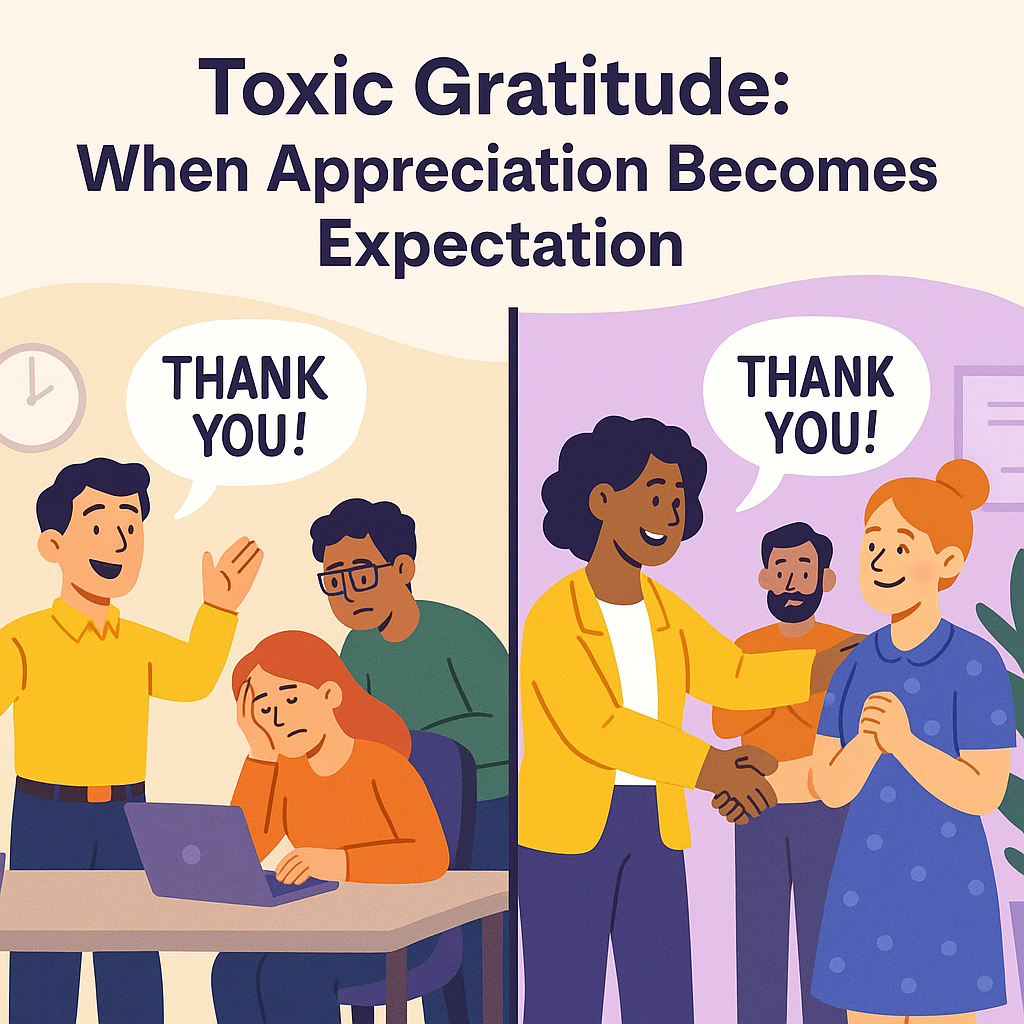
Gratitude is often celebrated as one of the healthiest workplace habits. A simple “thank you” can boost morale, improve engagement, and make employees feel valued. But when appreciation becomes an expectation or worse, a mask for deeper issues it turns into toxic gratitude. Instead of motivating, it pressures employees into accepting unfair workloads, poor treatment, or lack of recognition beyond a hollow “thank you.”
Toxic gratitude happens when leaders rely on constant praise to keep employees compliant, rather than addressing structural problems. For example, telling employees they should be “grateful” for having a job during tough times, or constantly thanking them for working long hours without adjusting workloads, can feel manipulative. Over time, employees may feel guilty for raising concerns, thinking gratitude should replace their need for fair treatment and balance.
For HR, the challenge is to ensure gratitude remains authentic and doesn’t become a tool of control. True appreciation must be paired with action like fair pay, realistic deadlines, and opportunities for growth. Recognizing employees shouldn’t be about silencing them, but about celebrating their contributions while continuing to support their well-being.
When done right, gratitude fuels positivity and connection. But when it becomes toxic, it undermines trust and leaves employees feeling undervalued. The lesson for leaders and HR is simple: gratitude should complement fairness, not substitute for it.