


In recruitment conversations, the terms talent pipeline and talent pool are often used interchangeably. But for HR leaders, understanding the difference is critical for building a strong, future-ready workforce. Both concepts focus on securing talent, yet they serve different purposes in the hiring process.
A talent pool is a broad group of potential candidates who may be suitable for future opportunities. This group includes past applicants, passive candidates, referrals, or individuals interested in your company but not currently under consideration for a specific role. Pools are about collecting possibilities they give HR a wide range of people to engage with when new roles open up.
A talent pipeline, on the other hand, is far more structured. Pipelines focus on candidates who are being actively nurtured and developed for specific roles, especially critical or hard-to-fill positions. This includes building relationships, conducting pre-assessments, and preparing individuals to step into a role when the time comes. In short, pools are about quantity, while pipelines are about readiness.
For HR, the smartest strategy isn’t choosing between pools or pipelines it’s integrating both. Talent pools keep options broad and diverse, while pipelines ensure you have top candidates primed for key roles. By balancing the two, organizations can reduce time to hire, strengthen employer branding, and build a sustainable approach to talent acquisition.
In recruitment conversations, the terms talent pipeline and talent pool are often used interchangeably. But for HR leaders, understanding the difference is critical for building a strong, future-ready workforce. Both concepts focus on securing talent, yet they serve different purposes in the hiring process.
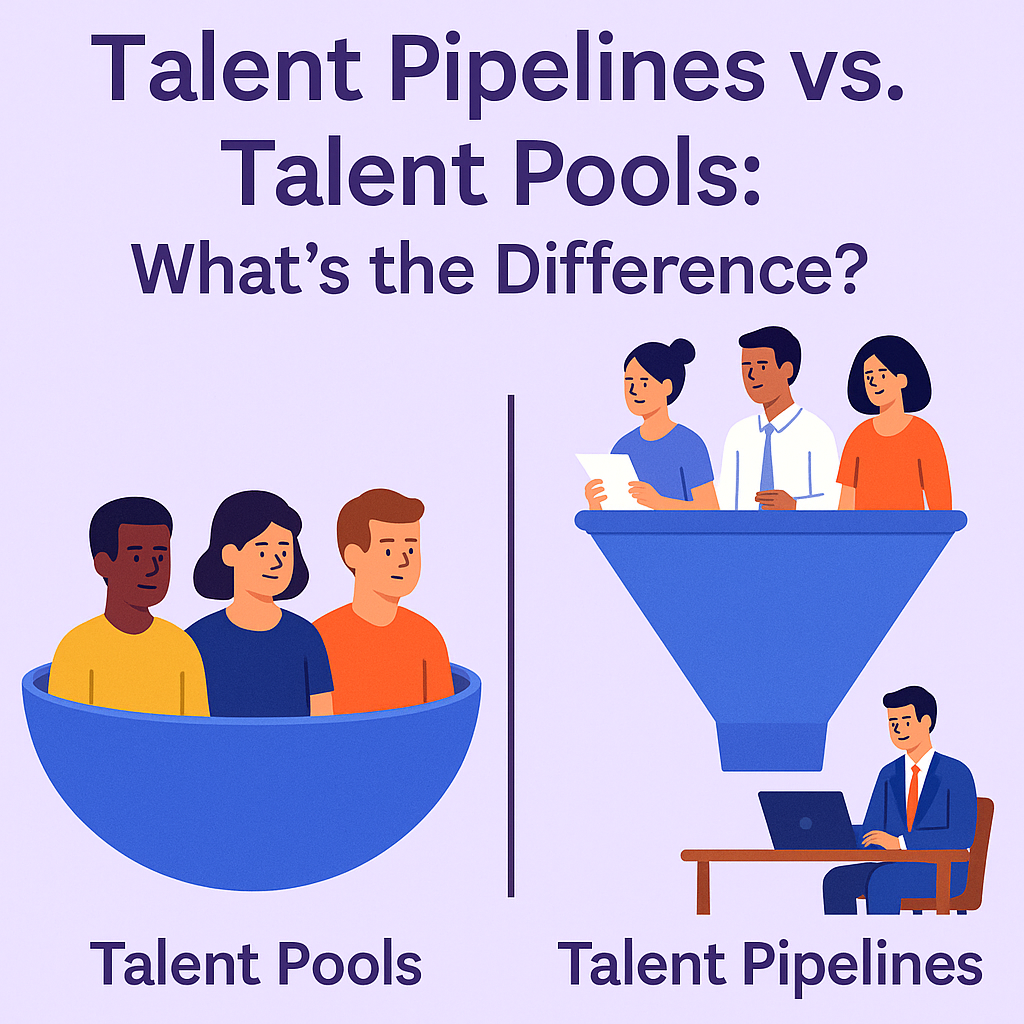
A talent pool is a broad group of potential candidates who may be suitable for future opportunities. This group includes past applicants, passive candidates, referrals, or individuals interested in your company but not currently under consideration for a specific role. Pools are about collecting possibilities they give HR a wide range of people to engage with when new roles open up.
A talent pipeline, on the other hand, is far more structured. Pipelines focus on candidates who are being actively nurtured and developed for specific roles, especially critical or hard-to-fill positions. This includes building relationships, conducting pre-assessments, and preparing individuals to step into a role when the time comes. In short, pools are about quantity, while pipelines are about readiness.
For HR, the smartest strategy isn’t choosing between pools or pipelines it’s integrating both. Talent pools keep options broad and diverse, while pipelines ensure you have top candidates primed for key roles. By balancing the two, organizations can reduce time to hire, strengthen employer branding, and build a sustainable approach to talent acquisition.