


In a hyperconnected world, employees are constantly bombarded by emails, Slack messages, and notifications. While technology enables collaboration, it also creates an “always on” culture that drains focus and fuels burnout. As a response, some organizations are experimenting with Digital Detox Days scheduled time when employees unplug from devices to rest, recharge, and reconnect. But do these initiatives really work?
Digital detox days can provide a much-needed reset. By stepping away from screens, employees reclaim space for reflection, creativity, and stress relief. Studies show that reduced screen time improves sleep, mental health, and overall well being. When companies encourage employees to unplug, even for a single day, it signals a genuine commitment to balance and mental health not just productivity.
However, digital detoxes can feel superficial if they’re not supported by broader cultural change. If employees know they’ll return to an overflowing inbox or unrealistic expectations, the benefits vanish quickly. For HR, the challenge is to ensure that detox days aren’t one-off perks, but part of a larger wellness strategy that includes boundary-setting, workload management, and leadership modeling healthy behavior.
Ultimately, digital detox days can recharge employees when implemented thoughtfully. But they’re not a cure-all. True well being requires ongoing efforts to reduce digital overload, create mindful work practices, and design cultures where disconnecting is normalized not exceptional.
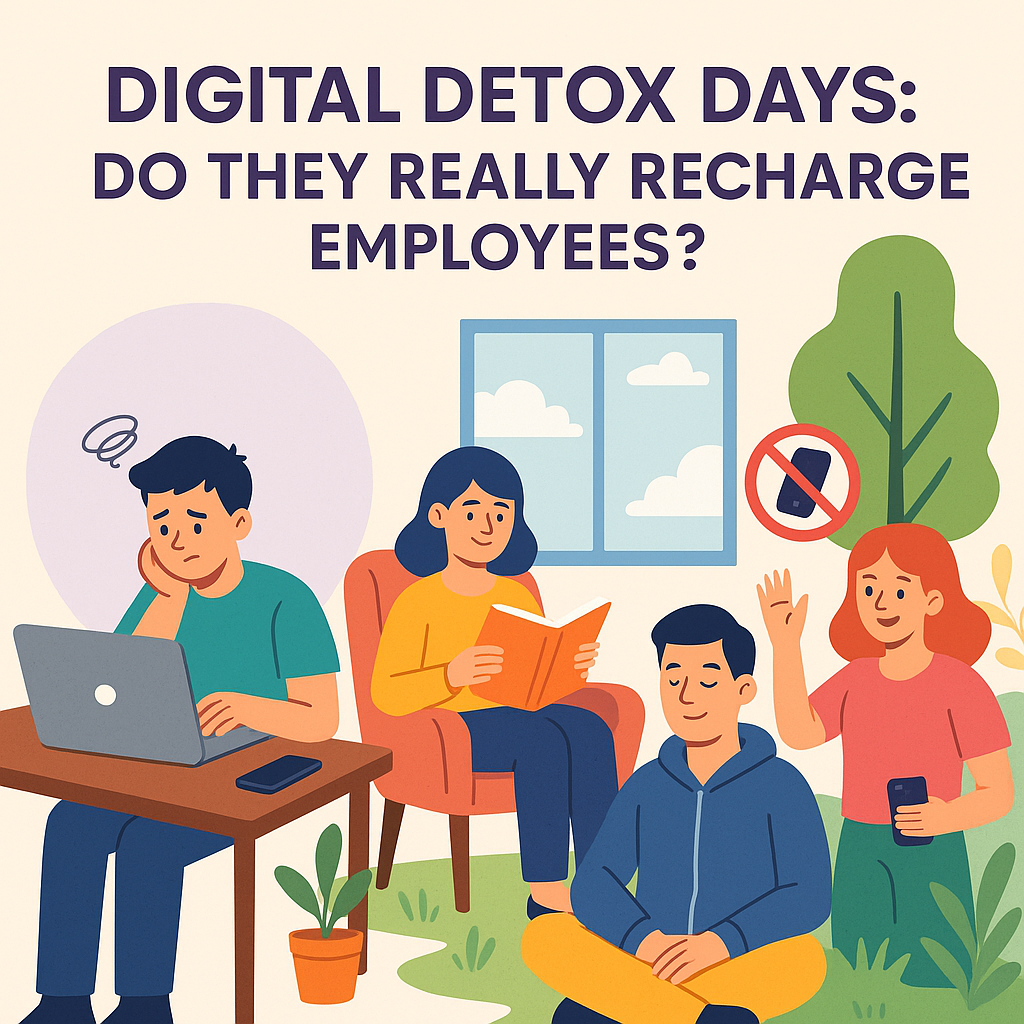
In a hyperconnected world, employees are constantly bombarded by emails, Slack messages, and notifications. While technology enables collaboration, it also creates an “always on” culture that drains focus and fuels burnout. As a response, some organizations are experimenting with Digital Detox Days scheduled time when employees unplug from devices to rest, recharge, and reconnect. But do these initiatives really work?
Digital detox days can provide a much-needed reset. By stepping away from screens, employees reclaim space for reflection, creativity, and stress relief. Studies show that reduced screen time improves sleep, mental health, and overall well being. When companies encourage employees to unplug, even for a single day, it signals a genuine commitment to balance and mental health not just productivity.
However, digital detoxes can feel superficial if they’re not supported by broader cultural change. If employees know they’ll return to an overflowing inbox or unrealistic expectations, the benefits vanish quickly. For HR, the challenge is to ensure that detox days aren’t one-off perks, but part of a larger wellness strategy that includes boundary-setting, workload management, and leadership modeling healthy behavior.
Ultimately, digital detox days can recharge employees when implemented thoughtfully. But they’re not a cure-all. True well being requires ongoing efforts to reduce digital overload, create mindful work practices, and design cultures where disconnecting is normalized not exceptional.