


For years, companies have leaned on perks to attract and retain employees free lunches, gym memberships, game rooms, and casual Fridays. But as the workforce evolves, employees are making one thing clear: perks alone don’t inspire loyalty. The new currency of retention is purpose a sense that their work matters, contributes to something bigger, and aligns with their personal values.
Perks are nice-to-have, but they’re surface-level. They may generate excitement at first, but they don’t sustain engagement when workloads increase or challenges arise. Purpose, on the other hand, taps into intrinsic motivation. Employees who see how their efforts contribute to meaningful outcomes are more resilient, innovative, and committed. It’s the difference between “I’m doing my job” and “I’m part of a mission.”
For HR, embedding purpose means moving beyond flashy benefits to building authentic connections between employees and organizational goals. Leaders should communicate the “why” behind initiatives, recognize contributions that align with core values, and give employees opportunities to grow in ways that matter to them personally and professionally. Creating a culture where people feel valued for more than just output transforms retention from a transaction into a relationship.
In today’s talent market, where skilled employees have choices, companies that lead with purpose will stand out. By aligning vision with values, HR can foster loyalty that no perk or bonus can match because people stay where they feel they truly belong.
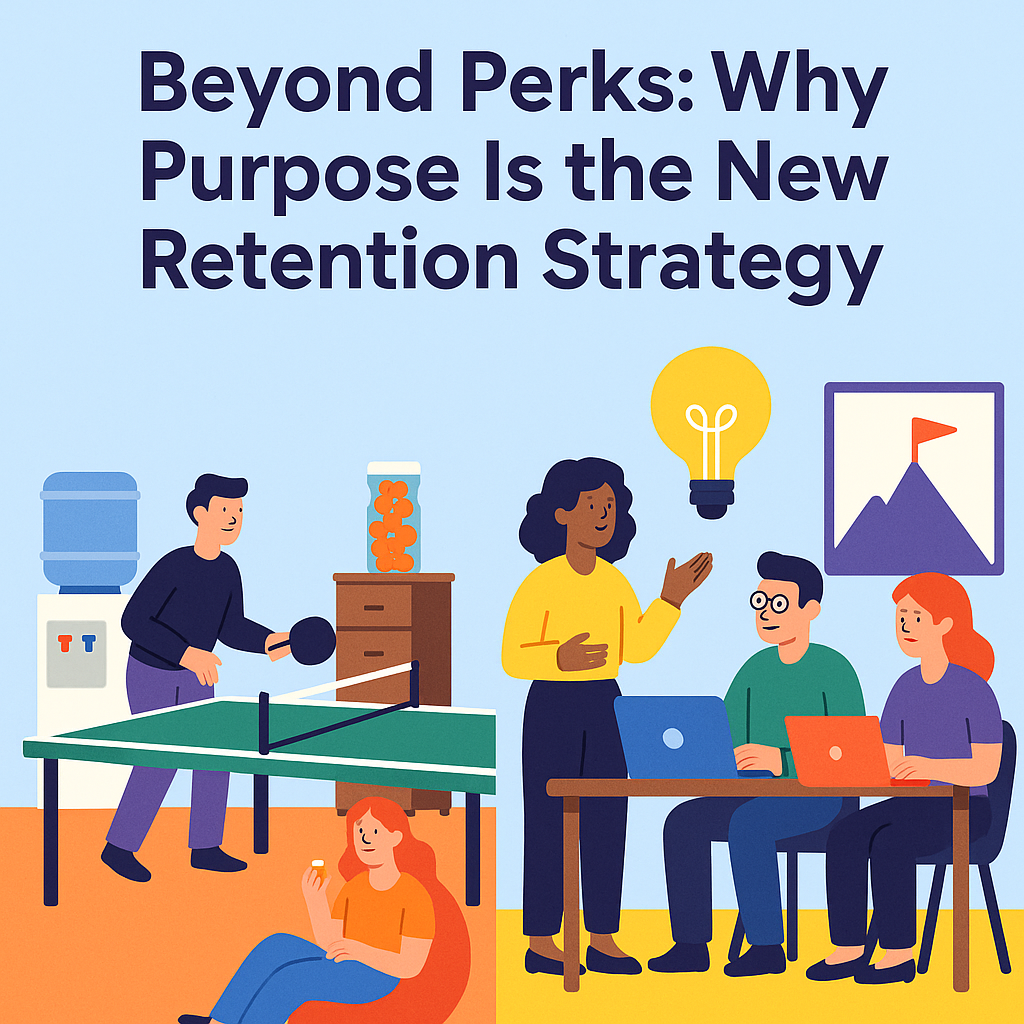
For years, companies have leaned on perks to attract and retain employees free lunches, gym memberships, game rooms, and casual Fridays. But as the workforce evolves, employees are making one thing clear: perks alone don’t inspire loyalty. The new currency of retention is purpose a sense that their work matters, contributes to something bigger, and aligns with their personal values.
Perks are nice-to-have, but they’re surface-level. They may generate excitement at first, but they don’t sustain engagement when workloads increase or challenges arise. Purpose, on the other hand, taps into intrinsic motivation. Employees who see how their efforts contribute to meaningful outcomes are more resilient, innovative, and committed. It’s the difference between “I’m doing my job” and “I’m part of a mission.”
For HR, embedding purpose means moving beyond flashy benefits to building authentic connections between employees and organizational goals. Leaders should communicate the “why” behind initiatives, recognize contributions that align with core values, and give employees opportunities to grow in ways that matter to them personally and professionally. Creating a culture where people feel valued for more than just output transforms retention from a transaction into a relationship.
In today’s talent market, where skilled employees have choices, companies that lead with purpose will stand out. By aligning vision with values, HR can foster loyalty that no perk or bonus can match because people stay where they feel they truly belong.