


Fitness trackers, smartwatches, and wearable devices are no longer just consumer gadgets they’re making their way into the workplace. Companies are increasingly offering wearables as part of wellness programs, tracking everything from steps and sleep to stress levels. On the surface, this looks like a powerful way to boost employee health and productivity. But it also raises a critical question: where does wellness end and privacy invasion begin?
On the positive side, wearables can encourage healthier habits. Employees get real-time insights into their activity levels, reminders to take breaks, and even stress management support. For organizations, aggregated (and anonymized) data can highlight workplace wellness trends, helping HR design initiatives that reduce burnout and improve engagement. Done right, wearables can create a healthier, happier workforce.
But the risks are just as real. If employees feel pressured to share personal health data, wearables can quickly become intrusive. Even anonymized data can spark concerns: who really has access, and how might it be used? Trust is fragile if workers feel monitored instead of supported, wellness programs can backfire, creating stress rather than reducing it.
For HR, the challenge is balance. Transparency, consent, and choice must be at the heart of any wearable program. Employees should control what data is shared, and companies should focus on collective wellness insights rather than individual surveillance. When handled ethically, wearables can be a powerful tool for well-being. But without safeguards, they risk crossing the line from health booster to privacy invader.
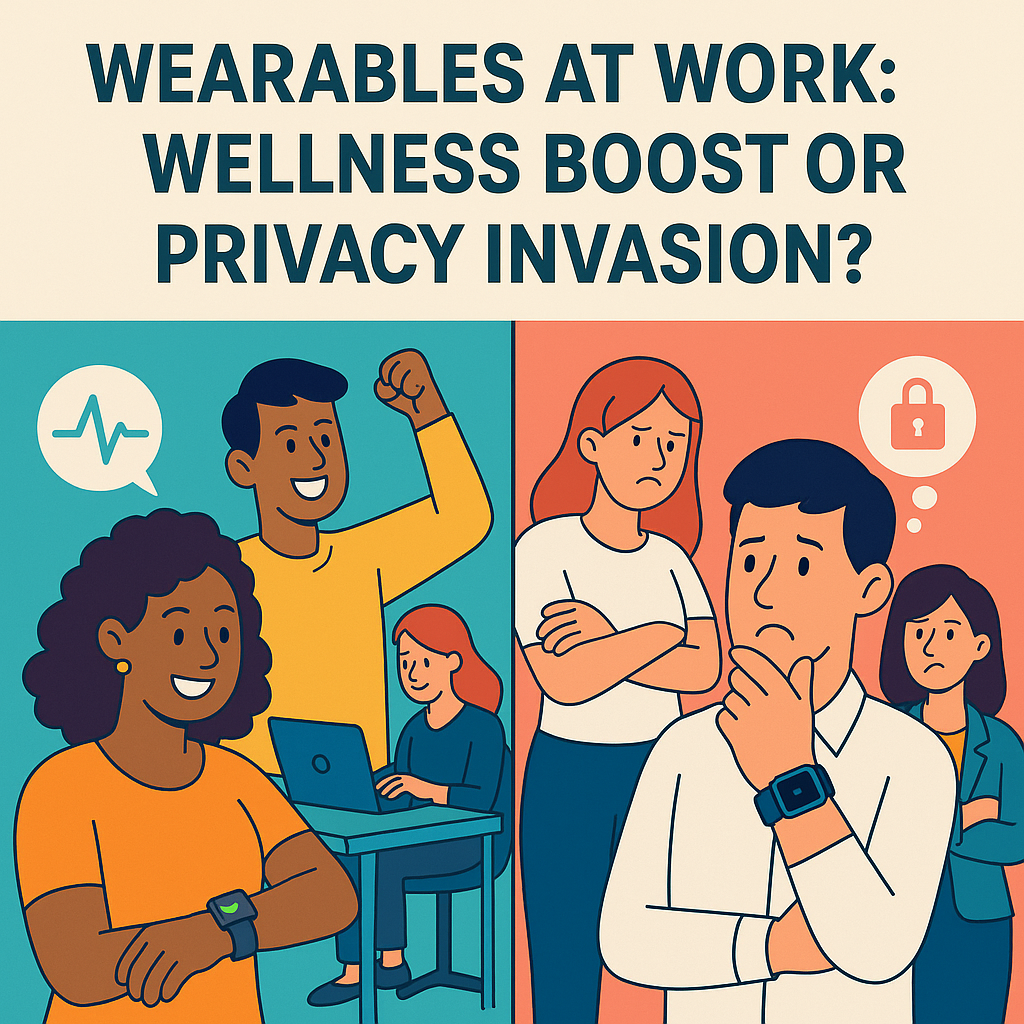
Fitness trackers, smartwatches, and wearable devices are no longer just consumer gadgets they’re making their way into the workplace. Companies are increasingly offering wearables as part of wellness programs, tracking everything from steps and sleep to stress levels. On the surface, this looks like a powerful way to boost employee health and productivity. But it also raises a critical question: where does wellness end and privacy invasion begin?
On the positive side, wearables can encourage healthier habits. Employees get real-time insights into their activity levels, reminders to take breaks, and even stress management support. For organizations, aggregated (and anonymized) data can highlight workplace wellness trends, helping HR design initiatives that reduce burnout and improve engagement. Done right, wearables can create a healthier, happier workforce.
But the risks are just as real. If employees feel pressured to share personal health data, wearables can quickly become intrusive. Even anonymized data can spark concerns: who really has access, and how might it be used? Trust is fragile if workers feel monitored instead of supported, wellness programs can backfire, creating stress rather than reducing it.
For HR, the challenge is balance. Transparency, consent, and choice must be at the heart of any wearable program. Employees should control what data is shared, and companies should focus on collective wellness insights rather than individual surveillance. When handled ethically, wearables can be a powerful tool for well-being. But without safeguards, they risk crossing the line from health booster to privacy invader.