


A positive attitude can be a powerful force in the workplace. Encouragement, optimism, and resilience all help teams navigate challenges. But when positivity is forced or becomes the only acceptable response, it turns into toxic positivity and its hidden costs can quietly harm employees and culture.
Toxic positivity dismisses real emotions. When employees are told to “just stay positive” in the face of stress, conflict, or burnout, it invalidates their experiences. Over time, this leads to suppressed feelings, resentment, and disengagement. Instead of creating a supportive environment, it builds a culture where people feel they must wear a mask rather than express themselves honestly.
For HR, the danger lies in confusing positivity with well-being. Real well-being acknowledges that challenges, frustrations, and failures are part of the work experience. Leaders must create space for open conversations, validate struggles, and offer solutions instead of clichés. Encouraging vulnerability and honest dialogue builds trust far more effectively than insisting on smiles.
The healthiest cultures aren’t those where everyone is “always positive,” but where employees feel safe to bring their whole selves to work. By addressing toxic positivity and replacing it with authentic support, HR can foster resilience, empathy, and true engagement.
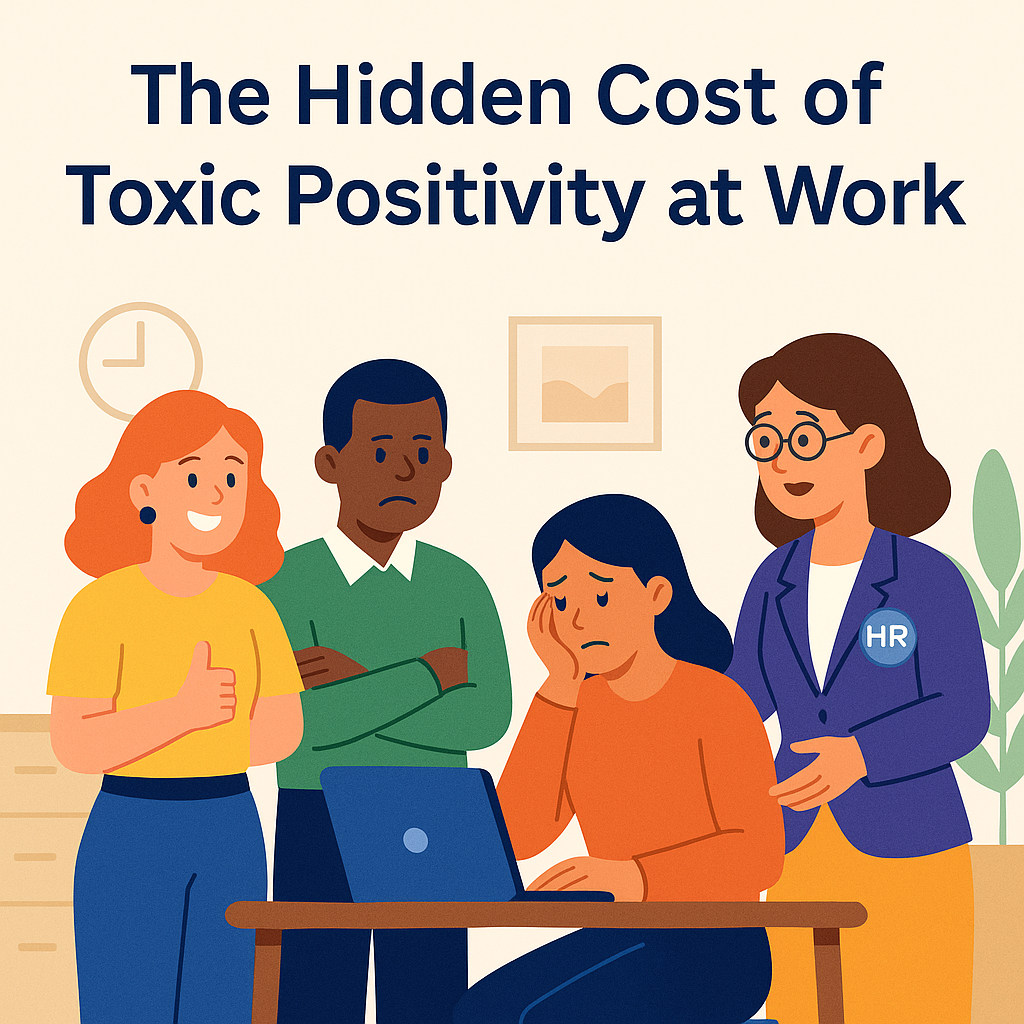
A positive attitude can be a powerful force in the workplace. Encouragement, optimism, and resilience all help teams navigate challenges. But when positivity is forced or becomes the only acceptable response, it turns into toxic positivity and its hidden costs can quietly harm employees and culture.
Toxic positivity dismisses real emotions. When employees are told to “just stay positive” in the face of stress, conflict, or burnout, it invalidates their experiences. Over time, this leads to suppressed feelings, resentment, and disengagement. Instead of creating a supportive environment, it builds a culture where people feel they must wear a mask rather than express themselves honestly.
For HR, the danger lies in confusing positivity with well-being. Real well-being acknowledges that challenges, frustrations, and failures are part of the work experience. Leaders must create space for open conversations, validate struggles, and offer solutions instead of clichés. Encouraging vulnerability and honest dialogue builds trust far more effectively than insisting on smiles.
The healthiest cultures aren’t those where everyone is “always positive,” but where employees feel safe to bring their whole selves to work. By addressing toxic positivity and replacing it with authentic support, HR can foster resilience, empathy, and true engagement.