


In many organizations, employees are promoted into management because they excel at their individual roles. But being a high performer doesn’t automatically translate into being a great coach. This creates a coaching gap where managers are expected to guide, mentor, and develop their teams, but lack the skills or mindset to do so effectively.
Unlike technical expertise, coaching requires empathy, active listening, patience, and the ability to inspire growth in others. Many managers default to giving instructions or micromanaging because that’s what they know best. Unfortunately, this approach stifles development and prevents employees from building confidence and independence. Without true coaching, teams may meet short-term goals but struggle to grow in the long run.
HR can play a critical role in closing this gap by offering leadership development programs that emphasize coaching as a core competency. This might include training managers in feedback delivery, mentoring, and emotional intelligence, while also providing tools like peer-learning circles or structured coaching frameworks. Coaching should be seen not as an add-on, but as a key responsibility of every leader.
When managers embrace coaching, they shift from being taskmasters to growth enablers. The result is a more motivated, engaged, and resilient workforce. Closing the coaching gap is not just about better leaders it’s about building a culture where everyone has the support to reach their potential.
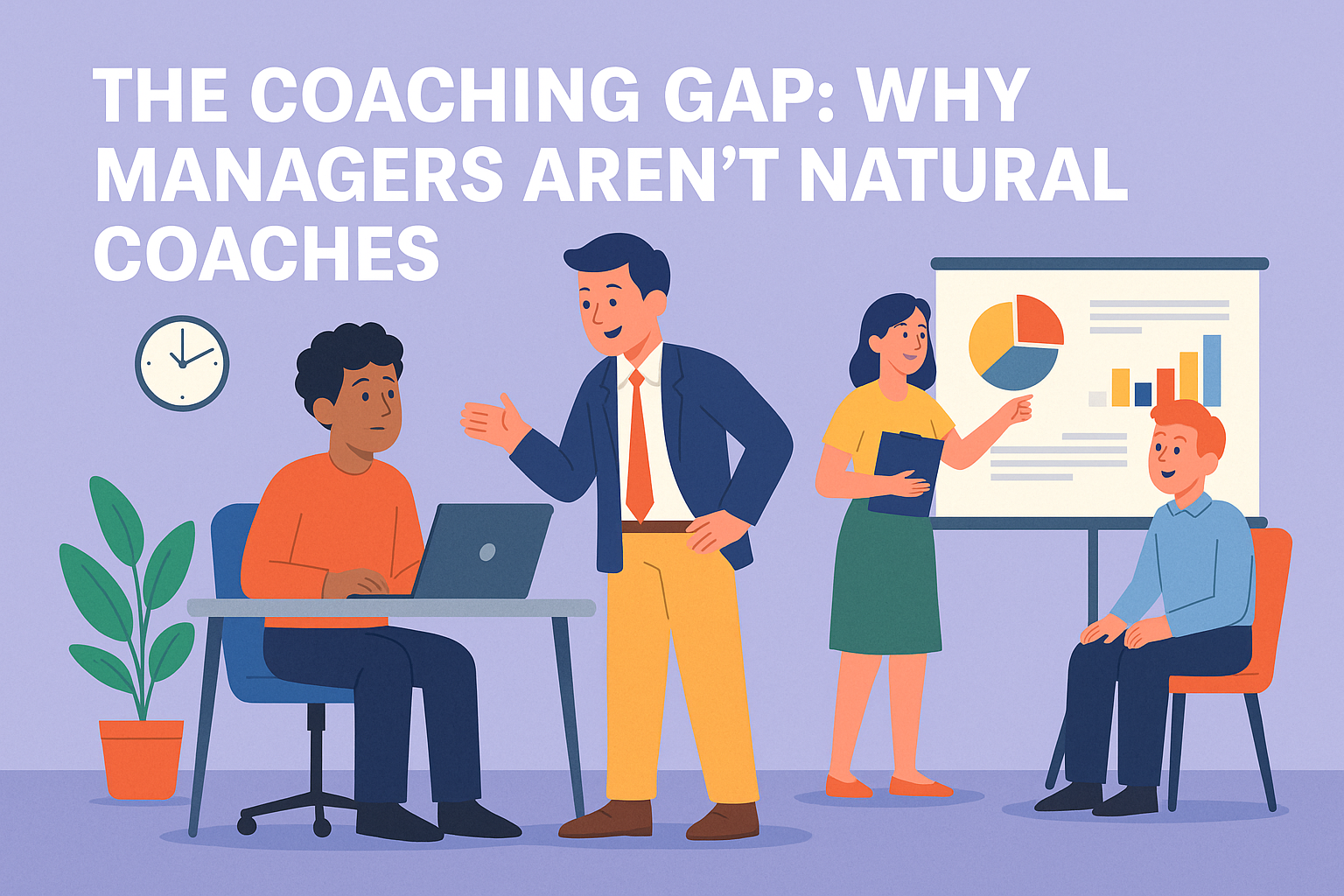
In many organizations, employees are promoted into management because they excel at their individual roles. But being a high performer doesn’t automatically translate into being a great coach. This creates a coaching gap where managers are expected to guide, mentor, and develop their teams, but lack the skills or mindset to do so effectively.
Unlike technical expertise, coaching requires empathy, active listening, patience, and the ability to inspire growth in others. Many managers default to giving instructions or micromanaging because that’s what they know best. Unfortunately, this approach stifles development and prevents employees from building confidence and independence. Without true coaching, teams may meet short-term goals but struggle to grow in the long run.
HR can play a critical role in closing this gap by offering leadership development programs that emphasize coaching as a core competency. This might include training managers in feedback delivery, mentoring, and emotional intelligence, while also providing tools like peer-learning circles or structured coaching frameworks. Coaching should be seen not as an add-on, but as a key responsibility of every leader.
When managers embrace coaching, they shift from being taskmasters to growth enablers. The result is a more motivated, engaged, and resilient workforce. Closing the coaching gap is not just about better leaders it’s about building a culture where everyone has the support to reach their potential.