


Leadership isn’t only learned in classrooms or training programs it’s often absorbed by watching leaders in action. This is the essence of shadow leadership: when future leaders learn by observing how current leaders handle challenges, communicate, and make decisions. For many employees, the most impactful lessons aren’t in manuals but in the day-to-day behaviors of those they look up to.
Shadow leadership gives emerging leaders real-world insights into decision-making, resilience, and people management. It shows them how leaders respond under pressure, balance competing priorities, or inspire their teams. Unlike formal training, this observation-based learning feels authentic because it’s grounded in lived experiences. But it also comes with a responsibility leaders must remember that their behaviors, both good and bad, are constantly being modeled.
For HR, encouraging shadow leadership means creating opportunities for mentorship, role shadowing, and cross-functional exposure. Giving rising talent a chance to sit in on leadership meetings, observe strategy discussions, or participate in problem-solving sessions accelerates their growth. It’s about moving beyond theory and showing what leadership looks like in practice.
When done right, shadow leadership becomes a powerful pipeline for succession planning. By observing, reflecting, and eventually applying what they’ve seen, future leaders develop the confidence and skills to step into bigger roles. In many ways, the legacy of a leader isn’t just in what they achieve it’s in who they quietly inspire to lead next.
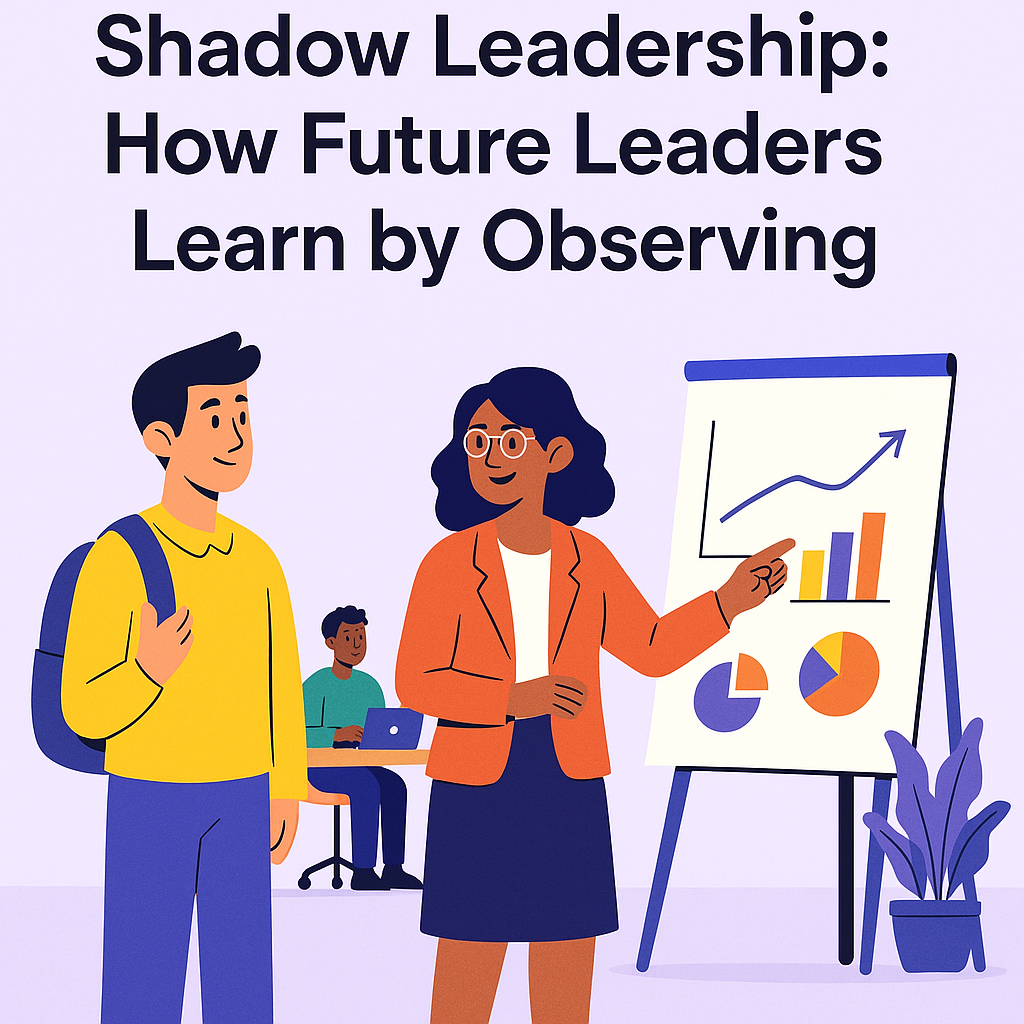
Leadership isn’t only learned in classrooms or training programs it’s often absorbed by watching leaders in action. This is the essence of shadow leadership: when future leaders learn by observing how current leaders handle challenges, communicate, and make decisions. For many employees, the most impactful lessons aren’t in manuals but in the day-to-day behaviors of those they look up to.
Shadow leadership gives emerging leaders real-world insights into decision-making, resilience, and people management. It shows them how leaders respond under pressure, balance competing priorities, or inspire their teams. Unlike formal training, this observation-based learning feels authentic because it’s grounded in lived experiences. But it also comes with a responsibility leaders must remember that their behaviors, both good and bad, are constantly being modeled.
For HR, encouraging shadow leadership means creating opportunities for mentorship, role shadowing, and cross-functional exposure. Giving rising talent a chance to sit in on leadership meetings, observe strategy discussions, or participate in problem-solving sessions accelerates their growth. It’s about moving beyond theory and showing what leadership looks like in practice.
When done right, shadow leadership becomes a powerful pipeline for succession planning. By observing, reflecting, and eventually applying what they’ve seen, future leaders develop the confidence and skills to step into bigger roles. In many ways, the legacy of a leader isn’t just in what they achieve it’s in who they quietly inspire to lead next.