


Promotions are among the most defining moments in an employee’s career. Traditionally, they’ve relied on a mix of manager evaluations, peer feedback, and leadership judgment. But with the rise of HR analytics, many companies are now turning to data-driven promotions, using performance metrics, productivity dashboards, and algorithms to guide decisions. The big question is: does this make promotions more fair or dangerously over-automated?
On the one hand, data-driven promotions promise transparency. Decisions are backed by measurable outcomes like project completion rates, sales growth, or engagement scores—reducing the risk of favoritism or unconscious bias. Employees gain clarity on what matters, and promotions feel more merit-based. For HR, this creates consistency and a more scalable way to manage career progression.
Yet, there’s a flip side. Over-reliance on data can strip away the human element of leadership potential. Numbers might capture productivity but miss qualities like empathy, creativity, or resilience traits essential for future leaders. Algorithms may also reinforce hidden biases if the underlying data isn’t diverse or balanced. Employees can feel reduced to statistics rather than valued as individuals, damaging trust and morale.
The solution lies in balance. Data should inform promotion decisions, not dictate them. By blending analytics with human judgment—metrics with mentorship HR can ensure promotions are both fair and human-centered. After all, the best leaders aren’t always the ones with the highest numbers, but those who inspire others to grow.
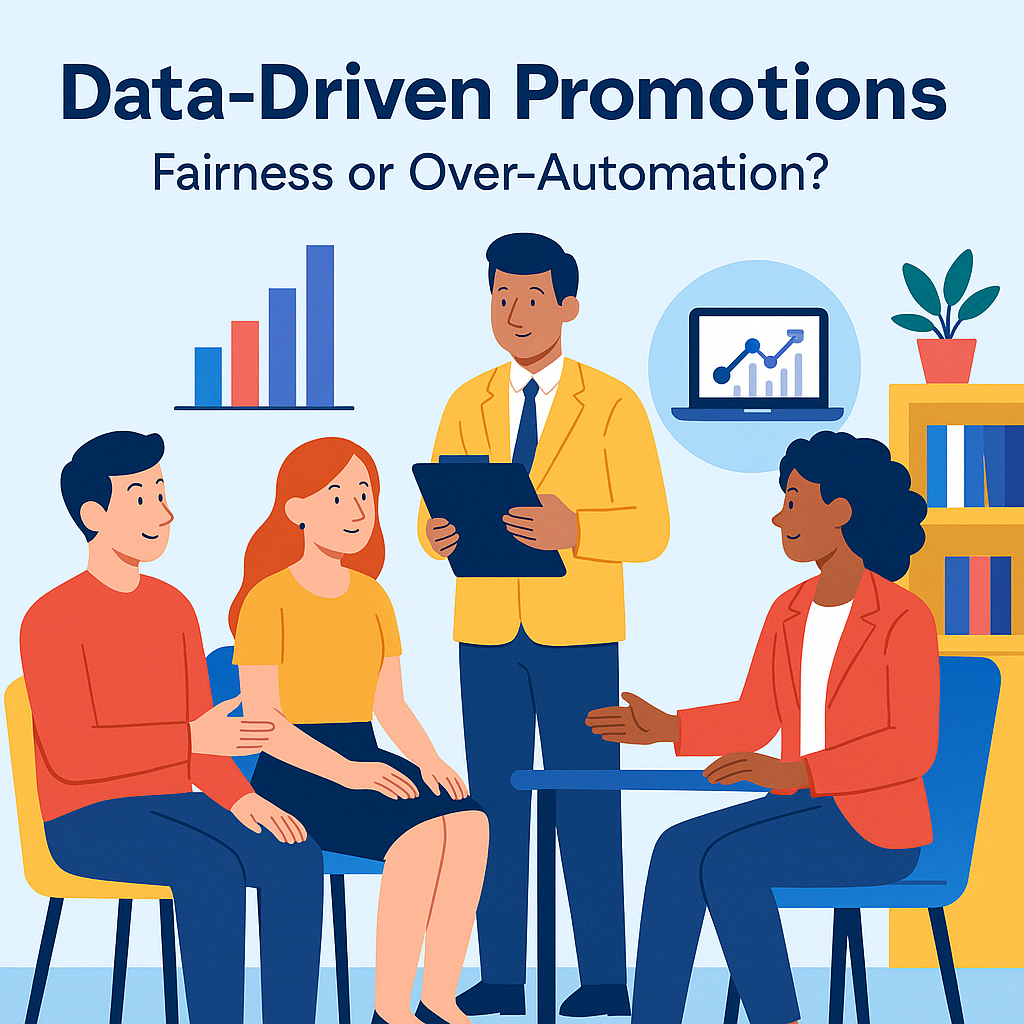
Promotions are among the most defining moments in an employee’s career. Traditionally, they’ve relied on a mix of manager evaluations, peer feedback, and leadership judgment. But with the rise of HR analytics, many companies are now turning to data-driven promotions, using performance metrics, productivity dashboards, and algorithms to guide decisions. The big question is: does this make promotions more fair or dangerously over-automated?
On the one hand, data-driven promotions promise transparency. Decisions are backed by measurable outcomes like project completion rates, sales growth, or engagement scores—reducing the risk of favoritism or unconscious bias. Employees gain clarity on what matters, and promotions feel more merit-based. For HR, this creates consistency and a more scalable way to manage career progression.
Yet, there’s a flip side. Over-reliance on data can strip away the human element of leadership potential. Numbers might capture productivity but miss qualities like empathy, creativity, or resilience traits essential for future leaders. Algorithms may also reinforce hidden biases if the underlying data isn’t diverse or balanced. Employees can feel reduced to statistics rather than valued as individuals, damaging trust and morale.
The solution lies in balance. Data should inform promotion decisions, not dictate them. By blending analytics with human judgment—metrics with mentorship HR can ensure promotions are both fair and human-centered. After all, the best leaders aren’t always the ones with the highest numbers, but those who inspire others to grow.