


One of the most powerful promises of modern HR technology is predictive analytics the ability to forecast workforce trends using data. From performance reviews to absenteeism records, predictive tools claim they can identify employees who may be at risk of leaving. But the question remains: Can HR truly predict turnover, and if so, how reliable is it?
The strength of predictive analytics lies in patterns. By analyzing factors like declining engagement scores, missed training opportunities, or reduced participation in team activities, these systems can flag early warning signs of attrition. This gives HR the chance to intervene with career development, coaching, or recognition programs before an employee decides to leave.
However, predictive analytics is not a crystal ball. People are complex, and decisions to resign are influenced by personal, professional, and even cultural factors that data alone may not capture. Over-reliance on algorithms also carries risks of bias or false assumptions, especially if the data feeding the system is incomplete or skewed.
The real power of predictive analytics comes when it’s paired with human insight. Data can highlight what is happening, but HR leaders still need conversations, empathy, and context to understand why. When used responsibly, predictive analytics doesn’t replace HR it empowers it, giving leaders the tools to act proactively and build stronger retention strategies.
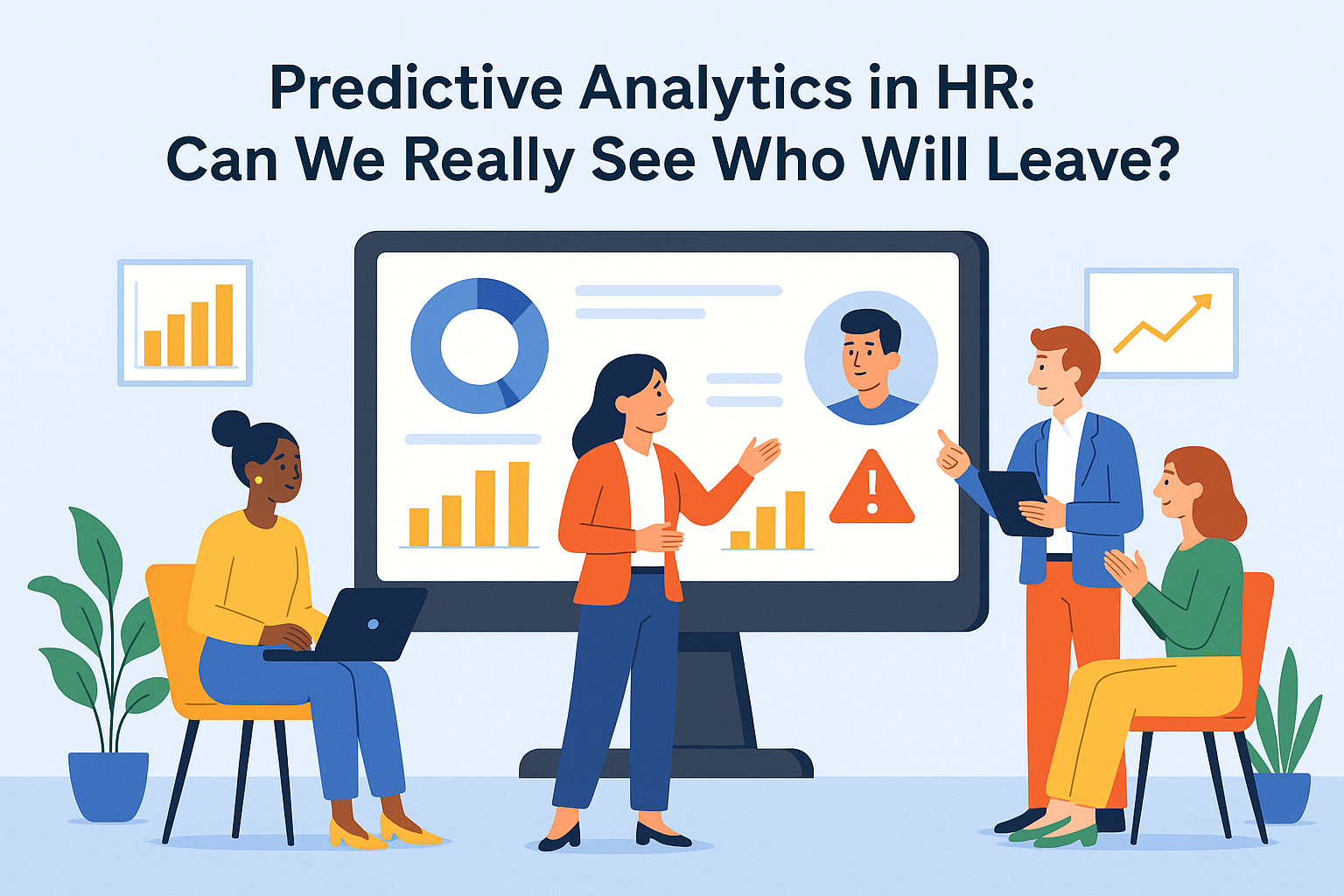
One of the most powerful promises of modern HR technology is predictive analytics the ability to forecast workforce trends using data. From performance reviews to absenteeism records, predictive tools claim they can identify employees who may be at risk of leaving. But the question remains: Can HR truly predict turnover, and if so, how reliable is it?
The strength of predictive analytics lies in patterns. By analyzing factors like declining engagement scores, missed training opportunities, or reduced participation in team activities, these systems can flag early warning signs of attrition. This gives HR the chance to intervene with career development, coaching, or recognition programs before an employee decides to leave.
However, predictive analytics is not a crystal ball. People are complex, and decisions to resign are influenced by personal, professional, and even cultural factors that data alone may not capture. Over-reliance on algorithms also carries risks of bias or false assumptions, especially if the data feeding the system is incomplete or skewed.
The real power of predictive analytics comes when it’s paired with human insight. Data can highlight what is happening, but HR leaders still need conversations, empathy, and context to understand why. When used responsibly, predictive analytics doesn’t replace HR it empowers it, giving leaders the tools to act proactively and build stronger retention strategies.