


Employee engagement is often seen as something tied to big, formal recognition programs annual awards, quarterly shoutouts, or end of year bonuses. While those are important, what truly fuels day to day motivation are the micro-moments of recognition. These are the quick thank-yous, the casual acknowledgments, and the spontaneous celebrations of small wins that remind employees they’re seen and valued.
Micro moments matter because they create emotional connections. A manager saying, “I noticed how you handled that client call great job,” or a peer giving a quick shoutout during a team meeting may seem small, but the cumulative impact is massive. They reinforce positive behavior, boost confidence, and build trust. Over time, these micro-moments contribute more to culture than any single grand gesture.
For HR, the challenge is building systems that encourage micro recognition without making it feel forced. This could include simple tools like digital recognition platforms, peer to peer shoutout boards, or integrating recognition into regular check-ins. The goal is to normalize acknowledgment so that it becomes part of the culture, not an afterthought.
The truth is, employees don’t just want to be recognized once a year they want to be noticed every day. By focusing on the power of micro moments, HR can foster workplaces where gratitude flows naturally, morale stays high, and small wins add up to big engagement.
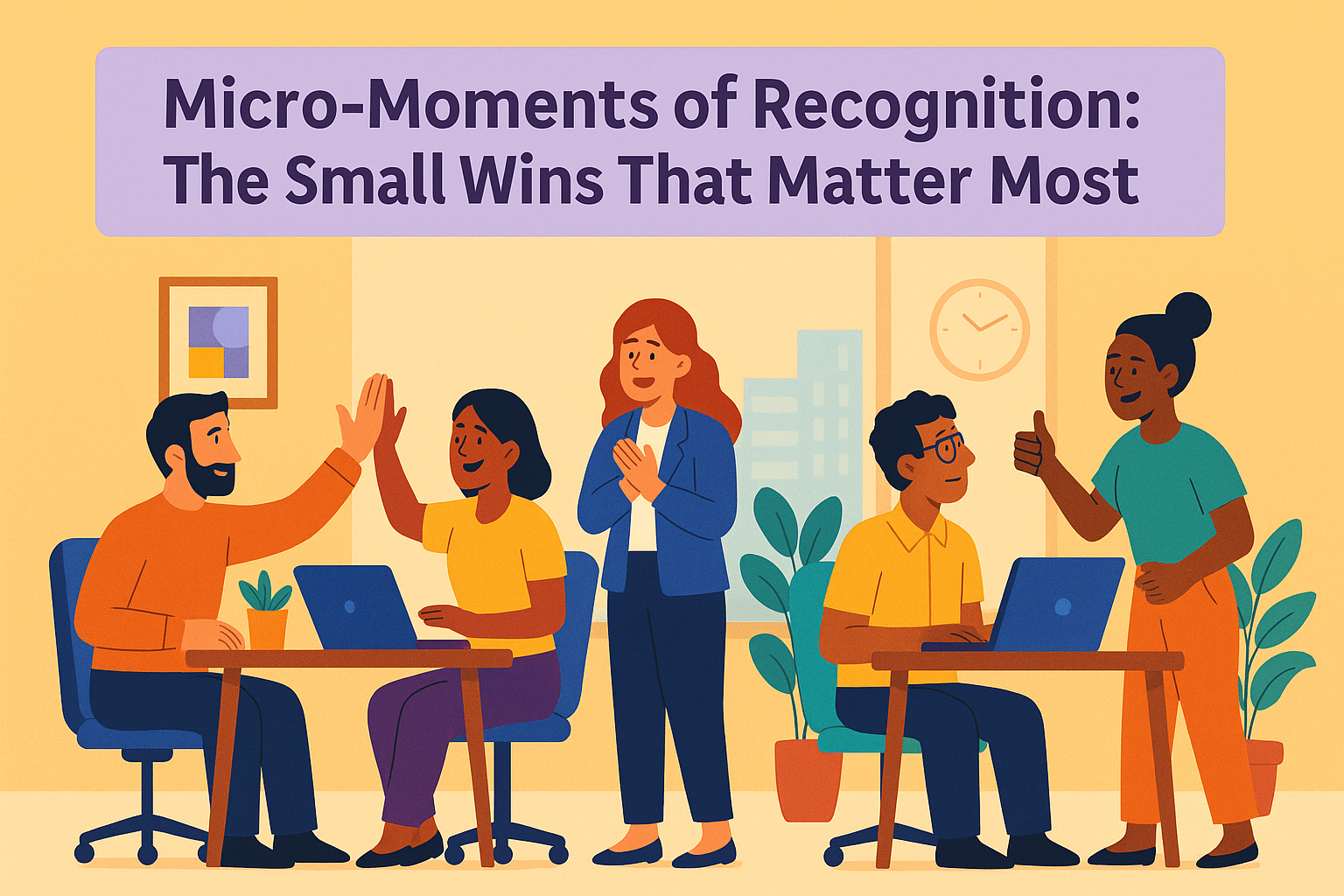
Employee engagement is often seen as something tied to big, formal recognition programs annual awards, quarterly shoutouts, or end of year bonuses. While those are important, what truly fuels day to day motivation are the micro-moments of recognition. These are the quick thank-yous, the casual acknowledgments, and the spontaneous celebrations of small wins that remind employees they’re seen and valued.
Micro moments matter because they create emotional connections. A manager saying, “I noticed how you handled that client call great job,” or a peer giving a quick shoutout during a team meeting may seem small, but the cumulative impact is massive. They reinforce positive behavior, boost confidence, and build trust. Over time, these micro-moments contribute more to culture than any single grand gesture.
For HR, the challenge is building systems that encourage micro recognition without making it feel forced. This could include simple tools like digital recognition platforms, peer to peer shoutout boards, or integrating recognition into regular check-ins. The goal is to normalize acknowledgment so that it becomes part of the culture, not an afterthought.
The truth is, employees don’t just want to be recognized once a year they want to be noticed every day. By focusing on the power of micro moments, HR can foster workplaces where gratitude flows naturally, morale stays high, and small wins add up to big engagement.