


Recruitment has long favored candidates with years of proven experience. But in today’s rapidly changing workplace, where skills evolve faster than job titles, organizations are rethinking what truly matters. Should you hire someone with a polished track record, or someone with the potential to grow into the role?
Hiring for experience provides immediate benefits employees can often hit the ground running with minimal training. They bring established skills, industry knowledge, and confidence from having “done it before.” But experience doesn’t always guarantee adaptability. In industries being reshaped by technology, yesterday’s expertise can quickly become outdated.
Hiring for potential, on the other hand, focuses on learning agility, problem solving ability, and cultural fit. These candidates may lack years of practice but bring fresh perspectives, creativity, and the drive to learn quickly. They often thrive in organizations that value continuous learning and innovation. However, investing in potential requires structured training, mentorship, and patience from employers.
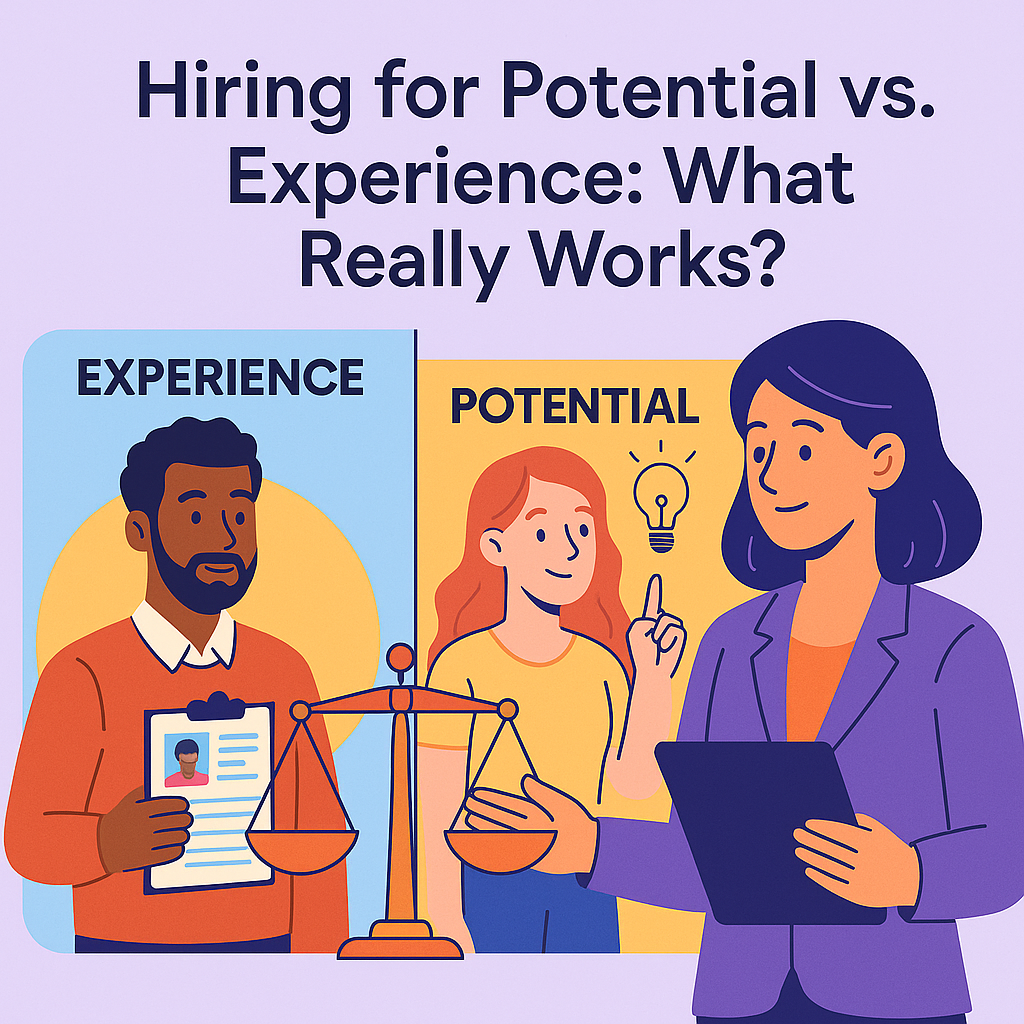
The truth is, it isn’t about choosing one over the other it’s about balance. For critical roles where mistakes are costly, experience is invaluable. But for roles where innovation, adaptability, and growth are key, potential may be the better bet. HR leaders must assess not just the needs of the role today, but also what the role and the company will require tomorrow.
Recruitment has long favored candidates with years of proven experience. But in today’s rapidly changing workplace, where skills evolve faster than job titles, organizations are rethinking what truly matters. Should you hire someone with a polished track record, or someone with the potential to grow into the role?
Hiring for experience provides immediate benefits employees can often hit the ground running with minimal training. They bring established skills, industry knowledge, and confidence from having “done it before.” But experience doesn’t always guarantee adaptability. In industries being reshaped by technology, yesterday’s expertise can quickly become outdated.
Hiring for potential, on the other hand, focuses on learning agility, problem solving ability, and cultural fit. These candidates may lack years of practice but bring fresh perspectives, creativity, and the drive to learn quickly. They often thrive in organizations that value continuous learning and innovation. However, investing in potential requires structured training, mentorship, and patience from employers.
The truth is, it isn’t about choosing one over the other it’s about balance. For critical roles where mistakes are costly, experience is invaluable. But for roles where innovation, adaptability, and growth are key, potential may be the better bet. HR leaders must assess not just the needs of the role today, but also what the role and the company will require tomorrow.